
Last updated November 15, 2026
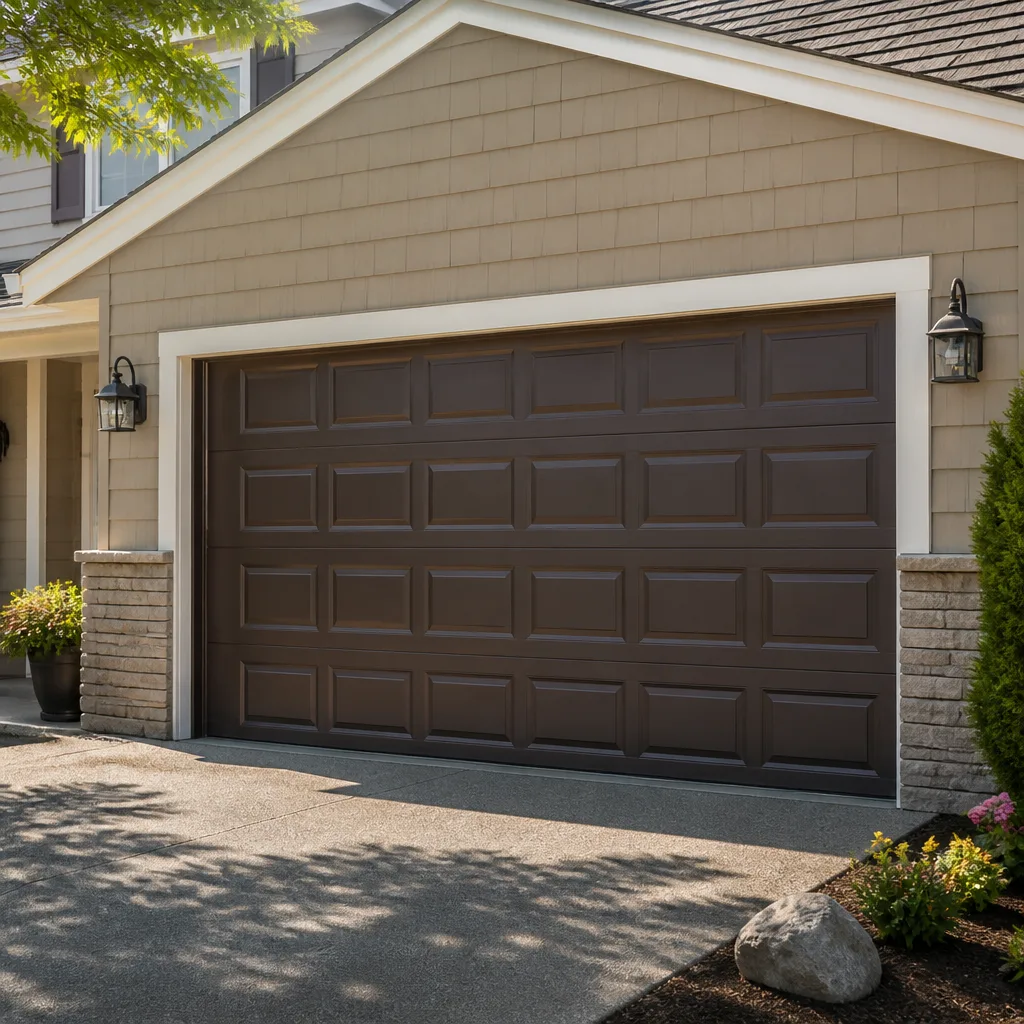 Raised-panel steel
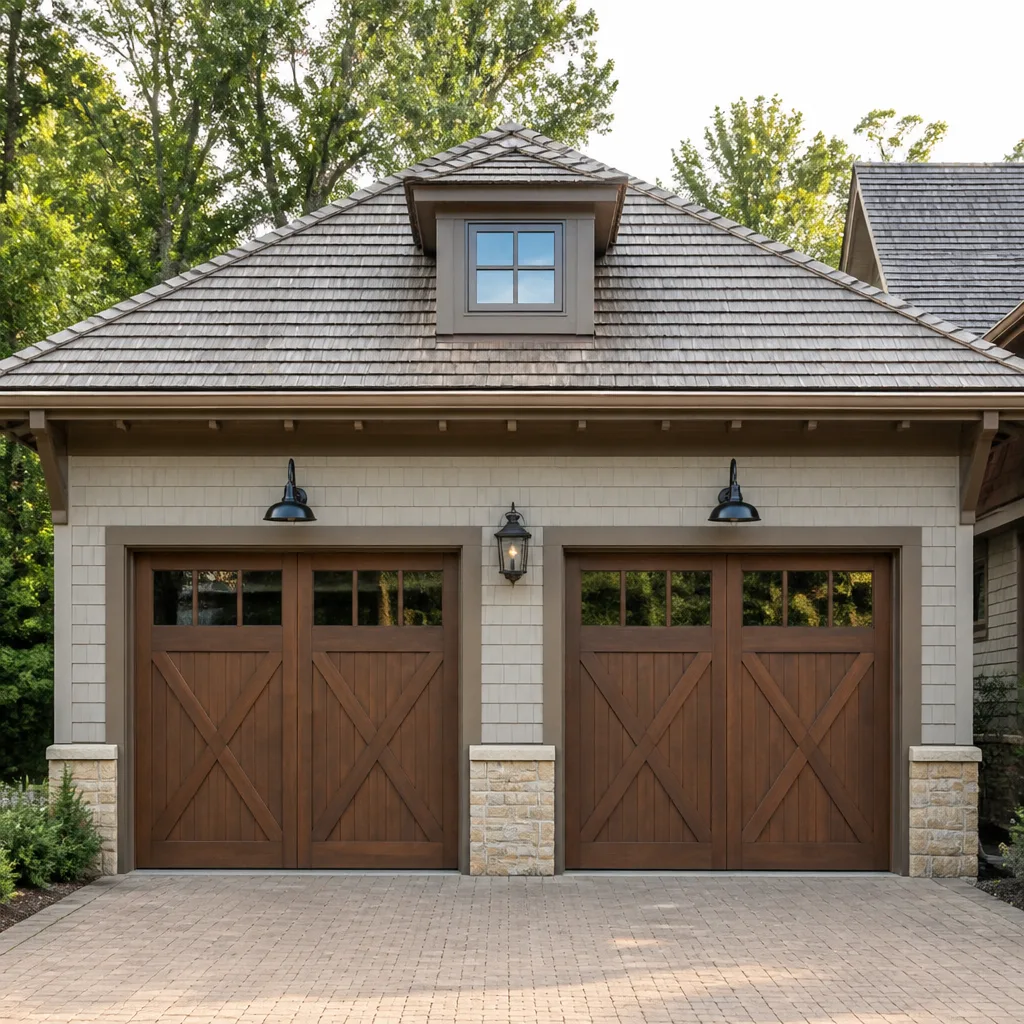 Carriage house
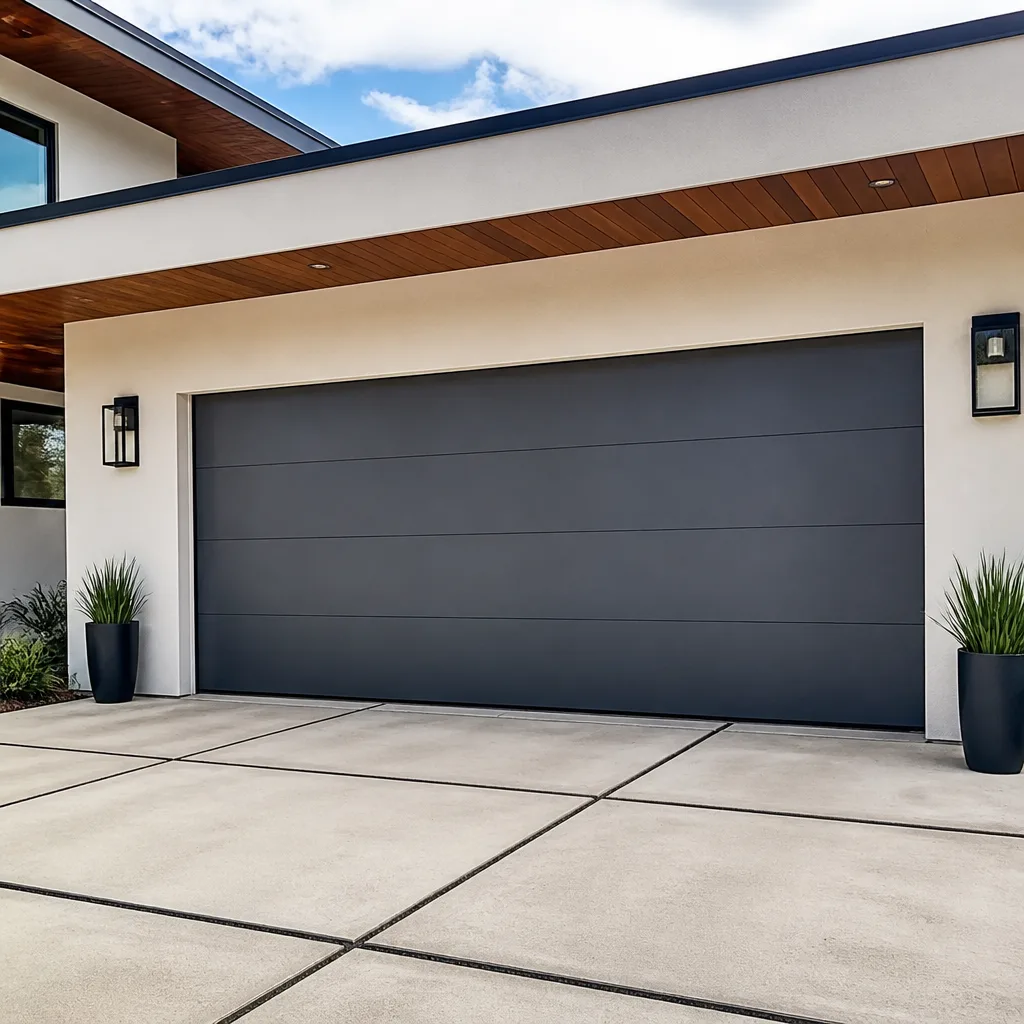 Modern flush
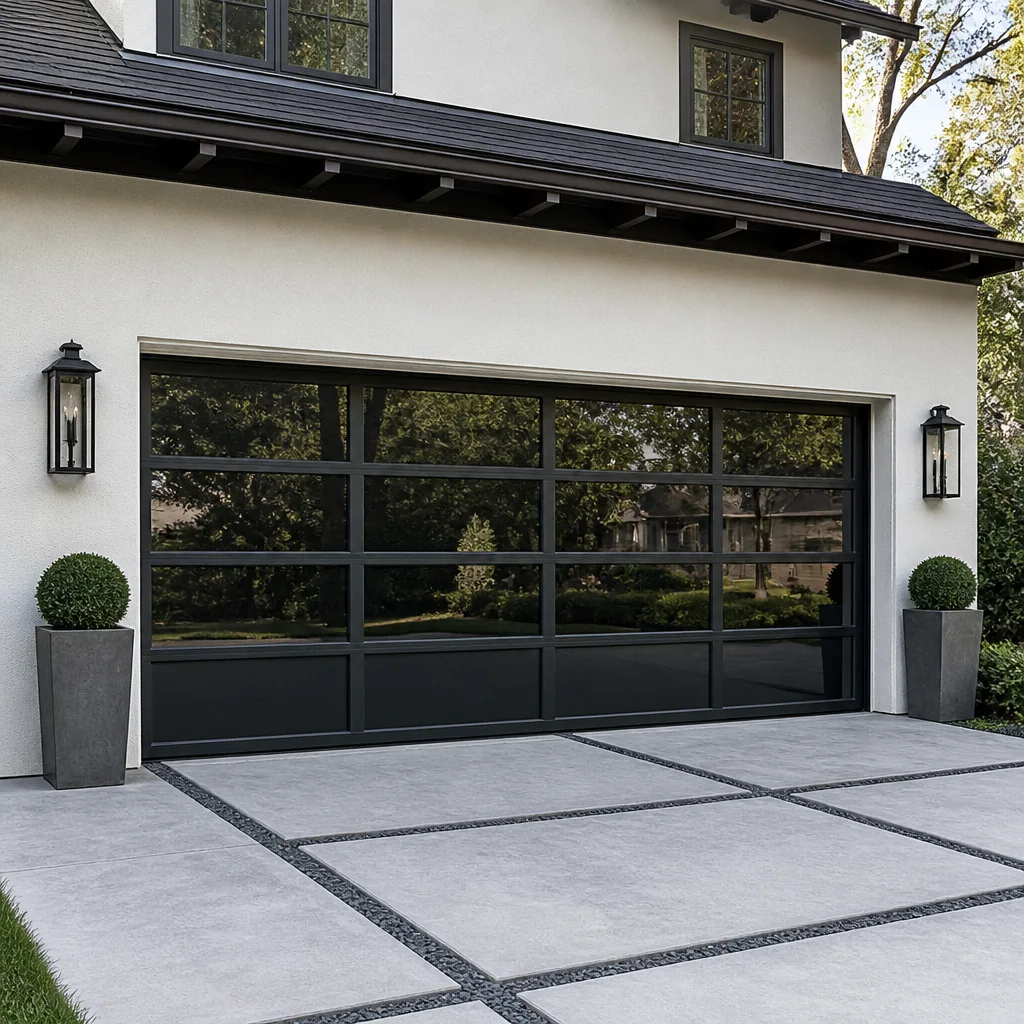 Full-view glass
 LiftMaster openers
 Chamberlain openers
Full 25-point door and opener safety check with every visit - springs, cables, rollers, tracks, and your LiftMaster or Chamberlain opener included
You get a price before we start. It does not change when the pro arrives.
Get your free estimateChoosing the Right Garage Door Brand: A Buyer’s Guide for Palm Bay
Here’s a discomforting truth about brand shopping: a garage door with a household name on it can still be the wrong door for a Palm Bay home. National brand rankings measure steel thickness, opener features and warranty terms – almost none of them ask whether a specific model carries a Florida Product Approval for Brevard County’s wind speed designation. A dealer who sells one brand has no reason to raise that question, and plenty of homeowners don’t learn about it until a permit reviewer or insurance inspector does. This guide walks through what actually decides a smart brand choice here: approval status, steel gauge, real parts availability in Brevard County, and how your opener fits the picture. By the end you’ll know how to compare brands on the criteria that matter for this market.
Quick Answer
The right garage door brand for a Palm Bay home is the one whose specific model holds a current Florida Product Approval for Brevard County’s design wind speed, has a distributor network that can supply parts quickly, and pairs cleanly with a compatible opener. Brand reputation matters far less than those three things. Any of the major manufacturers – Clopay, Amarr, Wayne Dalton, Raynor – can be the correct pick depending on your opening, exposure and budget, which is exactly why a single-brand dealer can’t give you a fair comparison.
Styles & brands we work with
- Raised-panel steel
- Carriage house
- Modern flush
- Full-view glass
- LiftMaster openers
- Chamberlain openers
Table of Contents
- What Florida Product Approval Means for Brand Selection
- Steel Gauge: Why 25 vs. 27 Gauge Matters More in Palm Bay
- Parts Availability and Service Continuity in Brevard County
- The Single-Brand Dealer Limitation
- How Opener Brand Compatibility Affects Your Door Choice
- How to Compare Garage Door Brands: A Step-by-Step Method
- What to Know About the Major Brands
- Common Mistakes to Avoid
- When to Call a Professional
- Frequently Asked Questions
What Florida Product Approval Means for Brand Selection
Florida Product Approval is a state-level review system. Each product – not each brand as a whole, but a specific model, in a specific size and configuration – receives a document with an FL number that sets out the conditions under which it’s allowed to be installed. What matters for Palm Bay is which design wind speed those approvals cover, because Brevard County sits in a wind zone where wind-load requirements are enforced.
This is where national brand marketing breaks down. A manufacturer may publish a beautiful catalog of models, but only some of those models will have approvals covering local requirements. Ask a sales rep at a single-brand showroom and you’ll get either a confident “of course it’s approved” or a vague “I’d have to check.” Neither is a lookup.
How to Verify a Door’s Approval Status
- Ask the dealer for the FL number for the specific model, size and configuration you’re buying – not the brand family.
- Look the number up in Florida’s Building Code Information System to confirm the approval is current and not expired.
- Match the approval’s design wind speed to the requirements for your property. Your permit reviewer will do this too, so get ahead of it.
- Confirm the approval covers the installation method being used – mounting, reinforcement and jamb attachment are part of the approval.
- Keep the documentation with your permit paperwork. It matters at inspection and later if you sell the home.
Every reputable brand has approved doors. The gap is at the model level. Clopay, Amarr, Wayne Dalton and Raynor all have approved product lines for Florida installations, but “brand X is approved” is not the same sentence as “the model you chose is approved.” If a dealer can’t hand you the FL number without a scramble, that tells you something about how often the question is asked.
Steel Gauge: Why 25 vs. 27 Gauge Matters More in Palm Bay
Steel gauge is measured in reverse: 25-gauge is thicker than 27-gauge. A 27-gauge door is lighter, cheaper and fine for a lot of installations. A 25-gauge door is heavier, dents less, holds its alignment longer and handles wider and taller openings better. In dry climates, the difference mostly shows up as cosmetics after a decade.
Palm Bay’s humidity changes what that difference means. A section that dents loses its shape permanently in an environment where the metal alternates between condensation and dry periods; a section that’s thinner is easier to dent, and every dent distorts how the door seats against the jamb. Thicker steel carries that cost better. It also handles the heavier-duty cycles of a door that runs several times a day, which is normal in a household where the garage is the main entrance.
Steel Gauge by Manufacturer (Typical Product Lines)
- Clopay: ranges from 27-gauge on builder lines to 25-gauge on heavier residential styles. Ask which line specifically.
- Wayne Dalton: a mix of 26- and 25-gauge lines depending on series. Confirmation should come from the spec sheet, not the label.
- Amarr: several product families span 24-, 25- and 26-gauge. Higher-gauge steel is standard on their entry lines.
- Raynor: generally 25-gauge and heavier on their residential lines. Considered a heavier build by most installers.
One more thing about humidity and doors: insulation matters as much as gauge. A non-insulated door sweats condensation on the interior panel in muggy weather, which feeds fasteners, hinges and rollers long-term. If you’re in a single-family Palm Bay home with an air-conditioned garage or one you use as a workspace, ask for an insulated option. If it’s just parking, plain steel is defensible.
Parts Availability and Service Continuity in Brevard County
Brand choice outlives the purchase. A door’s springs, hinges, rollers, cables and opener components fail at different intervals, and every one of those failures runs into a parts question. Some brands have strong statewide distributor networks, so a torsion spring, roller set or opener logic board arrives with the technician in a couple of days. Others are effectively mail-order, and repairs stretch out.
We’ve seen this play out on ordinary repairs. A garage door with a common chord-and-cable configuration and a mainstream brand gets diagnosed and sourced quickly. A less common brand or an obscure model can turn a same-day fix into a week of calls and shipped parts, and the homeowner pays for the waiting. If the door is on a busy household schedule – which most Palm Bay doors are – days without operating it matter.
What to Ask a Dealer About Parts
- Which regional distributor supplies this brand, and what’s their typical turnaround on a torsion spring and a complete roller/hinge set?
- Is a logic board for this opener stocked locally, or is it a factory order?
- Does the manufacturer still support this model line? Older series get discontinued and leave parts proprietary.
- Who in Brevard County actually services this brand? A door that no one locally knows well is a liability.
This is a big part of why we take a brand-agnostic approach to garage door repair. We work on your brand, whether that’s Raynor, Clopay or Wayne Dalton, and we’d rather tell you a model is going to be a parts headache than sell it and find out together at the first spring break.
The Single-Brand Dealer Limitation
A dealer who sells one brand has one catalog. That’s not a character flaw; it’s a business model. But it means they cannot honestly tell you when a competitor’s door is the better fit for your opening, your exposure or your budget. They can only tell you why their line is adequate. Adequate and correct are different things, especially on a door that will be on your house for a couple of decades.
Here’s how that limitation shows up in practice:
- Oversized openings: some brands excel at wide spans, others don’t. A single-brand seller will steer you to what they have.
- Unusual exposure: a wall that gets heavy wind exposure may need a heavier-gauge door and specific reinforcement. If the brand they sell doesn’t carry it, they’ll downplay it.
- Style fit: if the house is a modern build and the brand’s product is all traditional panel, you get traditional panel.
- Budget pressure: dealer inventory influences recommendations. That’s not a scandal, but you should know it.
We’re not a dealership for any single manufacturer. That’s deliberate. It means when we walk into a Palm Bay garage, the conversation is about your door, your clearance, and the wind zone it sits in, not about a manufacturer’s quarterly push. If a LiftMaster opener makes sense on your door even though a different brand also fits, that’s what we’ll recommend. The name “Unity” reflects a promise: one call, one team, complete resolution.
How Opener Brand Compatibility Affects Your Door Choice
Your opener is the part of the system you touch every day, and it’s the piece most often chosen separately from the door. That’s a problem. Door weight and opener capacity are paired, and mixing ecosystems carelessly produces long-term headaches: mismatched safety sensors, remotes that need a bridge, smart-home integrations that don’t behave, and travel limits that keep drifting.
Opener compatibility comes down to four things:
- Lift capacity: a heavier door needs more lifting force, and the opener needs to match the door’s weight within its rated range.
- Safety sensor protocol: brands differ in how sensors communicate. Mixing brands at the sensor level is where code compliance and safe operation get shaky.
- Remote and smart-home layering: Wi-Fi modules and hub integration work well within a brand family, less well across families.
- Parts and service: an opener brand with strong local parts support is easier to keep running for the life of the door.
The big three opener brands – LiftMaster, Chamberlain and Genie – dominate residential installations, and each has a wide parts footprint. We treat garage door opener repair as its own specialty, not a side task, because opener diagnostics, remote pairing and smart-home wiring are a genuinely different skill from hanging a door. When you’re buying a new door, it’s worth deciding on the opener at the same time.
How Opener Brand Affects Door Brand Choice
- Decide whether you’re staying on your current opener or replacing it. If you’re replacing, choose the opener brand first.
- Match the door’s weight to the opener’s rated capacity with margin, not at the limit.
- Prefer a door and opener combination that shares compatible safety sensor protocol. This matters for code compliance.
- If you want smart-home control, choose the opener family known for it and make sure the door and opener are installed as one system.
- Confirm parts availability for both brands before you buy, not after.
Buying a door from one manufacturer and an opener from another isn’t automatically wrong. Buying them from two companies that don’t talk to each other is. One call, fully resolved is the point.
How to Compare Garage Door Brands: A Step-by-Step Method
We diagnose before we quote, and you should shop brands the same way. The method below takes about an hour of research and a couple of phone calls. It beats comparing brochures.
- Measure your opening and clearance. Width, height, headroom above the door, and side room. Brand options narrow fast based on these numbers alone.
- Confirm the wind speed designation for your property. Ask your city’s building department what wind speed the door has to be rated for at your address. This is the single most consequential number in the whole decision.
- Find approved models, not approved brands. Request the FL number for each specific model, size and configuration you’re considering. Reject any brand that can’t produce one.
- Compare steel gauge and insulation. 25-gauge and heavier is a reasonable target for this climate. Insulated is worth it if the garage is used as living or working space.
- Check parts availability with two different suppliers. Ask how quickly a torsion spring, a logic board and a roller set arrive. This is your future repair timeline.
- Match your opener. Confirm capacity and sensor compatibility. If you’re keeping your existing opener, make sure the new door’s weight is within its rated range.
- Get a written estimate that itemizes door, hardware, opener and installation. The written quote is the price. Anything verbal doesn’t count.
If this sounds like work, it is – but it’s the difference between a door that lasts and a door that fights you. In Palm Bay, where the humidity is steady and the wind zone rules are real, brand choice is a technical decision. It deserves technical criteria.
What to Know About the Major Brands
We’re familiar with eight major brands on this side of the work: LiftMaster, Chamberlain, Genie, Clopay, Amarr, Wayne Dalton, Craftsman and Raynor. Here’s a plain-spoken look at each. None of this is a ranking; it’s what each brand is typically good at, and where it can trip you up.
Clopay
One of the broadest residential lineups in the country, from builder-grade to heavy insulated doors. Approval coverage is strong because of the volume of product. Watch the gauge difference between entry lines and higher lines; the label won’t always tell you which you’re buying without the spec sheet.
Amarr
Solid quality across residential lines and a wide range of sizes and styles. Popular with custom builders. Confirm the specific line for gauge and approval. Amarr is widely available in the Southeast, which helps with parts.
Wayne Dalton
Good range of residential doors and openers. Their product families cross both 26- and 25-gauge, so verify the exact series. They’re common in existing Florida homes, which means parts and service know-how are broadly present.
Raynor
Built heavier than average on most residential lines, which is why installers often recommend it for wide openings or homes exposed to heavier wind. Fewer showrooms than some brands, but well-supported through distributors.
LiftMaster, Chamberlain, Genie, Craftsman (Openers)
The residential opener market in the US is nearly all LiftMaster, Chamberlain and Genie, with Craftsman remaining common on older doors. Remote and sensor compatibility matter here. LiftMaster and Chamberlain share some lineage and accessory lines; Genie has its own protocol. If you’re buying a new door, decide on the opener brand alongside it.
For a doorway that gets used every day in Palm Bay, the practical question isn’t “which brand is best” – it’s “which brand’s specific model is right for this opening, in this wind zone, with parts that can be sourced here?” That’s a question we can answer in a free estimate.
Common Mistakes to Avoid
- Buying on brand name alone. Two models from the same manufacturer can differ by four gauge thicknesses and two approval classes. Always compare model-level specs.
- Assuming a dealer knows the local wind zone requirements. Some do, many don’t. Get the FL number from the manufacturer and confirm it covers your property.
- Skipping the FL number and finding out at permit review. Rejected permits waste weeks and re-orders on the door. Ask for the number before you sign.
- Choosing an opener separately from the door. A mismatched ecosystem costs you later in remotes, sensors and integration problems. Choose them together.
- Underestimating humidity’s effect on thin steel. A 27-gauge door with minimal insulation is easier to dent and holds condensation. In Palm Bay, that matters.
- Not asking about parts availability before you buy. A door whose closest parts distributor is three states away turns every repair into a week-long wait.
- Taking a verbal price. Ask for a written, itemized estimate covering door, hardware, opener and installation. Our estimate is free, and the written quote sets the price before any work starts.
When to Call a Professional
You need a professional when the door needs a torsion spring, hinge or cable replaced – those components are under high tension, and a mistake can cause serious injury. Call a pro if the door is out of alignment, if the opener stops reversing on obstruction, if a permit requires a documented approval you can’t find, or if you’re choosing between brands and don’t have the wind-speed designation for your property in hand. The same applies if you’re considering a new door and want a real comparison instead of a single-catalog pitch. We can walk you through Unity Garage Door Repair services and give you an honest read on what makes sense. Free estimates in Palm Bay. Call (866) 901-6506. We answer 24/7. Fast dispatch from 7am to 7pm, Sunday through Friday.
Frequently Asked Questions
There isn’t one best brand. The better question is which specific model holds a current Florida Product Approval for Brevard County’s design wind speed, has local parts support, and pairs with a compatible opener. Any of the major manufacturers – Clopay, Amarr, Wayne Dalton, Raynor – can be correct depending on your opening and exposure. Getting a fair comparison across brands is why a brand-agnostic installer is useful. Call (866) 901-6506 for an exact quote – estimates are free.
Because it’s a model-by-model document, not a brand-wide label. Florida Product Approval sets the conditions – size, configuration, mounting method, design wind speed – under which a specific door can legally be installed. A well-known brand may have some approved models and some that don’t cover the requirements for a particular property, and a permit will enforce the difference. Ask for the FL number for your exact model before buying.
Generally yes, if the door is used heavily or faces a wall with more exposure. 25-gauge is thicker than 27-gauge, resists dents better, and holds its shape and alignment longer in humid conditions where condensation is common. Insulation matters as much as gauge. For a parking-only garage, 27-gauge with reasonable insulation is defensible; for daily use, go heavier.
No, and that’s a structural limit, not a knock on the dealer. A dealer with one catalog can only explain why their line is adequate. If your opening is oversized, your exposure is unusual, or your style doesn’t fit their catalog, you need a comparison across brands. That’s the reason we work brand-agnostically and let the door specs decide.
Ideally, yes – or at least from the same installer who will treat them as one system. Door weight and opener capacity must be paired, and safety sensors need compatible protocols. Mixing across brands creates small service headaches that grow over time. Decide the opener brand first if you’re replacing it, then choose the door to match.
It depends on the brand and model. Mainstream brands with regional distributors typically get common parts – springs, rollers, hinges – quickly. Less common brands or discontinued models can take days. That’s why parts availability should be part of your brand decision, not an afterthought at repair time. Call (866) 901-6506 for an exact quote – estimates are free.
The Bottom Line
Brand selection for a garage door in Palm Bay should start with the property, not the catalog: confirm the wind speed designation for your address, insist on the FL number for the specific model you’re buying, and compare steel gauge and insulation for a humid climate. Then check parts availability with a local distributor, because that number becomes your repair timeline for the life of the door. Finally, choose the door and opener together so sensors and remotes are on the same protocol. Any reputable brand can be right when it’s picked this way. The wrong door is almost always the one bought on name alone, from a dealer with only one name to offer.
If you want a straight comparison across Clopay, Amarr, Wayne Dalton and Raynor – and an honest read on whether your current opener still fits – we’ll do it in one visit. Call Palm Bay at (866) 901-6506 for a free estimate. The price is quoted and agreed before any work starts.
Written by the team at Unity Garage Door Repair.
See the difference
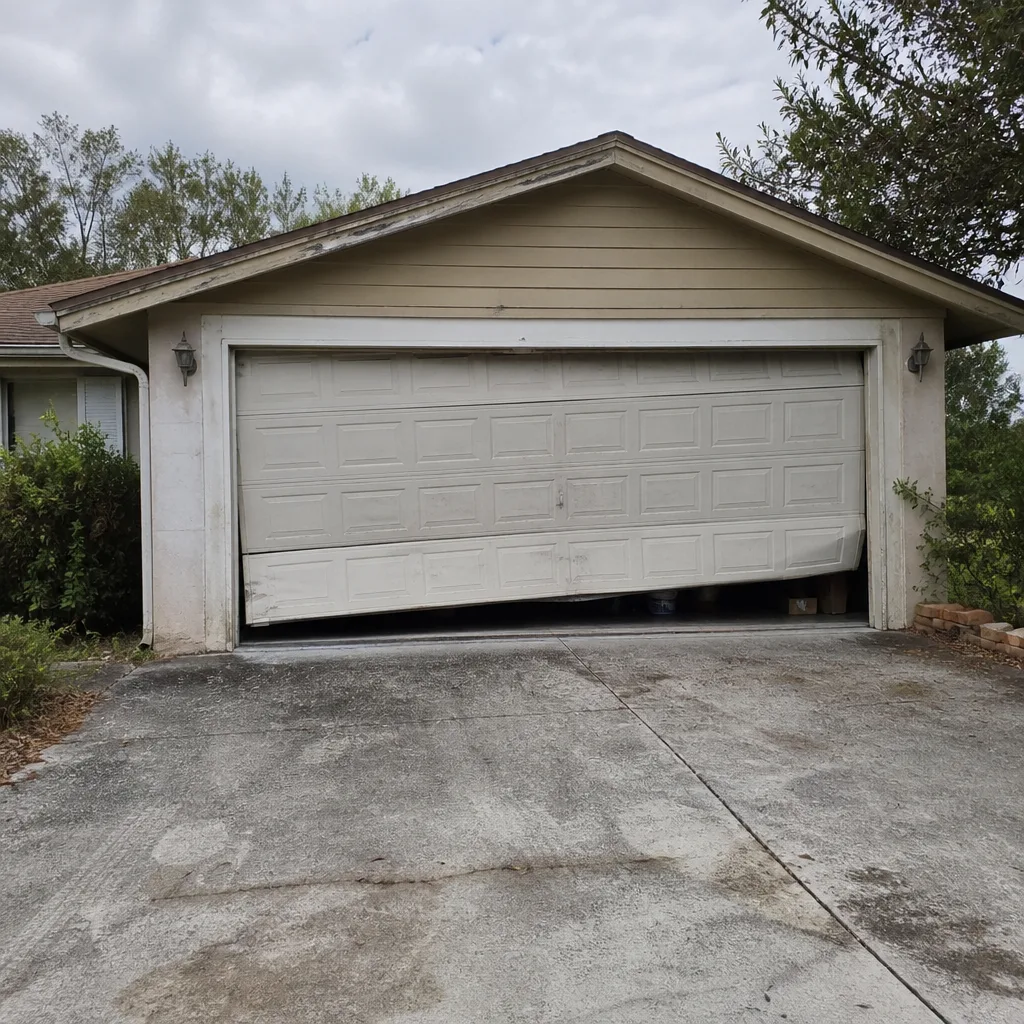 Before
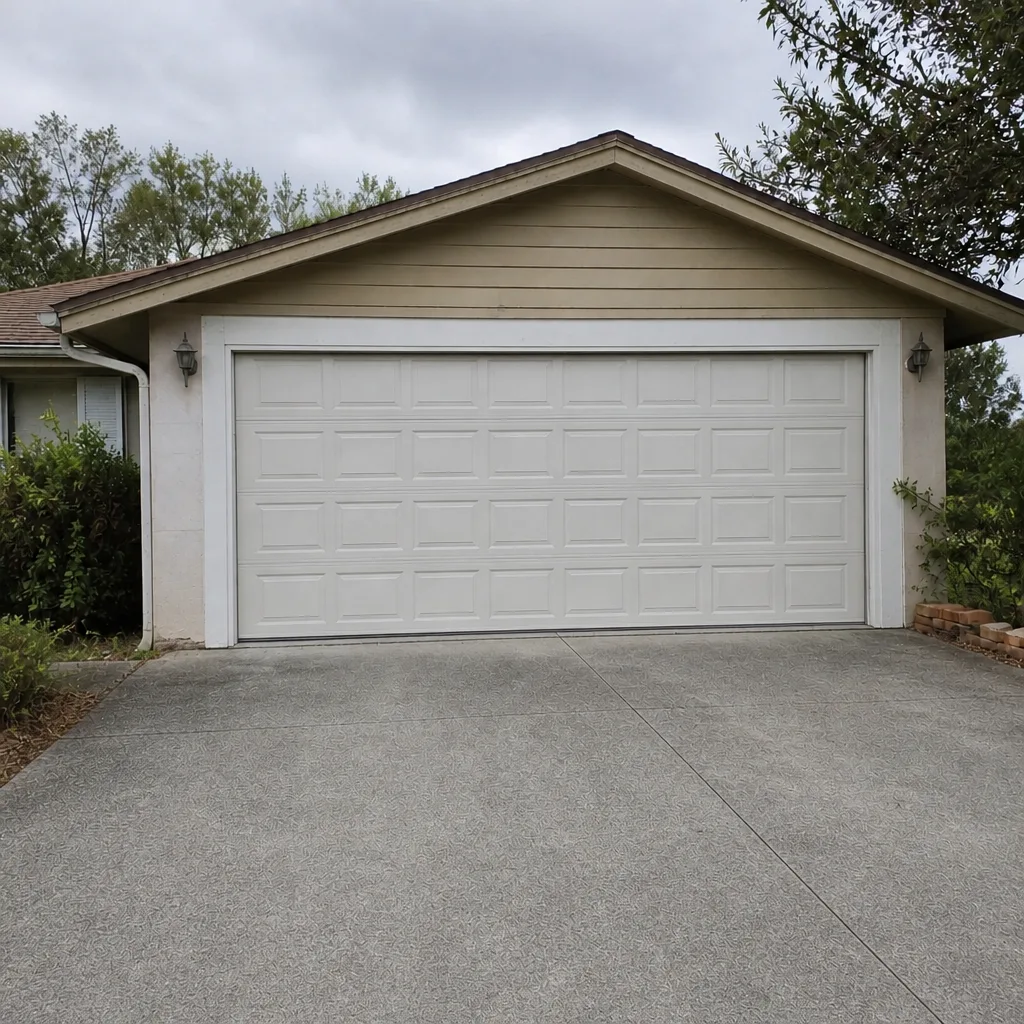 After
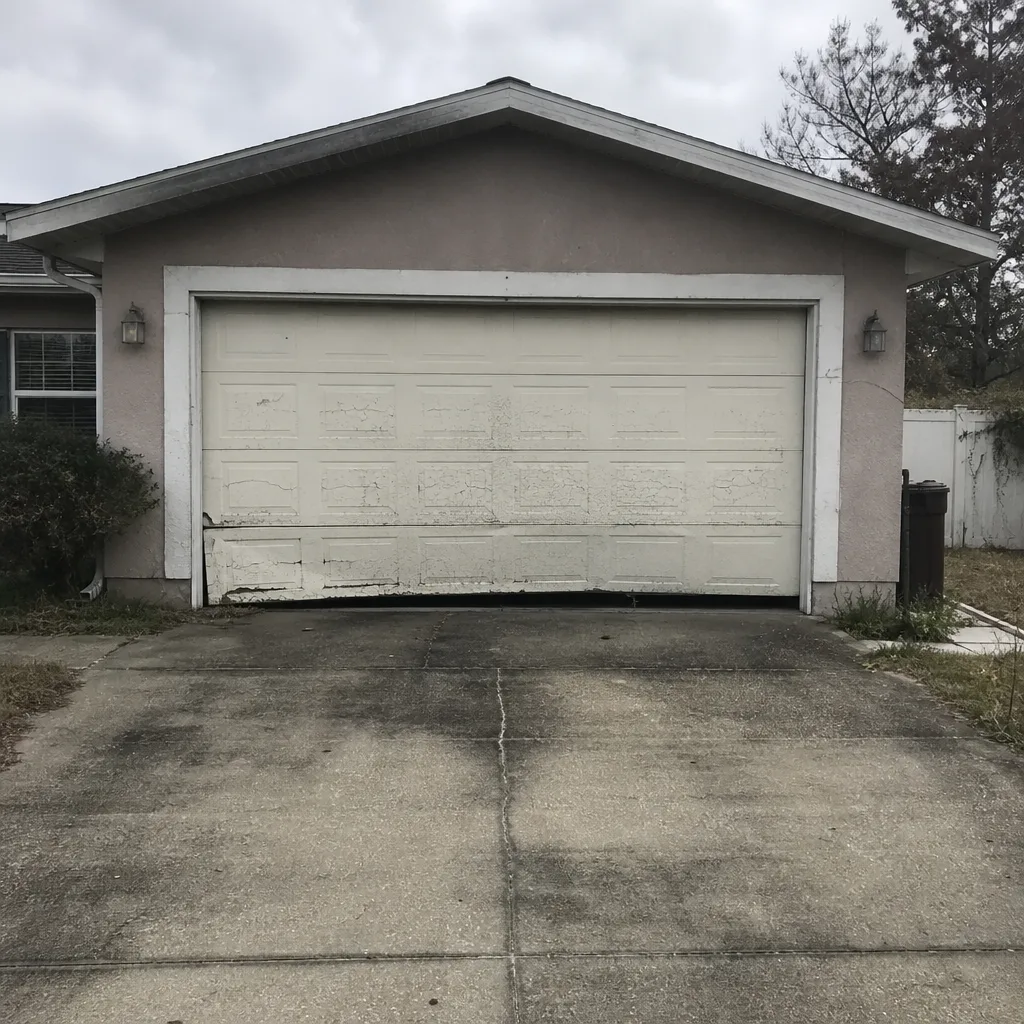 Before
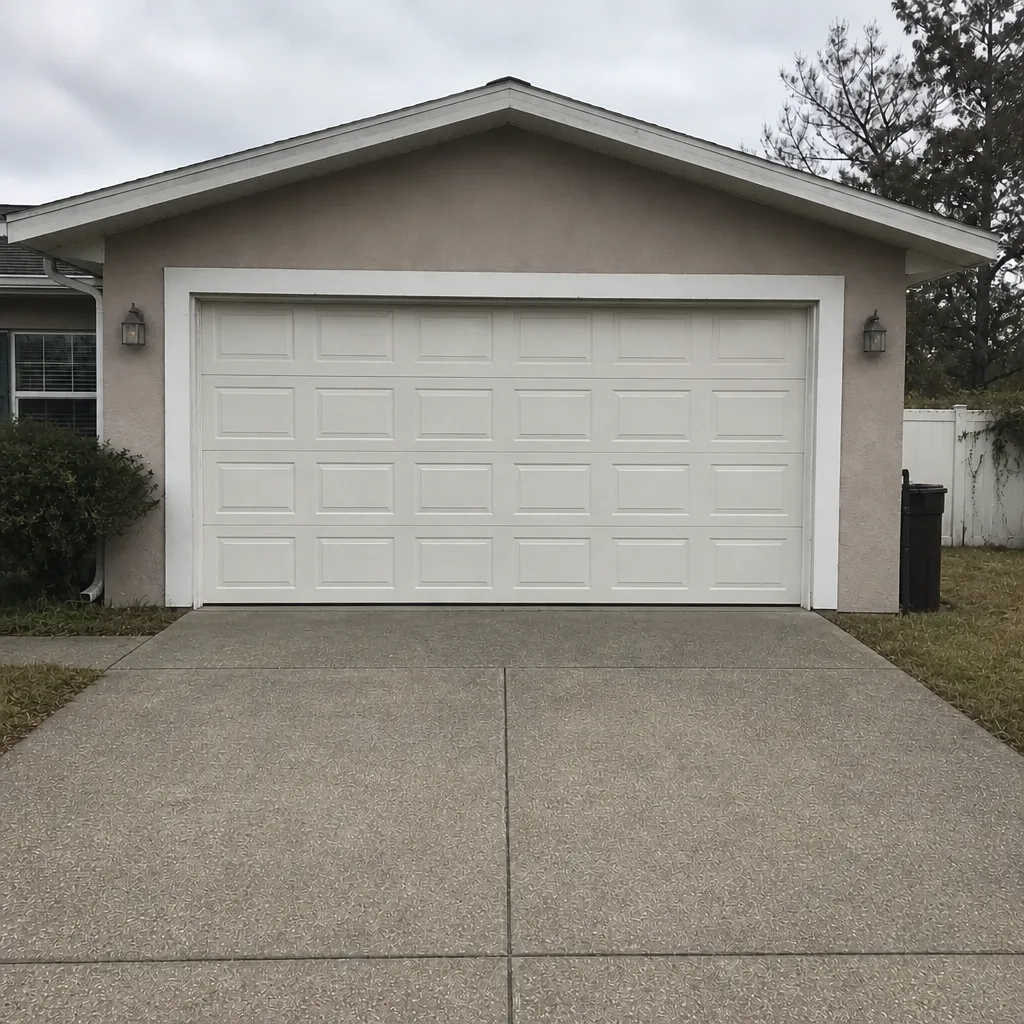 After
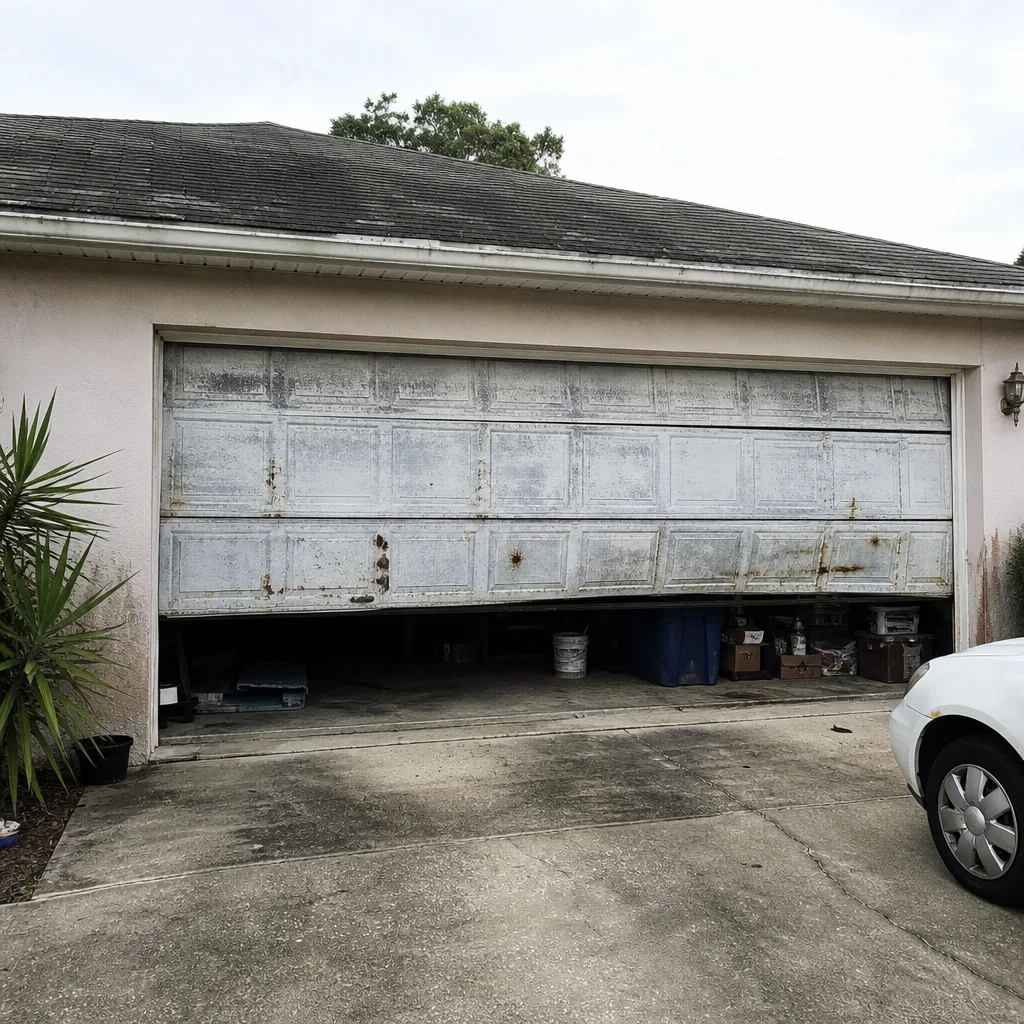 Before
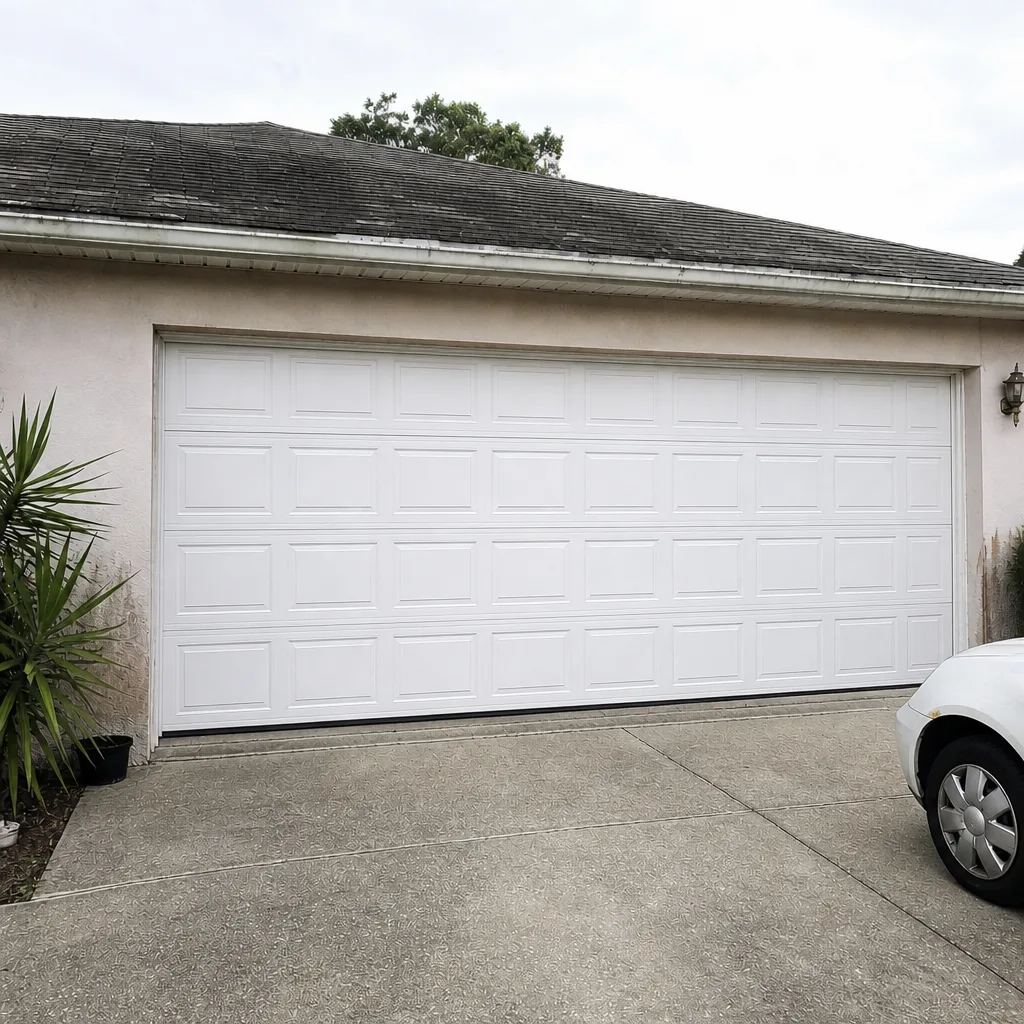 After