
Last updated November 15, 2026
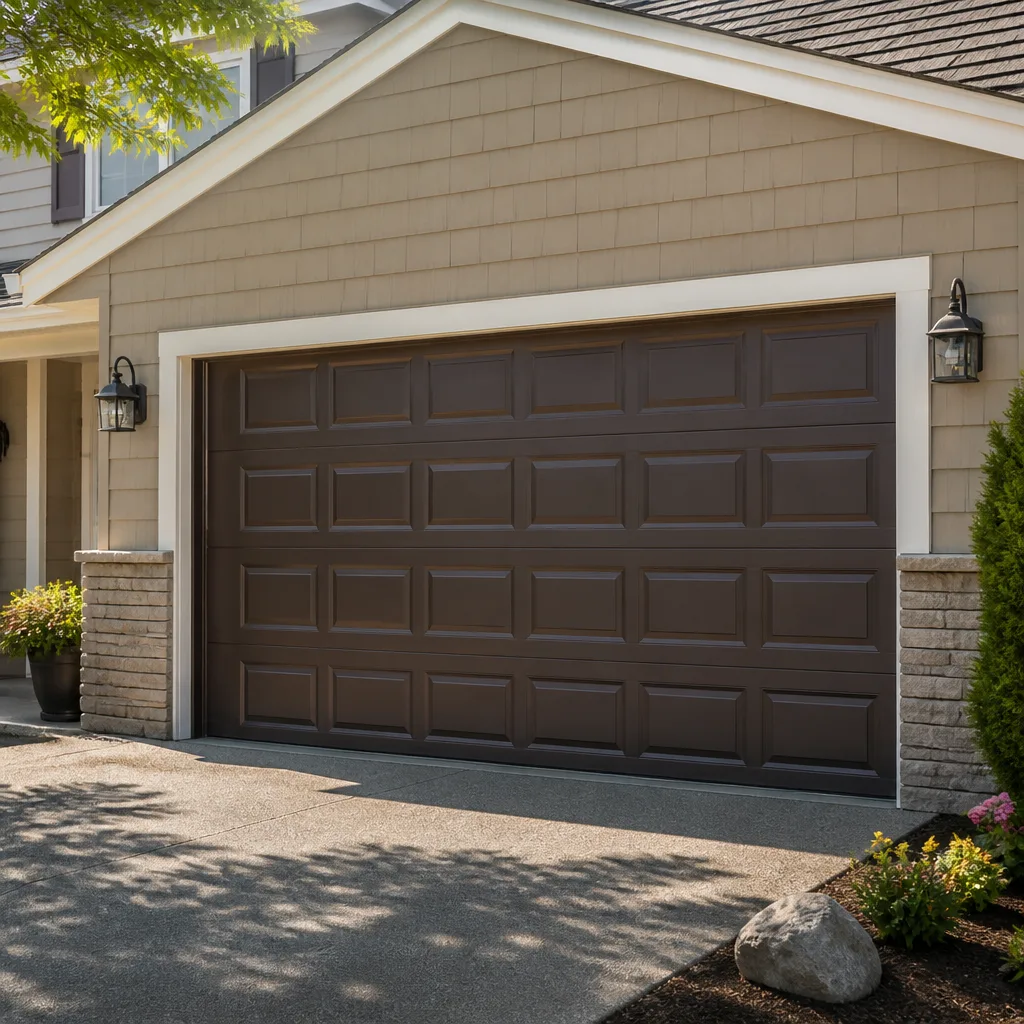 Raised-panel steel
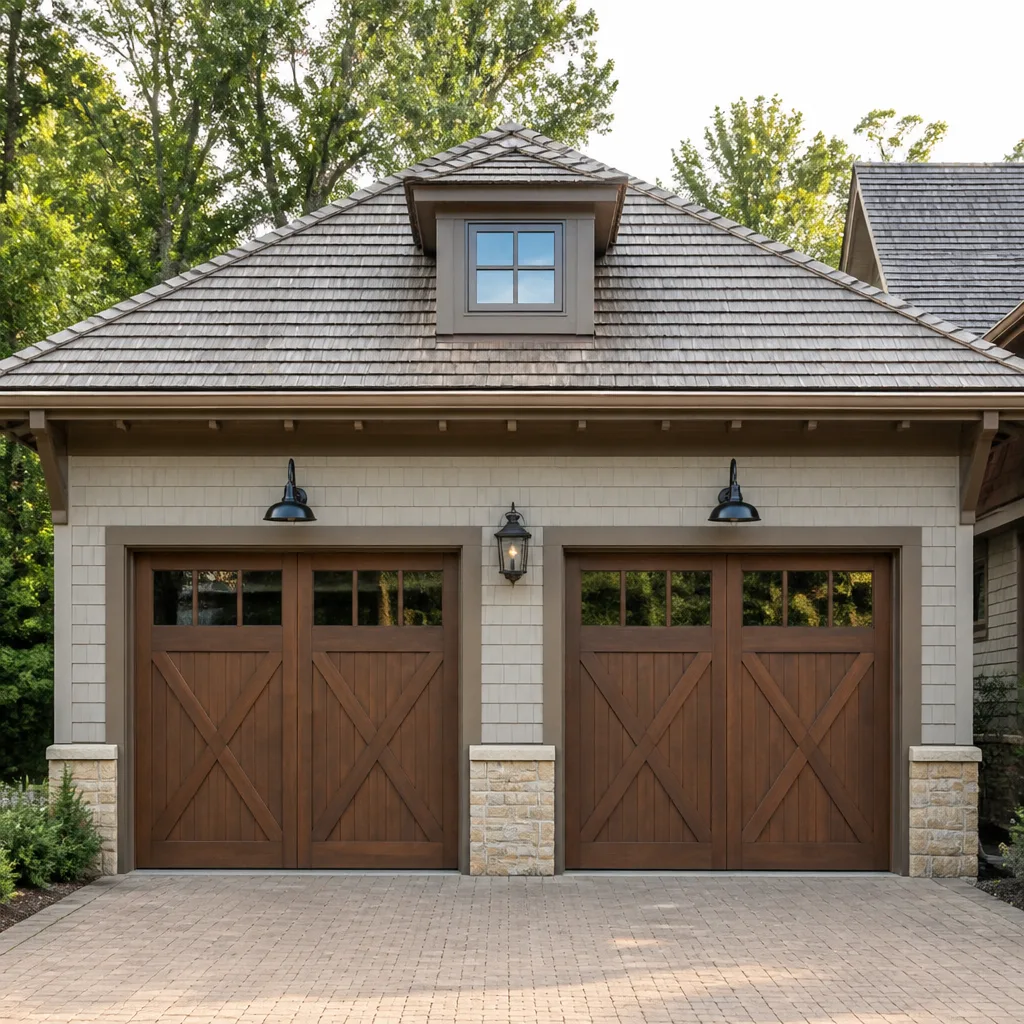 Carriage house
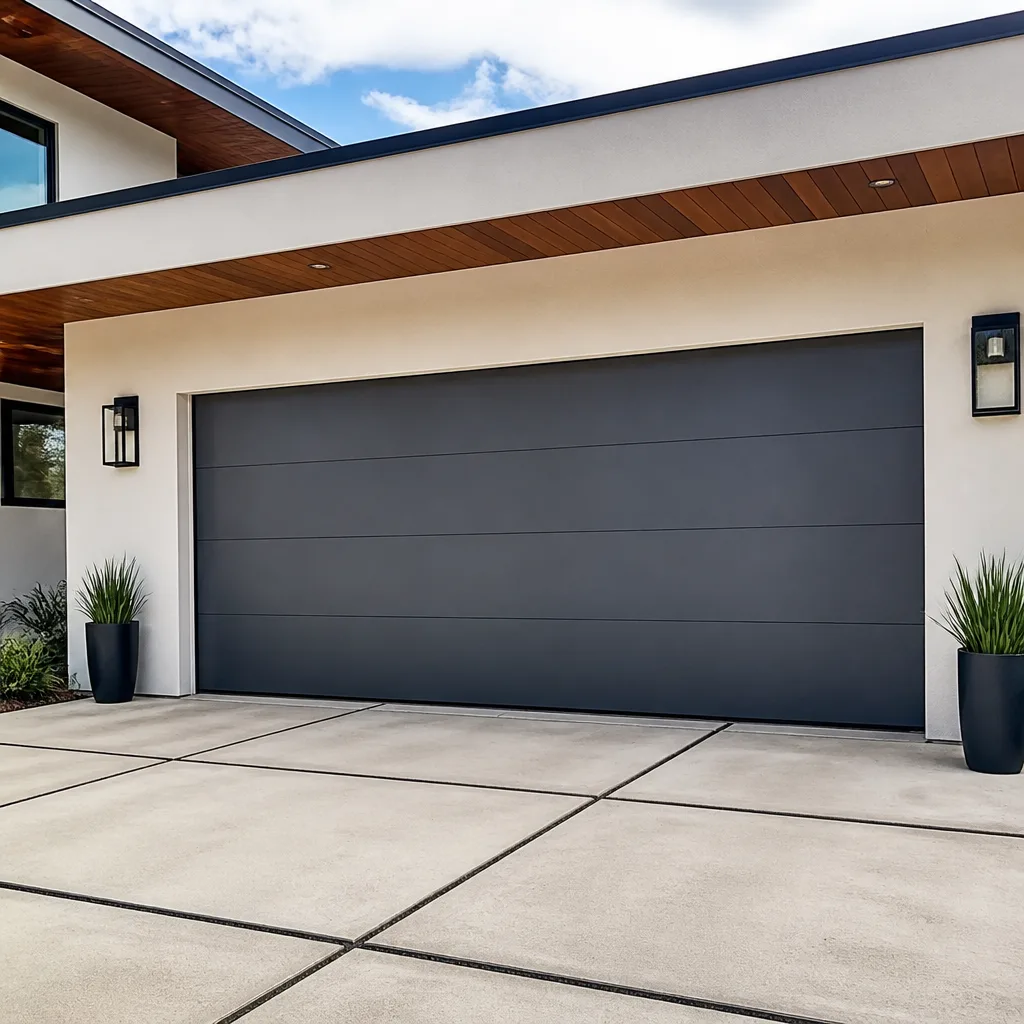 Modern flush
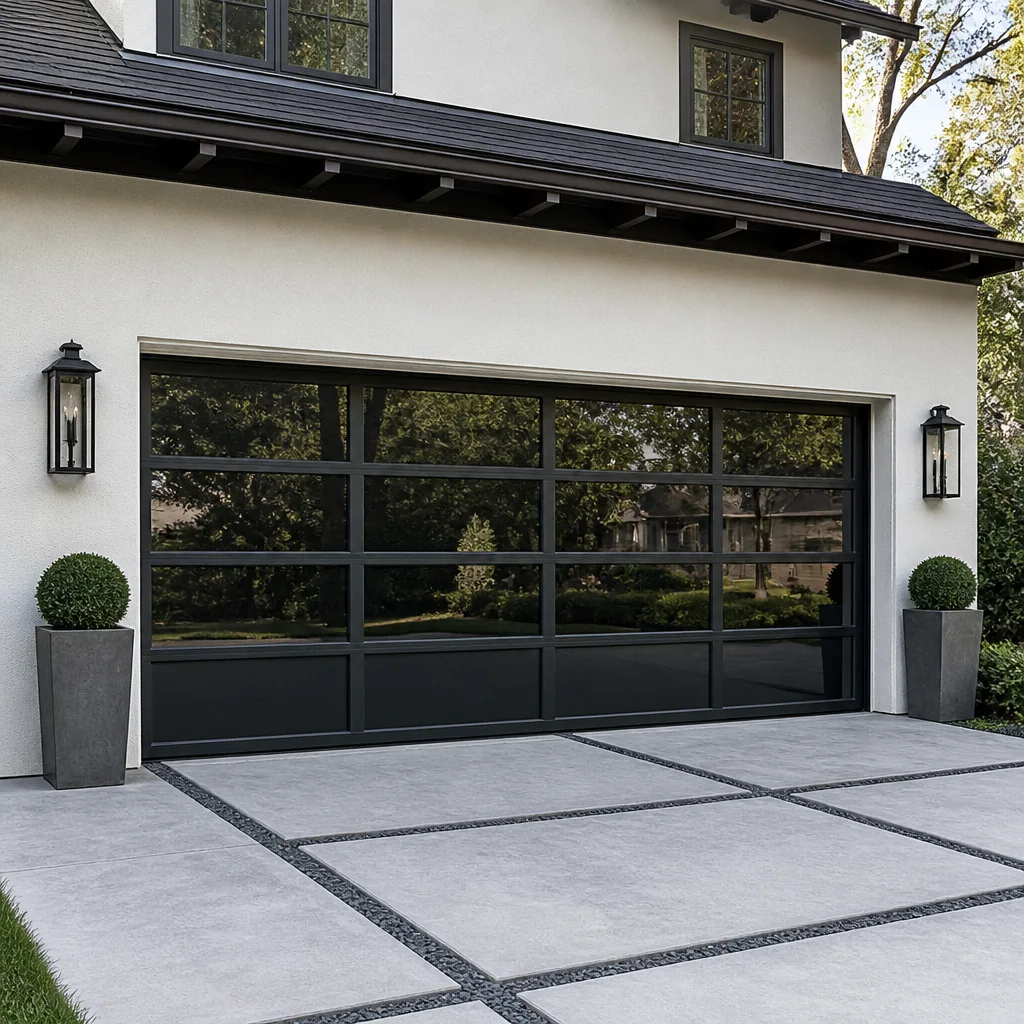 Full-view glass
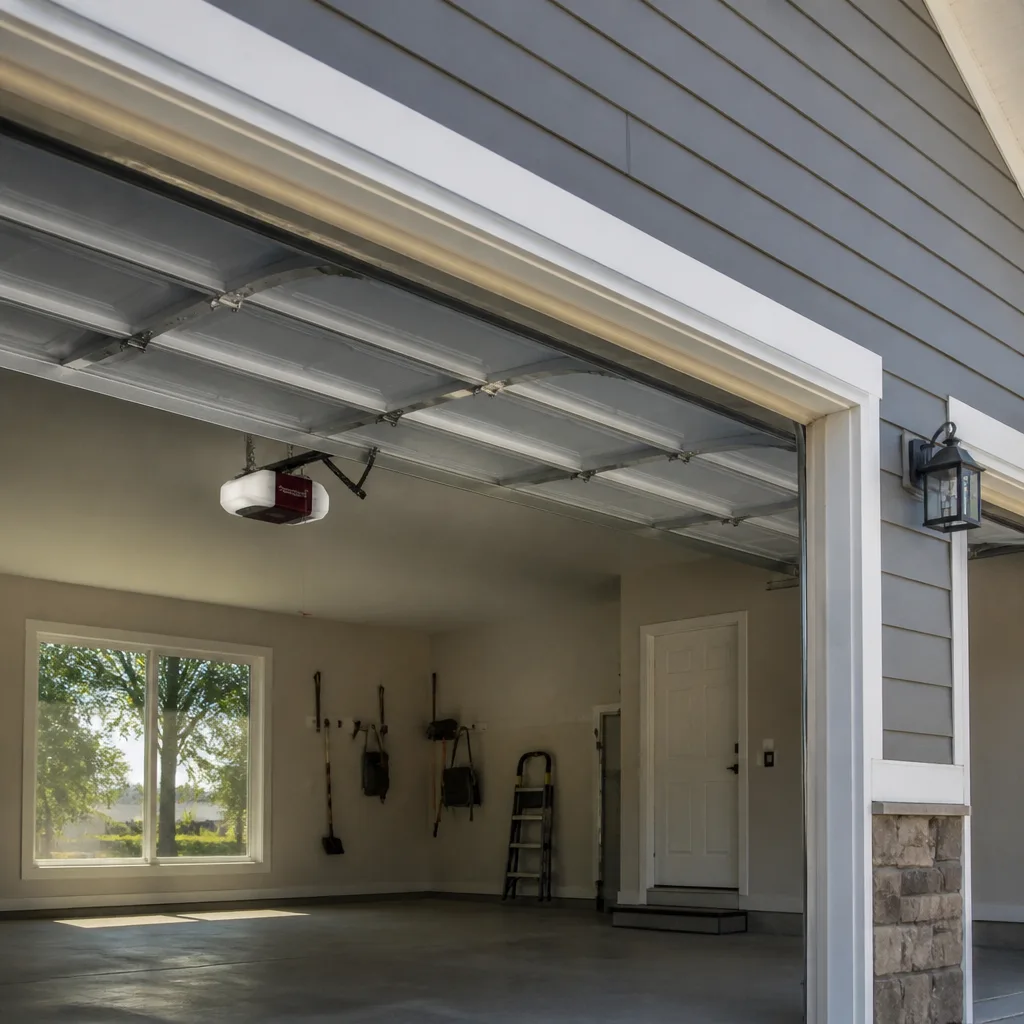 LiftMaster openers
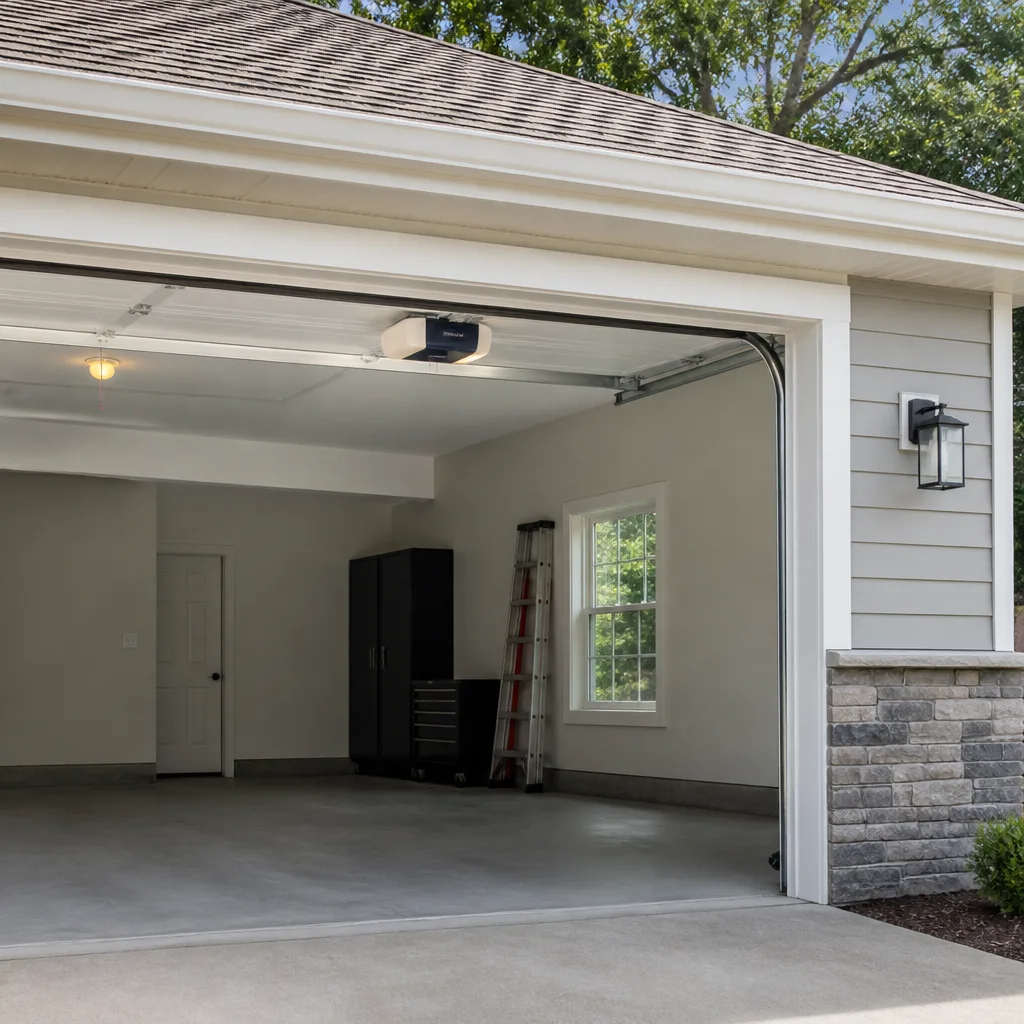 Chamberlain openers
Full 25-point door and opener safety check with every visit - springs, cables, rollers, tracks, and your LiftMaster or Chamberlain opener included
You get a price before we start. It does not change when the pro arrives.
Get your free estimateSeasonal Garage Door Care for Palm Bay: Year-Round Homeowner’s Guide
Most garage door maintenance advice assumes four seasons. Palm Bay doesn’t work that way. Our year splits into a dry season, a hurricane season, and a short transition between them, and a checklist built around spring, summer, fall, and winter misses the two windows that actually matter here. The gap between June 1 and the first named storm of the season is the most important maintenance period on the calendar for a Palm Bay garage door, and it’s the one most homeowners spend doing nothing. This guide covers what to check before hurricane season, what to do when a storm is named and when one is bearing down, how to spot damage that isn’t obvious afterward, and why winter is the smart time to book spring work.
Quick Answer
Seasonal garage door care in Palm Bay follows two phases, not four: a pre-hurricane checklist in April and May (wind rating, manual release, bottom seal), in-season storm protocol from June through November, and a dry-season recovery pass in December through February to re-lubricate and correct what humidity and storm pressure moved. The single highest-value maintenance window is the stretch between June 1 and the first named storm, because everything you verify then is what protects the door when wind arrives.
Styles & brands we work with
- Raised-panel steel
- Carriage house
- Modern flush
- Full-view glass
- LiftMaster openers
- Chamberlain openers
Table of Contents
- Why Palm Bay Needs a Two-Phase Schedule
- The Pre-Hurricane Season Checklist (April and May)
- In-Season Protocol: Before, During, and After a Named Storm
- Finding Storm Damage That Isn’t Obvious
- Dry Season Recovery (December through February)
- Why Winter Is the Right Time to Book Spring Work
- A Month-by-Month Maintenance Rhythm
- Common Mistakes to Avoid
Why Palm Bay Needs a Two-Phase Schedule
Garage doors fail from repeated small stresses, not from one bad day. In Palm Bay those stresses arrive on a schedule. From June through November the door lives through heat, heavy rain, and the pressure changes that come with storm systems moving through. From December through February the air dries out, humidity drops, and the parts that stayed lubricated through the wet months begin to lose that protection. Two different environments, six months apart, working on the same springs, cables, rollers, and seals.
A generic spring-summer-fall-winter checklist treats those months as four equal blocks. They aren’t. The wet season is when your door is tested. The dry season is when it recovers or doesn’t. If you service the door in April and then ignore it until the following spring, you’ve skipped the recovery phase entirely, and the wear from one storm season carries into the next.
There’s a practical reason this matters in Palm Bay specifically. Homes here rely on the garage as a primary entry, and many garages are attached and unconditioned, which means the door and its hardware sit in the same heat and humidity the rest of the house is insulated from. Steel panels expand and contract with temperature swings. Lubricant thins in heat and migrates. Wood and composite components take on moisture differently in July than they do in January.
None of that requires a drastic response. It requires timing. A short inspection in April, attention during the season, and a focused tune-up in December covers more ground than three generic “check your door” passes spread across the year. When something does need hands-on work, our garage door repair service handles the mechanical side, but the schedule below is something you can run yourself.
The Pre-Hurricane Season Checklist (April and May)
This is the window that pays for itself. Everything you confirm in April and May is what determines how your door behaves when a storm is forecast. Work through these items in order.
- Confirm your door’s wind load rating. Garage doors are rated for wind pressure, and the rating is printed on the door’s label or data plate, usually on the inside of a panel or on the track. If you can’t find it, the door’s manufacturer can tell you what the model was rated for. Knowing the number tells you whether your door was built for the wind zone your home sits in.
- Test the manual release. Pull the red release handle with the door closed, then lift the door by hand. It should move smoothly and stay where you put it. If it’s heavy, binds, or drops, the spring system needs attention before storm season, not during it.
- Inspect the bottom seal. The rubber or vinyl seal along the bottom edge is your first line against driven rain. Run a hand along it and look for cracks, flattening, or gaps at the corners. A seal that’s lost its shape lets water in under wind pressure, and that water ends up on your garage floor.
- Check the track for looseness. Grab each vertical track and try to rock it. Bolts that have worked loose over the year should be snugged down. Don’t overtighten; you’re checking for movement, not cranking on hardware.
- Look at the panel seams. Stand inside with the door closed and look for daylight between panels. Gaps mean the hinges or rollers have worn, and those gaps open further under wind load.
- Test the opener’s safety reverse. Place a roll of paper towels under the door’s path and close it. The door should reverse on contact. If it doesn’t, the opener needs adjustment before you rely on it. Opener issues are a specialty of ours, not a side job, and our garage door opener repair covers the mechanical, electrical, and smart-connectivity side together.
- Clear the area around the door. Anything stored against the door or leaning on the tracks becomes a projectile in high wind. This includes the things homeowners accumulate in a garage over a year without noticing.
None of this is difficult, and most of it takes an afternoon. What it buys you is a door that’s been verified rather than assumed. If you find something in step two or step five that concerns you, that’s the moment to get it looked at, well before the service calendar fills up for the season.
In-Season Protocol: Before, During, and After a Named Storm
Once hurricane season is active, the job changes from maintenance to storm protocol. What you do at each stage depends on how close the storm is. The three stages are different and they call for different actions.
Before a named storm forms a threat
This is your ordinary in-season state. Keep the door operating normally, but do a quick visual pass every few weeks: listen for new noises, watch for the door running unevenly, and check that the bottom seal still sits flat. Small changes caught early stay small. The heat and rain of a Palm Bay summer will find weak points, and a few minutes of attention keeps them from becoming failures you discover at the worst moment.
When a watch or warning is issued
- Close the door and leave it closed. An open garage door is an opening in the building envelope, and wind pressure against an open door is far worse than against a closed one.
- Disconnect the opener and switch to manual operation if the manufacturer’s instructions call for it ahead of a storm. Some openers are designed to be released; others should be left engaged. Check your opener’s documentation.
- Clear the tracks and the door’s path. Anything that could be driven into the door or the tracks should be moved.
- Do not tape the door or wedge it shut. Blocking the door’s normal movement doesn’t add strength and can damage the panels or the operator.
- Take photos of the door, tracks, and opener from a few angles. If there’s damage afterward, a before photo is worth more than a description.
After a storm passes
- Look before you open. Check the tracks, the panels, and the area around the door for debris, standing water, or anything resting against the door.
- Operate the door by hand first, with the opener disconnected. If it binds, stops, or feels heavy, stop and call for service. Forcing a door that’s out of alignment makes the damage worse and can be dangerous.
- Reconnect the opener only after the door moves freely by hand.
- Check the bottom seal and the floor inside for water intrusion, and check the panel seams for daylight.
- Photograph anything that looks different from your before photos.
If the door won’t operate correctly after a storm, don’t cycle it repeatedly hoping it clears. A door that’s out of alignment puts load on cables and springs in ways they aren’t designed for. Call (866) 901-6506. We answer 24/7. Fast dispatch from 7am to 7pm, Sunday through Friday. A call outside dispatch hours is booked into the next opening, Sunday through Friday, 7am to 7pm.
Finding Storm Damage That Isn’t Obvious
The dramatic damage is easy to see: a panel caved in, a door off its track, a spring that let go. The damage that costs you later is the quiet kind, and it’s what most homeowners miss after a storm season in Palm Bay. Wind doesn’t have to break something to move it.
Pressure differentials are the mechanism. When wind moves across a building, it creates areas of higher and lower pressure. A garage door is a large, relatively flexible surface, and the pressure changes push and pull on it. The door may come through looking fine while the hardware behind it has shifted.
- Micro-bends in panels. Run a straightedge or a level along a panel’s surface. A panel that was flat and now rocks slightly has taken a bend too small to see by eye. Micro-bends weaken the panel’s stiffness, and they tend to grow with each subsequent temperature cycle.
- Track alignment shifts. The vertical tracks should be parallel and plumb. A track that’s been pushed a fraction of an inch out of alignment will cause the rollers to bind on one side. You’ll hear it as a scrape or a thump before you see it.
- Cable drum movement. The drums at the top of the door hold the cables that balance the door. If a drum has rotated out of position, the cable will sit unevenly on it. This is a visual check only from a distance: look at the cable winding on each drum and compare. If they don’t match, stop and call a technician. Cables and springs are under extreme tension.
- Hinge wear. Hinges that have been stressed develop play. With the door closed, try to move each hinge by hand. A hinge with movement is one that’s loosening, and loose hinges let panels separate.
- Opener force settings. If your opener now needs more force to close the door than it did before the storm, something in the door’s balance has changed. Don’t raise the force setting to compensate. That masks the problem and defeats the safety reverse.
The safety point here is serious. Garage door springs and cables are under high tension, and a cable that’s slipped off a drum can release that tension instantly. We don’t recommend adjusting, removing, or inspecting cables or springs up close. Look from a distance, note what you see, and let a trained technician handle anything under tension. Our technicians have up to 14 years of experience with exactly this kind of post-storm assessment.
Dry Season Recovery (December through February)
December through February in Palm Bay is when the door recovers from the wet season, and it’s the phase most homeowners skip. Humidity drops, the air dries out, and every part that depended on lubrication through the summer starts to feel the difference. This is the time for a focused tune-up.
- Re-lubricate the moving parts. Rollers, hinges, and the torsion bar get a proper garage door lubricant, not a general-purpose spray. Lubricant applied in April has thinned and migrated by December. This pass restores the film that protects against wear.
- Clean the tracks. Dry-season cleaning is easier than wet-season cleaning because there’s less debris to contend with. Wipe the tracks down and check for buildup on the rollers.
- Inspect the bottom seal again. A seal that held through the summer may have hardened or split. A seal that’s failing in December lets water in next June.
- Check and correct alignment. Any track shift or panel bend you noted after the storm should be addressed now, while the service calendar is open and the fix is straightforward.
- Test the balance of the door. Disconnect the opener, lift the door halfway, and let go. A balanced door holds its position. A door that drops or rises on its own is out of balance, and that means the springs are carrying uneven load.
- Review the opener. Battery backup, remote range, and smart-home connections are all worth a check now. If the opener is a LiftMaster, Chamberlain, or Genie unit, we know the model’s common failure points and can diagnose quickly.
This recovery phase is also when you’ll notice problems that summer hid. The lower humidity makes noises sharper: a squeal that was masked in July becomes obvious in January. Good. Fixing a squeak in the dry season costs less than replacing a roller that seized in the wet season.
We work on equipment from Clopay, Amarr, Wayne Dalton, and Craftsman, along with the other major brands, and a brand-agnostic approach means we recommend what fits your door rather than what a dealer needs to move. If you’re not sure what you have, the door’s label and the opener’s data plate tell us what we need.
Why Winter Is the Right Time to Book Spring Work
Every trade has a busy season, and for garage doors in Palm Bay it’s summer. Storm season drives demand, and demand fills the calendar. That’s why December through February is the best window to schedule the work that doesn’t need to happen today, including spring replacement.
Springs wear out on a schedule measured in cycles, and a door used several times a day reaches that point eventually. Replacing a tired spring in the dry season means the door enters storm season with fresh hardware. Waiting until a spring breaks in July means you’re calling during the busiest stretch of the year, along with everyone else whose door failed.
There’s a second reason. Spring replacement is a job that should be planned rather than squeezed in. It needs the right spring for your door’s weight and height, and that means measuring first. Booked in the off-season, the job is measured, ordered, and scheduled without pressure. Here’s how that usually goes:
- We measure the door’s height, width, and weight, along with the existing spring’s dimensions and the drum and cable setup.
- We quote the job in writing before any work starts, and the written estimate sets the final price.
- The correct spring is ordered to match your door, not a generic replacement.
- Installation is scheduled for a date that works for you.
One pricing note that matters: a spring price covers one spring. Doors with two springs are usually replaced as a matched pair, and a pair costs about twice the single-spring price. We’d rather tell you that upfront than surprise you. If your door has two springs, ask for the pair price when you call. We also handle full Unity Garage Door Repair service across repair, opener work, and new installation, so a single call covers the whole job.
A Month-by-Month Maintenance Rhythm
Here’s the whole schedule in one place. It’s built for Palm Bay’s two-phase year, not a four-season template.
- January and February: Dry season recovery. Lubricate, clean tracks, check the seal, address any storm-season alignment issues, and book planned spring replacement.
- March: Transition. Test the opener and safety reverse. Check hinges for play. Order any parts the dry-season inspection flagged.
- April and May: Pre-hurricane checklist. Verify the wind rating, test the manual release, inspect the bottom seal, check track bolts and panel seams, and clear the area around the door.
- June: Season opens. Do a quick visual pass and listen for new noises. Confirm your before-storm photos are on file.
- July through October: In-season attention. Visual check every few weeks. Storm protocol at watch or warning. Post-storm inspection after anything that passes through.
- November: Season closes. Check for post-storm issues, note anything that needs dry-season attention, and schedule the recovery tune-up.
- December: Recovery begins. Re-lubricate, inspect the seal, test the balance, and review the opener.
Two inspections carry most of the weight: the April-May checklist and the December-February recovery. The rest of the year is attention, not labor. A Palm Bay homeowner who runs those two passes and pays attention in between will get more life out of a door than one who does a generic tune-up in spring and forgets it.
Common Mistakes to Avoid
- Treating Palm Bay like a four-season climate. A spring-summer-fall-winter checklist puts your heaviest maintenance in the wrong months. The wet season is when your door is tested, and the dry season is when it recovers. Build the schedule around those two phases.
- Skipping the dry-season pass entirely. Homeowners who service the door in April and ignore it until the next April miss the recovery phase, and wear from one storm season carries into the next. December through February is when lubrication and alignment get corrected.
- Raising the opener’s force setting to fix a heavy door. If the door needs more force to move, something in its balance has changed. Turning up the force masks the problem and can defeat the safety reverse. Fix the cause.
- Assuming a door that looks fine survived the storm. Micro-bends, track shifts, and cable drum movement aren’t visible from the driveway. The post-storm checks in this guide exist because the quiet damage is the expensive kind.
- Taping or wedging the door before a storm. It doesn’t add strength and it can damage panels or the operator. Close the door and leave it closed.
- Forcing a door that binds after a storm. Cycling a door that’s out of alignment loads the cables and springs in ways they weren’t designed for. Stop and call a technician.
- Waiting until summer to book spring replacement. Storm season fills the calendar. Winter is when a planned job gets measured, ordered, and scheduled without pressure.
See the difference
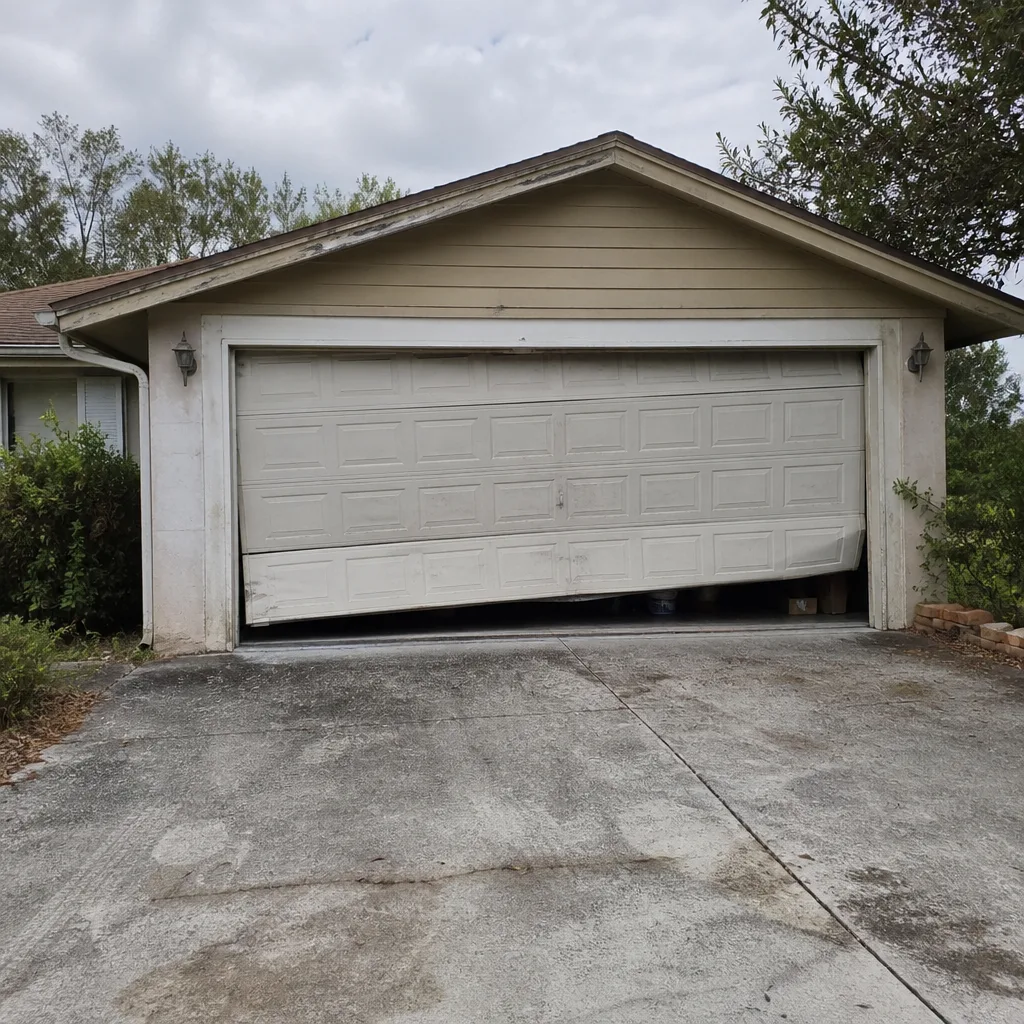 Before
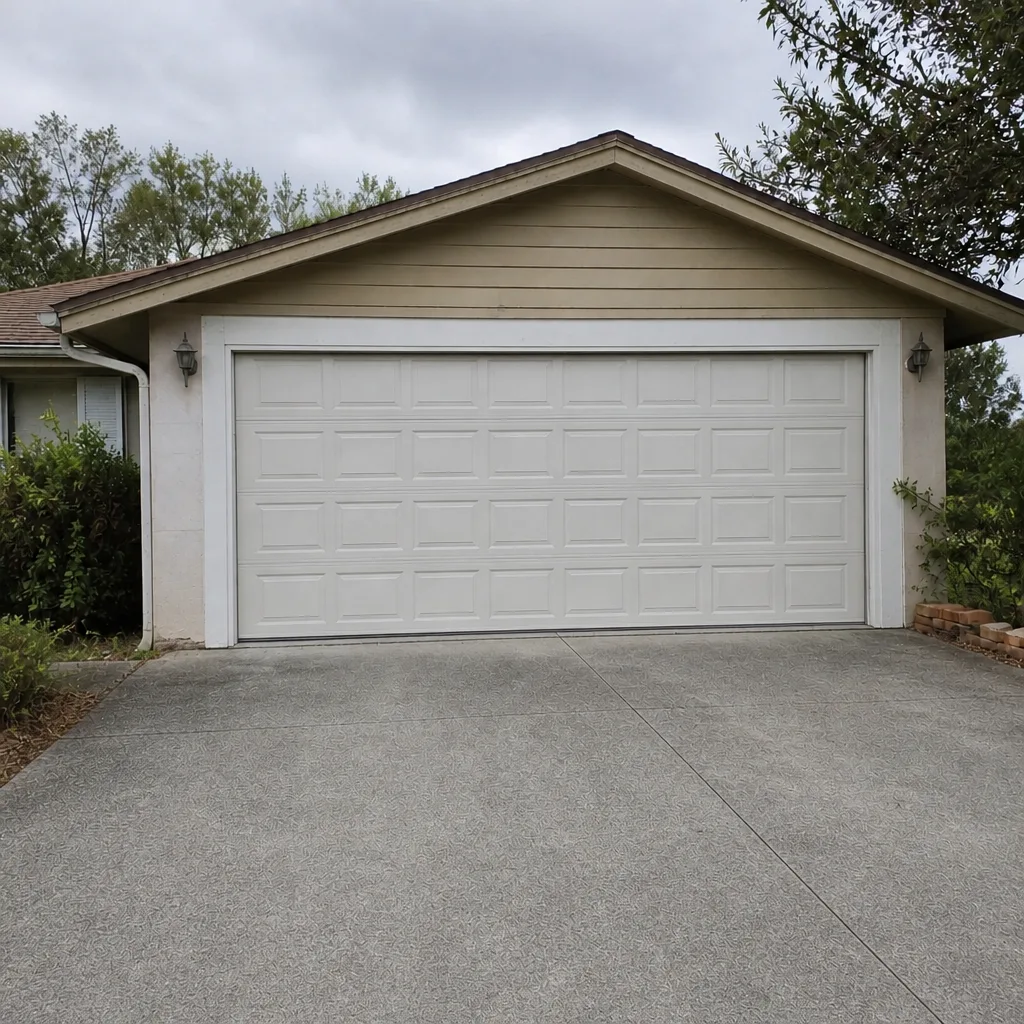 After
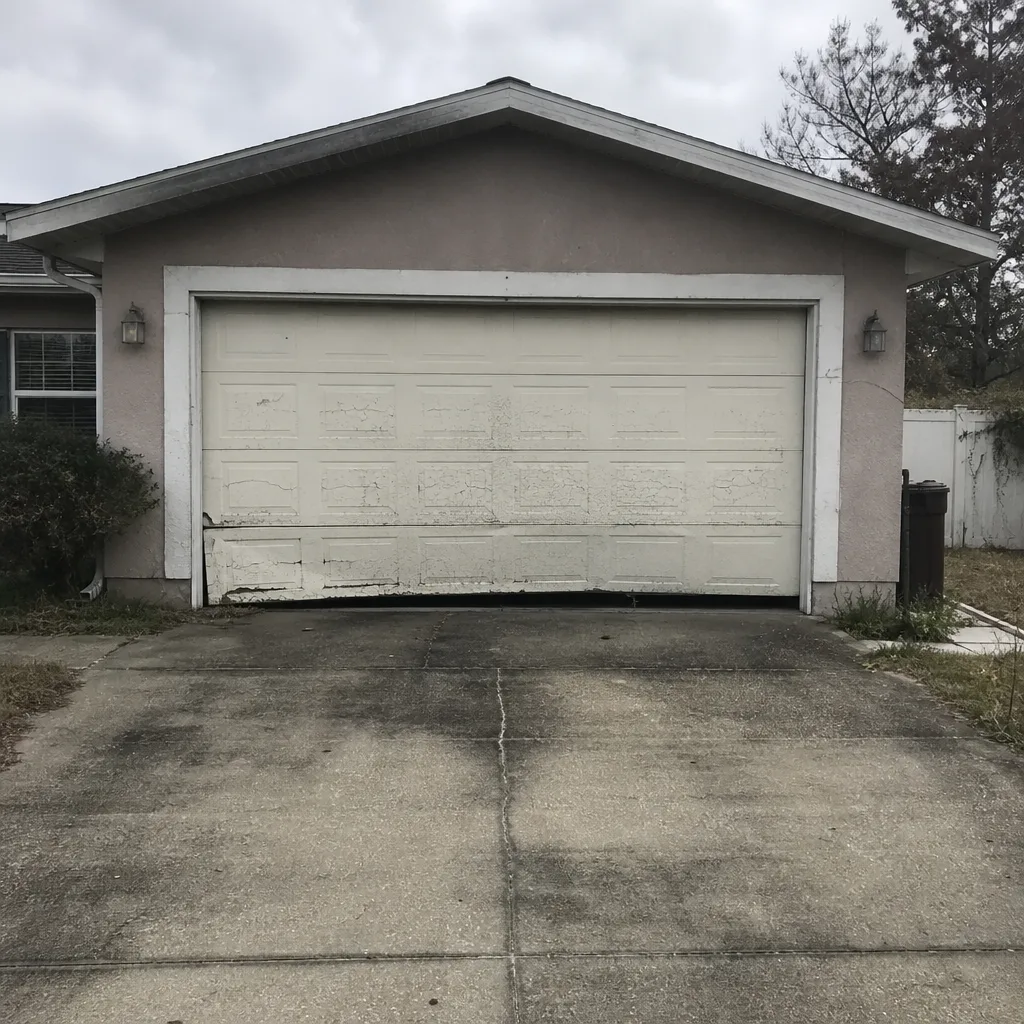 Before
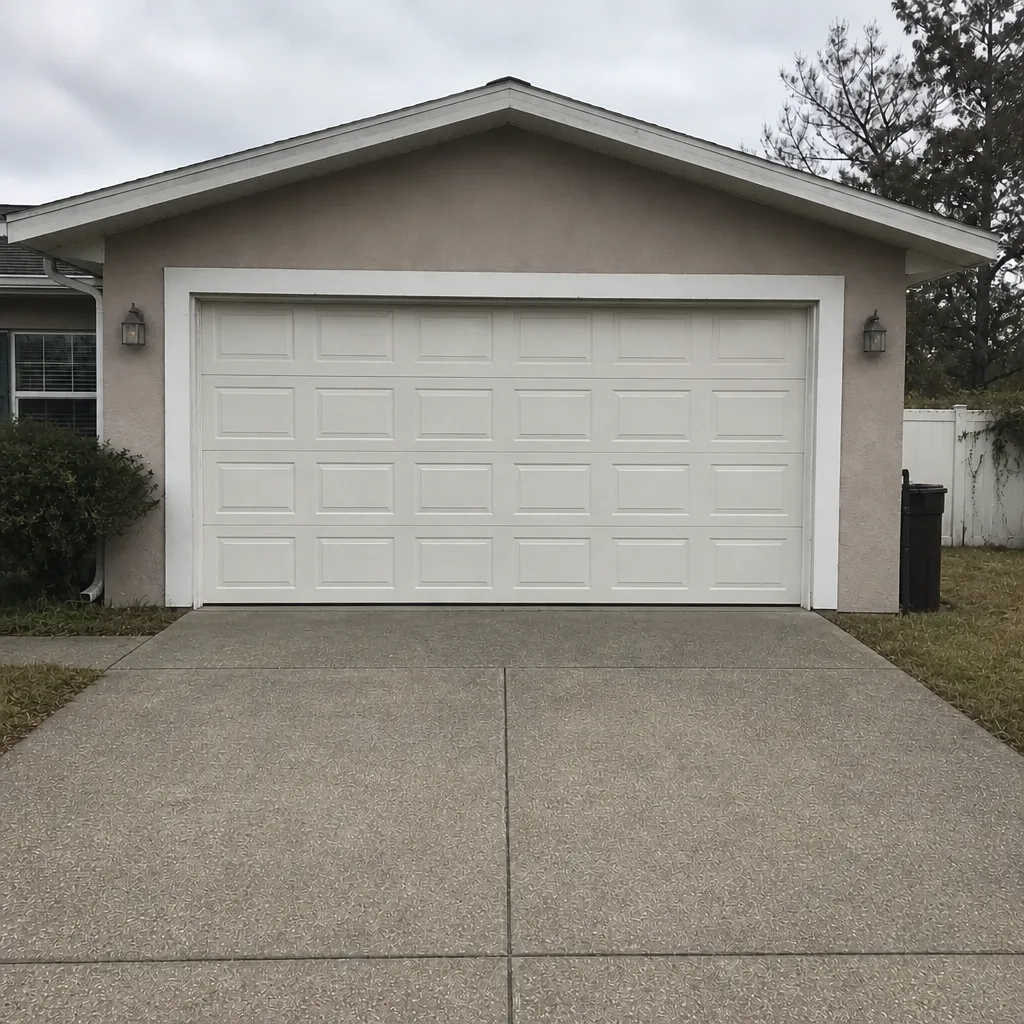 After
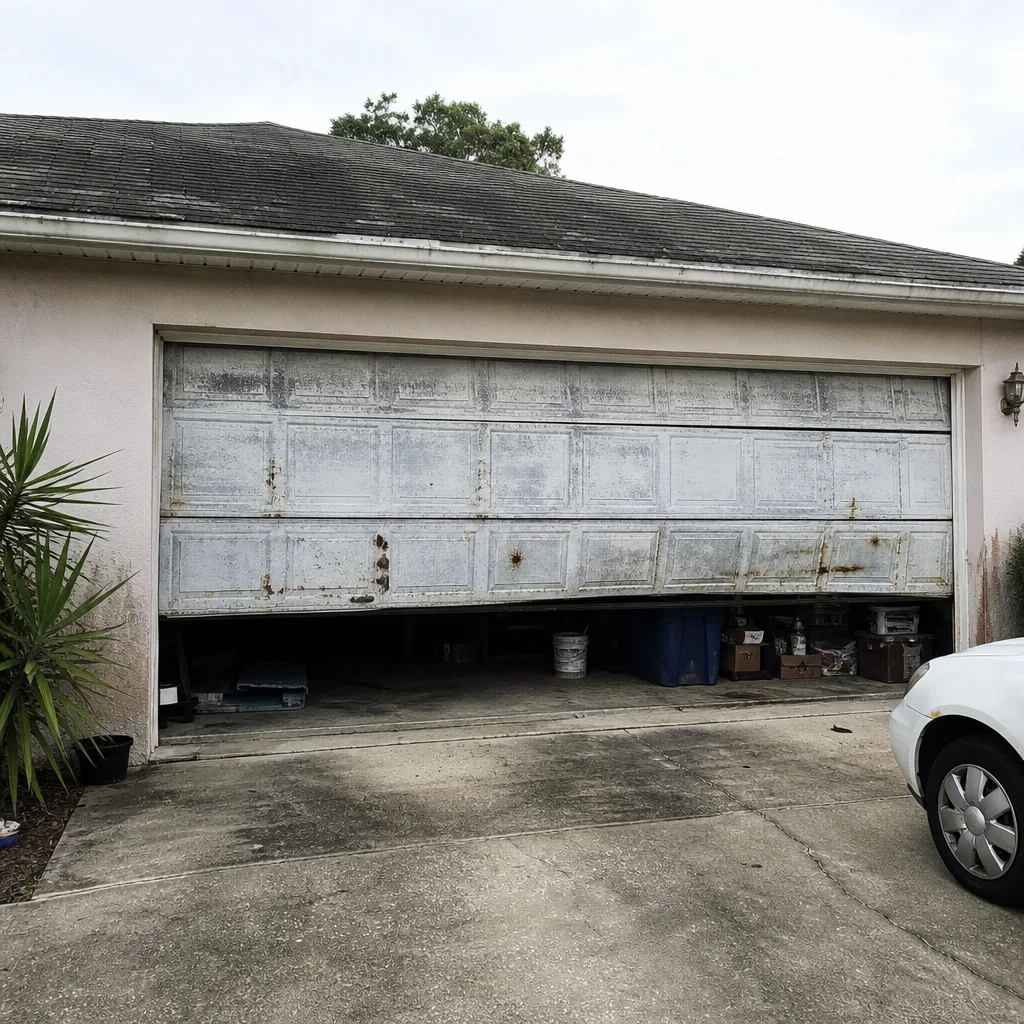 Before
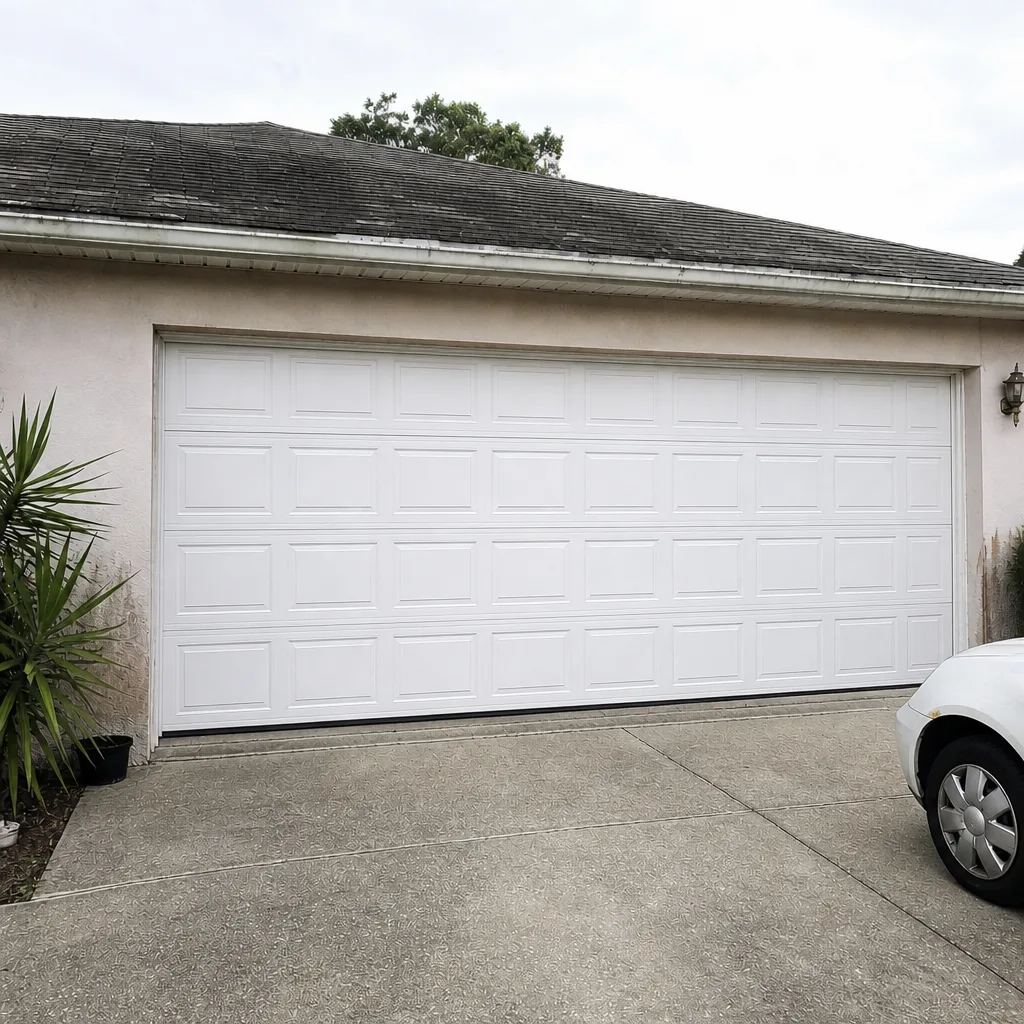 After
When to Call a Professional
Some seasonal tasks are homeowner work: clearing debris, cleaning tracks, checking a seal, taking before-and-after photos. Others are not. Call a professional if the door binds or feels heavy when you operate it by hand, if a spring has broken or the door won’t stay up, if a cable has come off its drum, if a track is bent or visibly out of alignment, if the opener won’t reverse on contact, or if you find micro-bends or drum movement after a storm. Springs and cables are under high tension and shouldn’t be adjusted by anyone without training. If the door won’t move at all, stop operating it. Unity Garage Door Repair offers free estimates in Palm Bay. Call (866) 901-6506. We answer 24/7, with fast dispatch from 7am to 7pm, Sunday through Friday. Prices are quoted and agreed before any work starts, and the written estimate sets the final price.
Frequently Asked Questions
Schedule the main inspection in April or May, before hurricane season opens on June 1, and the recovery tune-up in December through February. Those two windows cover the wet-season test and the dry-season recovery, which matters more here than a generic four-season schedule.
Close the door and leave it closed, clear the tracks and the door’s path, disconnect the opener only if the manufacturer’s instructions call for it, and photograph the door and hardware. Don’t tape or wedge the door. A closed door presents far less surface to wind pressure than an open one.
Look for micro-bends in panels, tracks that have shifted out of plumb, cable winding that doesn’t match on both drums, and hinges with play. Compare the cable winding from a distance only, since cables are under high tension. If the door now needs more opener force than before the storm, that’s a sign something in its balance changed.
No. Springs are under extreme tension and a mistake can cause serious injury. The off-season is the right time to book the job, because the calendar is open and the springs can be measured, ordered to match your door, and installed without pressure. A single spring price covers one spring; a matched pair costs about twice that.
It depends on the job. A tune-up, a spring replacement, and an opener repair are priced differently, and the written estimate sets the final price. We quote and agree on the price before any work starts, so you’re never looking at an invoice that doesn’t match the number you were given. Call (866) 901-6506 for an exact quote. Estimates are free.
We work on equipment from eight major manufacturers, including LiftMaster, Chamberlain, Genie, Clopay, Amarr, Wayne Dalton, Craftsman, and Raynor. That means we diagnose your specific model faster and source the right parts the first time, whether the job is a repair or a full replacement.
Whatever the season, the goal is the same: know what your door needs before it tells you. Explore more about our Palm Bay service area, and if you’re not sure where your door stands after a storm season, call and we’ll take a look.
The Bottom Line
Palm Bay’s garage doors don’t live through four seasons. They live through a wet season that tests them and a dry season that helps them recover, with a short transition between. The maintenance window that matters most is the one between June 1 and the first named storm, and the one most homeowners skip is the dry-season recovery from December through February. Run the pre-season checklist, pay attention during the season, correct what the storm moved in the dry months, and book planned work in winter when the calendar is open. That schedule will do more for your door than any generic seasonal checklist.
Unity Garage Door Repair handles repair, opener repair, and installation under one company, with technicians who have up to 14 years of experience on the eight major brands. Call (866) 901-6506 for a free estimate. We answer 24/7. Fast dispatch from 7am to 7pm, Sunday through Friday.
Written by the team at Unity Garage Door Repair.