
Last updated November 15, 2026
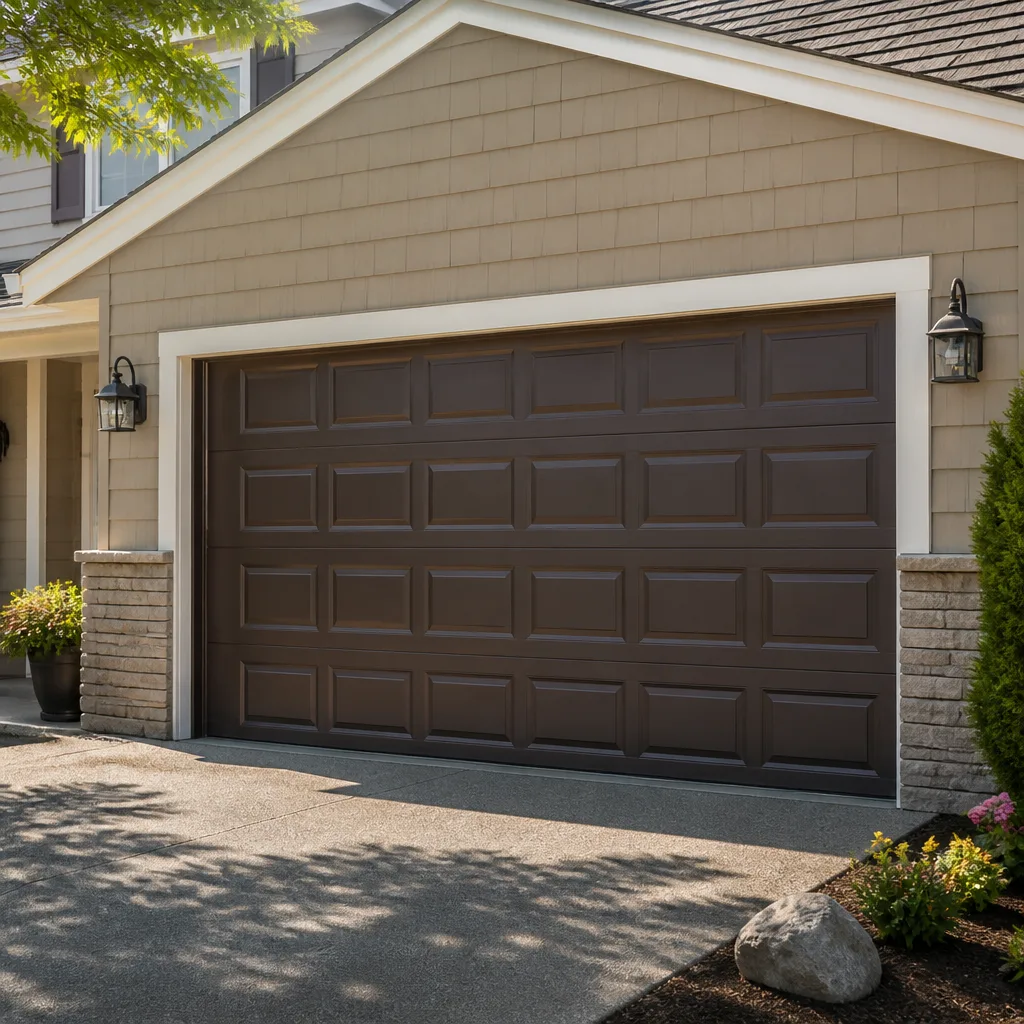 Raised-panel steel
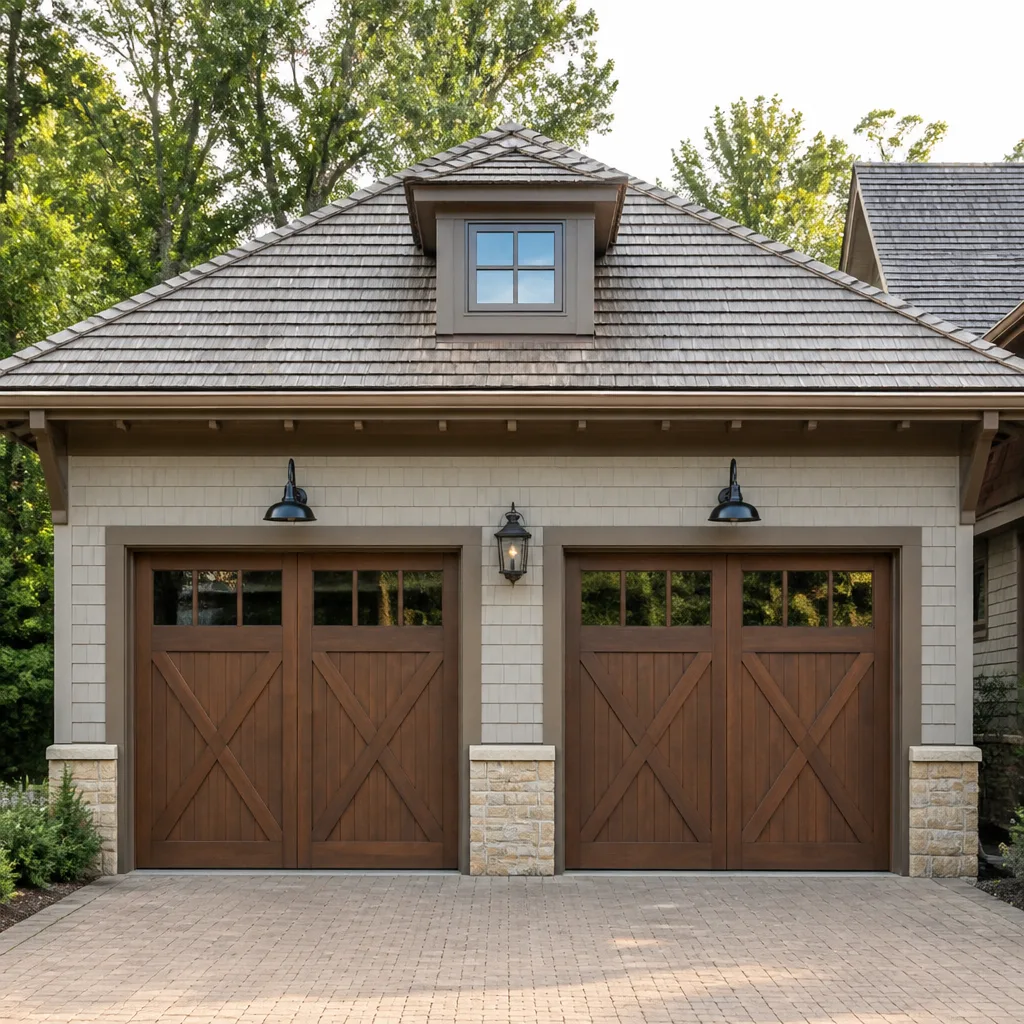 Carriage house
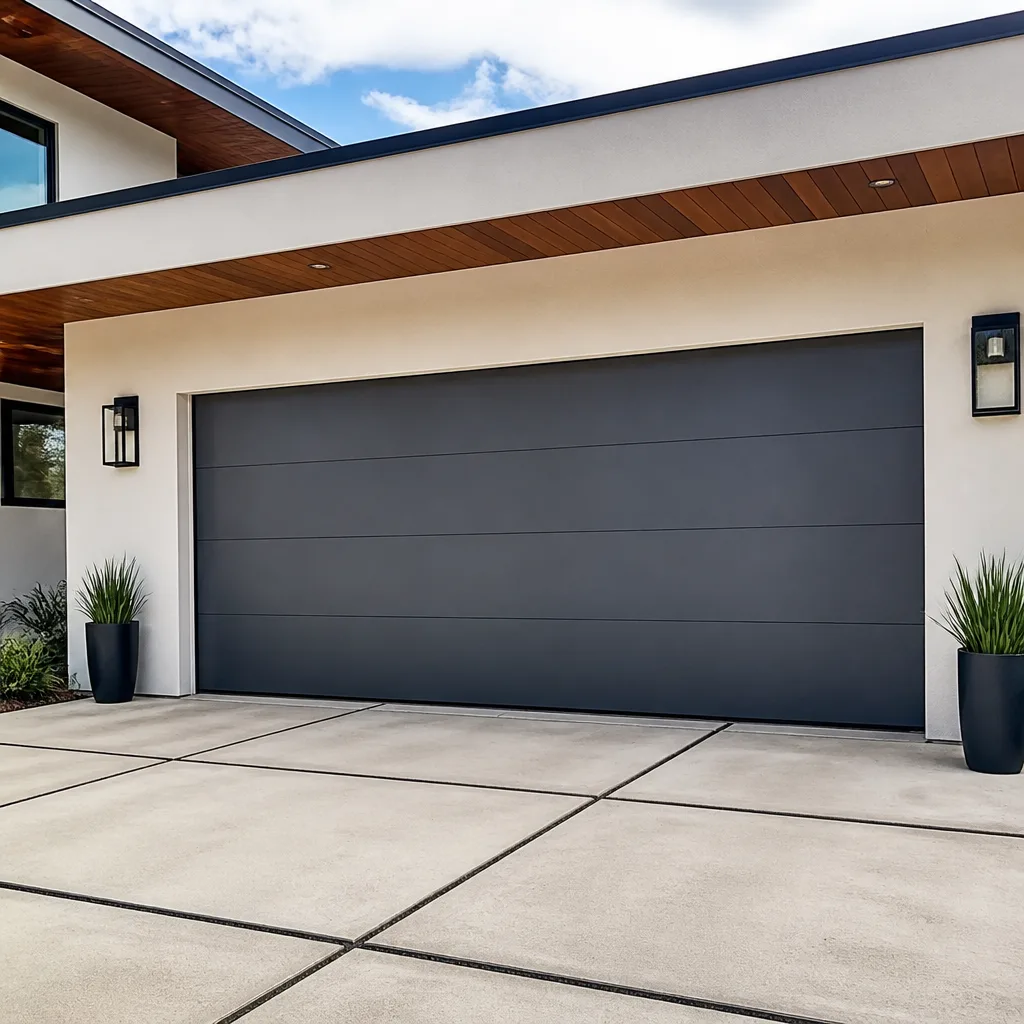 Modern flush
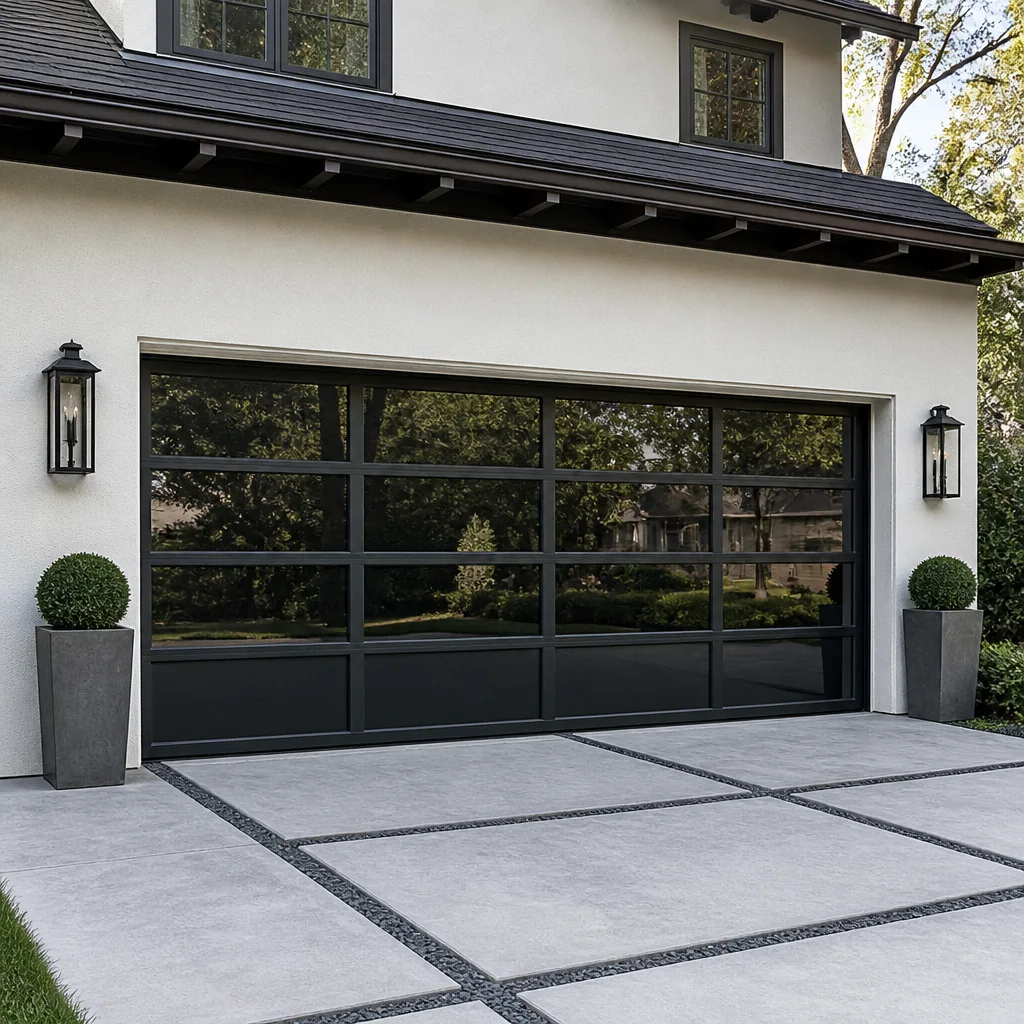 Full-view glass
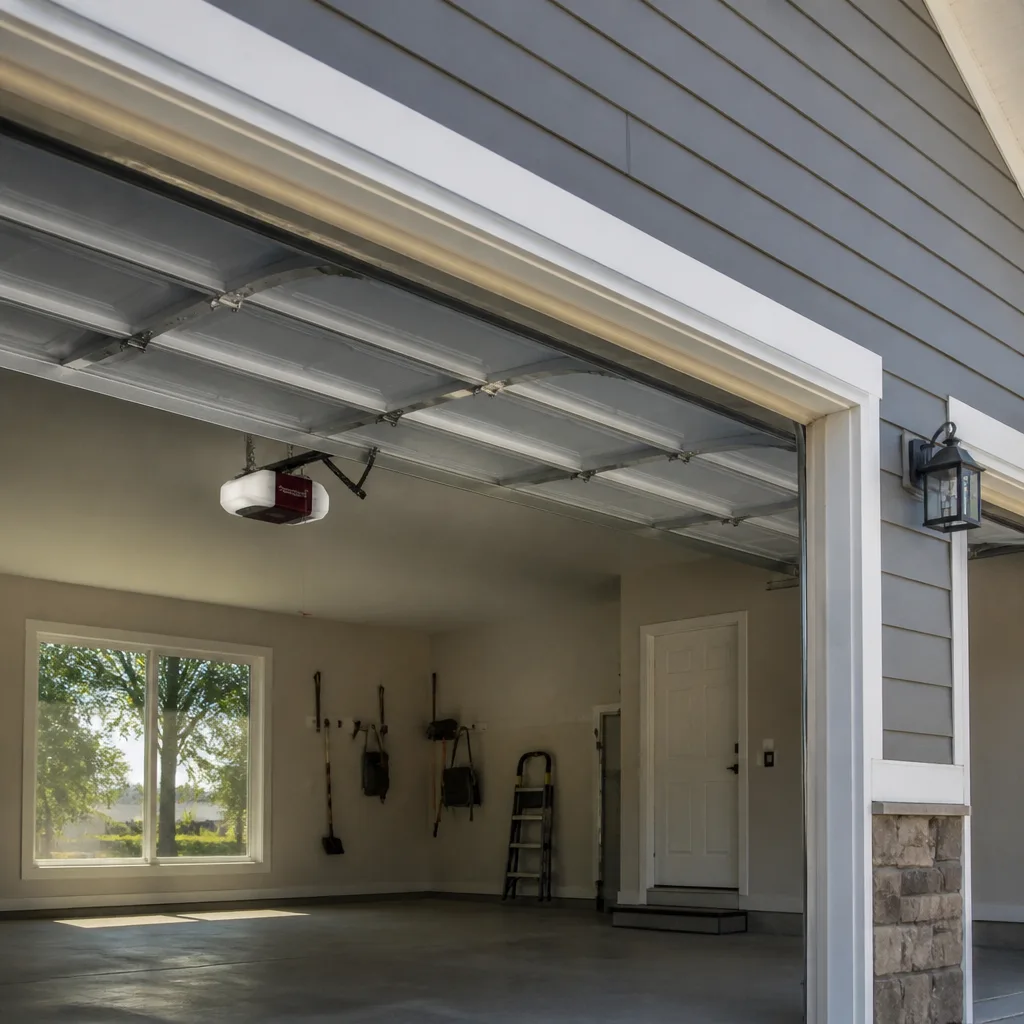 LiftMaster openers
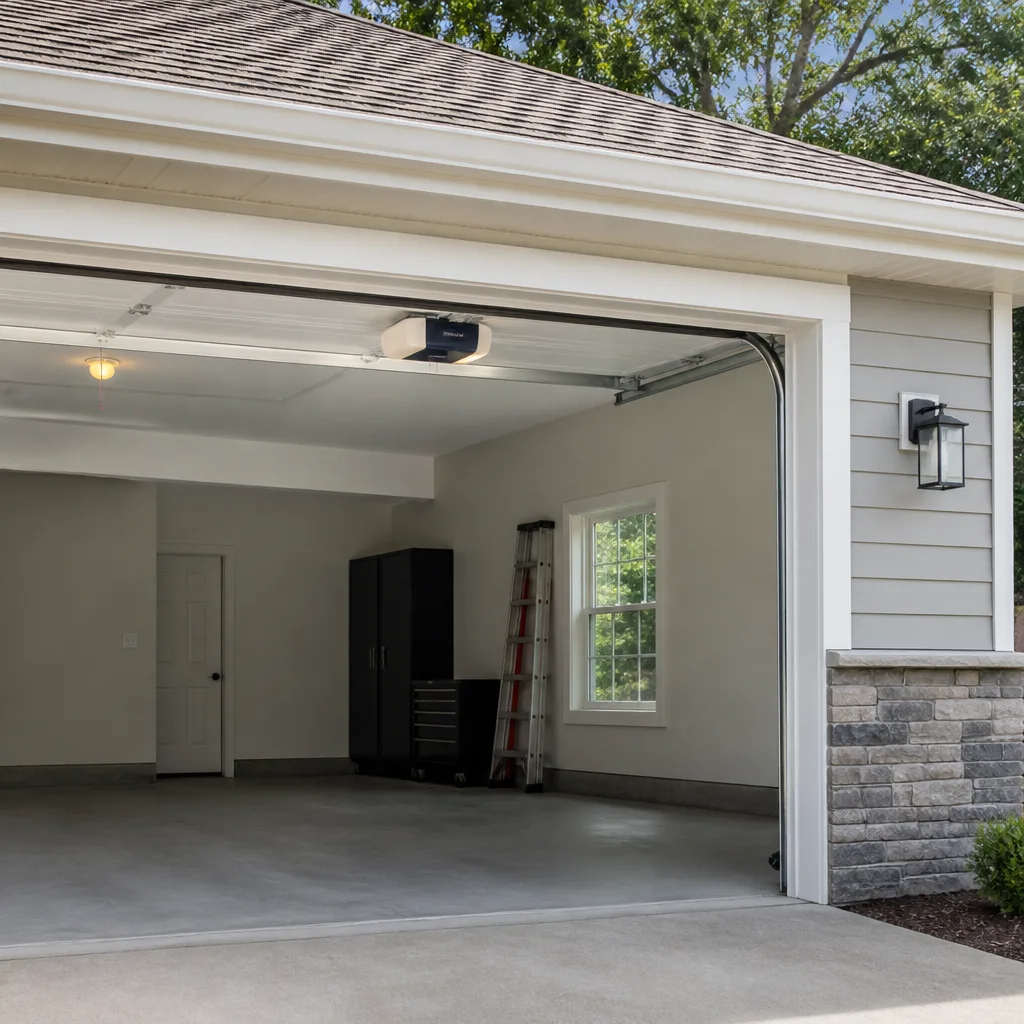 Chamberlain openers
Full 25-point door and opener safety check with every visit - springs, cables, rollers, tracks, and your LiftMaster or Chamberlain opener included
You get a price before we start. It does not change when the pro arrives.
Get your free estimateHow to Hire a Garage Door Contractor in Palm Bay: A Step-by-Step Guide
Most Palm Bay homeowners think they’re comparing prices. They aren’t. They’re comparing credentials they can’t read. Florida doesn’t issue a standalone “garage door contractor” license, so the license type a contractor holds matters far more than the number they put on the invoice. A bid can look identical on paper and come from a licensed specialty contractor or from someone who isn’t legally allowed to touch the work. This guide shows you how to tell them apart before you sign anything: the license classifications that cover garage door work, how to verify them in the state database, when a permit is required in Palm Bay, and the questions that separate a professional from a price tag.
Quick Answer
To hire a garage door contractor in Palm Bay, verify the contractor’s Florida license in the DBPR database, confirm insurance, ask who pulls the permit for installation work, and get a written estimate that specifies the parts, the spring sizing, and haul-away. In Florida, garage door installation and repair are typically covered by a general, building, or specialty contracting license rather than a dedicated “garage door” license, so the license classification is the thing you’re actually checking. A legitimate contractor will answer all of it without hesitation.
Styles & brands we work with
- Raised-panel steel
- Carriage house
- Modern flush
- Full-view glass
- LiftMaster openers
- Chamberlain openers
Table of Contents
- Which Florida license actually covers garage door work?
- How to verify a contractor in the DBPR database
- When a Brevard County permit is required
- Handyman, dealer, or multi-brand specialist?
- The questions to ask before you sign
- Red flags specific to the Palm Bay market
- How to compare two written estimates fairly
- Common mistakes to avoid
Which Florida license actually covers garage door work?
Florida does not have a standalone “garage door contractor” license. That single fact changes how you vet anyone quoting the job. Garage door installation and repair fall under general contracting, building contracting, or certain specialty classifications, depending on the scope and how the local building department classifies the work. Because there’s no dedicated niche license, the “garage door guy” on a business card has no default credential to show. The license is the credential, and you have to know which one to look for.
The classifications that typically cover this work:
- Certified General Contractor (CGC): state-certified, broad scope, can contract for structural and installation work.
- Certified Building Contractor (CBC): also state-certified, covers commercial and residential building work.
- Certified Residential Contractor (CRC): state-certified, limited to residential structures.
- Registered contractors: local-jurisdiction licenses, which are valid but scoped to that area.
- Specialty licenses: some classifications cover door and opening installation more narrowly.
What none of these licenses guarantee is that the contractor has actually done garage door work. A general contractor might legally install a door and still have never measured one for correct spring tension. The license tells you the work is legal; the brand familiarity and diagnosis history tell you it will be right. That’s why a multi-brand specialist is worth a second look: someone who handles garage door repair across Genie, Clopay, Amarr, and Wayne Dalton systems has already seen the failure modes on your specific equipment.
The practical takeaway: ask for the license classification and number up front. Then verify it. If the answer is a name and a number without a classification, ask again.
How to verify a contractor in the DBPR database
Verification takes about five minutes and it’s the single highest-value thing you’ll do in this process. The Florida Department of Business and Professional Regulation (DBPR) maintains a public license lookup at myfloridalicense.com. Every state-certified and state-registered contractor appears there, with current status, classification, and any disciplinary history.
Walk through it in this order:
- Search by the license number, not the company name. Company names change; license numbers don’t. A contractor handing you a number is giving you something checkable.
- Confirm the status reads “Current” or “Active.” A license shown as expired, delinquent, or revoked is a stop sign. Delinquent licenses still allow work in some cases but signal a compliance problem.
- Check the classification. Match the classification to the work you’re hiring for. Installation of a new door is heavier scope than a spring replacement, and the license should reflect that.
- Look at the disciplinary history tab. Any public complaints or actions show up here. One old citation isn’t automatically disqualifying. An active pattern is.
- Cross-check the company name. The license holder and the company on your estimate should match. A license belonging to someone else is not their license.
If a contractor can’t be found in the database by number, one of three things is happening: they’re using a subcontractor’s number, they’re operating without a license, or they made an error. None of those is a good outcome for you. Ask for clarification before moving forward.
While you’re at it, ask for a certificate of insurance. General liability and workers’ compensation are both relevant. A contractor who carries workers’ comp protects you from liability if someone is injured on your property. A contractor who doesn’t may not want to answer that question, which is itself the answer.
When a Brevard County permit is required
New garage door installation in Palm Bay typically requires a building permit through the city’s building department, and the exact requirements depend on the door, the opening, and how the work is classified. Opener replacement can also trigger permit requirements in certain configurations. The honest answer is that permit requirements vary enough that you should ask the city’s building department directly about your specific job rather than relying on what a contractor tells you.
What you should expect from a legitimate contractor on the permitting question:
- They should tell you whether a permit applies to your job without hedging.
- They should state clearly whether they pull the permit or you do.
- They should include the permit cost in the written estimate if they’re pulling it.
- They should give you the permit number or inspection paperwork when the job closes out.
The alternative is a contractor who mutters “you don’t need a permit for that” as a matter of routine. Sometimes they’re right. Sometimes they’re telling you what you want to hear so the price looks lower. You can test them: call the city’s building department, describe the work, and ask whether a permit is needed. If the contractor’s answer and the city’s answer diverge, you have your verdict.
The permit matters beyond legal compliance. It creates an inspection trail. If a door is installed without a permit and later fails, or an opener is replaced without documentation and the home changes hands, you may end up proving something you never chose to leave undocumented. Ask the question before the work starts. In Palm Bay, the building department is the source of truth, not the contractor.
Handyman, dealer, or multi-brand specialist?
Three categories of people will quote your job, and they can’t all legally do the same work. Knowing which one you’re talking to tells you what to expect before the estimate even lands.
The handyman. Handymen are usually limited to small repairs and cosmetic work below a certain dollar threshold. Spring replacement, torsion cable work, and full door installation typically fall outside that scope. A handyman can hang a shelf, but the load of a garage door – the torsion on a spring under tension, the weight of the door, the structural connection at the opening – is a different category of task. Hiring one for this work is not just a compliance issue; it’s a safety issue.
The single-brand dealer. A dealer sells one manufacturer’s product and typically services that product. Their quotes may look attractive because they have inventory to move. The limitation shows up when your door isn’t that brand, or when the real problem is an opener from a different manufacturer. They may decline the job, or quote a full replacement when a repair would do. They’re not necessarily bad; they’re structurally limited.
The multi-brand specialist. A contractor service that handles multiple manufacturers can diagnose what’s actually wrong first, then recommend the fix that fits your door, your budget, and your use. That’s the model at Unity Garage Door Repair. We work on LiftMaster, Chamberlain, Genie, Clopay, Amarr, Wayne Dalton, Craftsman, and Raynor equipment, and because we aren’t tied to any one brand, the recommendation is what fits the door – not what needs to move from inventory. That brand-agnostic posture is a check on honesty, not just a marketing point.
Opener work occupies its own category here. It’s electrical, mechanical, and increasingly smart-home connectivity, all at once. A specialist who treats garage door opener repair as a separate skill set will diagnose the actual failure – the board, the logic, the motor, the sensor, or the connectivity – instead of swapping parts and hoping.
The questions to ask before you sign
The estimate is where the real vetting happens. Anybody can say the right things on the phone. The written quote shows whether they’ve actually thought about your door.
Ask these six questions before you sign anything:
- Who supplies the parts? “We use whatever the warehouse has” is a warning. You want a specific answer: which brand, which model, and whether the part is being supplied by the contractor or by you. Parts from the wrong source fall outside warranty.
- Is the spring system sized for the door weight? Springs aren’t universal. They’re calculated against the weight of the door, the height of the opening, and the cycle life you want. A contractor who can’t tell you the spring size they’re installing hasn’t measured your door properly.
- Does the quote include haul-away? Old doors and old springs have to leave your property. If haul-away isn’t in the quote, it shows up later, usually at a premium.
- Does the quote specify the labor and the parts as separate line items? A single lump-sum number is a quote you can’t compare to anything else. Line items let you see what you’re actually paying for.
- What happens if the job takes longer or costs more? The answer should be: nothing. The price is what the written estimate says. Ask them to put that in writing before work starts.
- What’s the brand and model of the opener or door being installed? If they can’t name it, you’ve been quoted a category, not a product.
We diagnose before we quote, and the questions above are how you check that the person in front of you does the same. If they answer well, you’ve found a contractor worth hiring. If they deflect, you’ve saved yourself a return visit.
Red flags specific to the Palm Bay market
The Palm Bay garage door market has its own patterns. Not all of them show up in other cities. Here are the ones worth watching for.
Quotes without a site visit. Palm Bay homes vary widely in door size, opening configuration, header condition, and track alignment, and none of that can be assessed by phone. A contractor who quotes a full installation sight-unseen is guessing, or is planning to adjust the price when they arrive. A legitimate contractor measures first. Free estimates are the standard, and “free” should still mean “on site.”
“Wind-rated” claims without documentation. Palm Bay falls within a region where wind-rated products come up often in conversation. What matters legally and practically is documentation – the manufacturer’s rating sheet, the product approval number, and confirmation the installed product matches what’s on the permit. If a contractor uses “wind-rated” as a sales phrase without offering the paperwork, ask for it before you sign. A verbal claim about wind ratings is not a compliance claim.
Openers sold without brand-matched accessories. This is a real and specific problem. A Genie opener sold with a generic remote may or may not pair correctly. A smart-home-enabled opener sold without the right module means the smart feature was sold but not delivered. Ask what accessories are included, and confirm they’re matched to the opener’s brand and model. If you’re being quoted an opener, you’re being quoted a system, not a box.
Quotes that list “garage door work” with no scope. A written estimate that doesn’t distinguish repair from replacement, spring from opener, and labor from parts is not an estimate. It’s a placeholder.
Refusal to give a license classification. Already covered above, but it bears repeating because it’s the most common failure in this market. A name and a number without a classification is not a credential.
Pressure to sign on the first visit. A written estimate is free and there’s no reason to pressure you into signing before you’ve had time to compare. If a contractor won’t leave the quote with you, that’s a red flag, not urgency.
How to compare two written estimates fairly
Comparing garage door estimates by total price alone is how homeowners end up paying more for less. Two quotes can differ by a few hundred dollars and represent completely different work.
Line up the two quotes against the same four buckets:
- Scope: repair vs. replace, spring vs. opener, one door vs. two. A like-for-like comparison starts here.
- Parts specification: brand, model, spring size (if applicable), and accessories. Generic “door” or “spring” line items tell you nothing.
- Labor and permit: separated, with a permit cost stated if it applies. A quote without the permit line is incomplete if a permit is required.
- Haul-away and cleanup: stated or not. Add it to the cheaper quote before comparing if it’s missing.
Then ask each contractor to clarify anything still vague. A quote that clarifies cleanly is a contractor worth considering. A quote that defends vagueness is not. Estimates are free, and comparing two or three written estimates from licensed contractors is the right amount of diligence.
Common Mistakes to Avoid
- Hiring based on the lowest bid without verifying the license. The lowest bid is often the one that skipped the permit, skipped the measurement, or skipped the insurance. Verify first, then compare price.
- Accepting a verbal “wind-rated” claim. Ask for the product approval documentation and confirm it matches what’s being installed. A phrase is not a spec.
- Skipping the permit to save money. Palm Bay permits exist for a reason. The cost of a permit is small next to the cost of an unpermitted installation you later have to document.
- Assuming “garage door license” exists in Florida. There is no standalone license; the classification is the thing to check.
- Letting a handyman touch torsion springs or cables. This is high-tension equipment. No amount of confidence substitutes for training, and injuries from released torsion are severe.
- Not asking who supplies the parts. Parts sourced from unclear suppliers put your warranty at risk and complicate future repairs.
- Comparing quotes without checking haul-away and permit lines. What’s missing from a quote is sometimes more informative than what’s in it.
When to Call a Professional
Some garage door problems are worth calling on right away. A broken torsion spring, a snapped cable, a door that’s come off one track, a door that drops when it shouldn’t, or an opener that moves the door erratically all warrant a professional visit. The spring and cable systems on any garage door store enough tension to cause serious injury, and diagnosing them is a trained-technician job. Door off-track is also a two-person-plus job with real injury risk. Opener issues that look electrical – a motor that hums and stops, a board that beeps and does nothing, remotes that stopped pairing after a manufacturer update – fall into the same category. A Palm Bay door that’s been sitting in the heat and humidity for years and suddenly stops lifting halfway needs a proper diagnosis, not a guess.
Unity Garage Door Repair offers free estimates in Palm Bay – call (866) 901-6506. We answer 24/7. Fast dispatch from 7am to 7pm, Sunday through Friday. Our technicians have up to 14 years of experience, we diagnose before we quote, and the written estimate is the price before any work starts.
See the difference
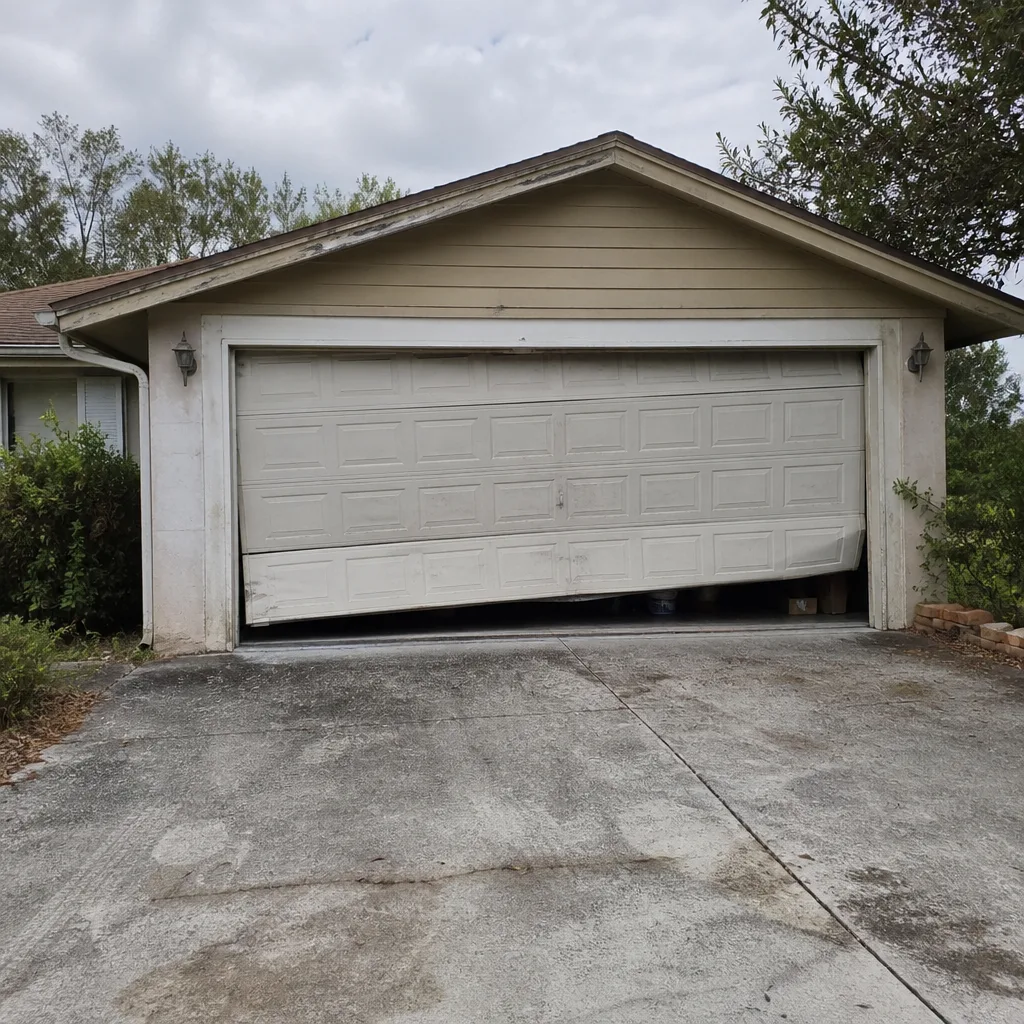 Before
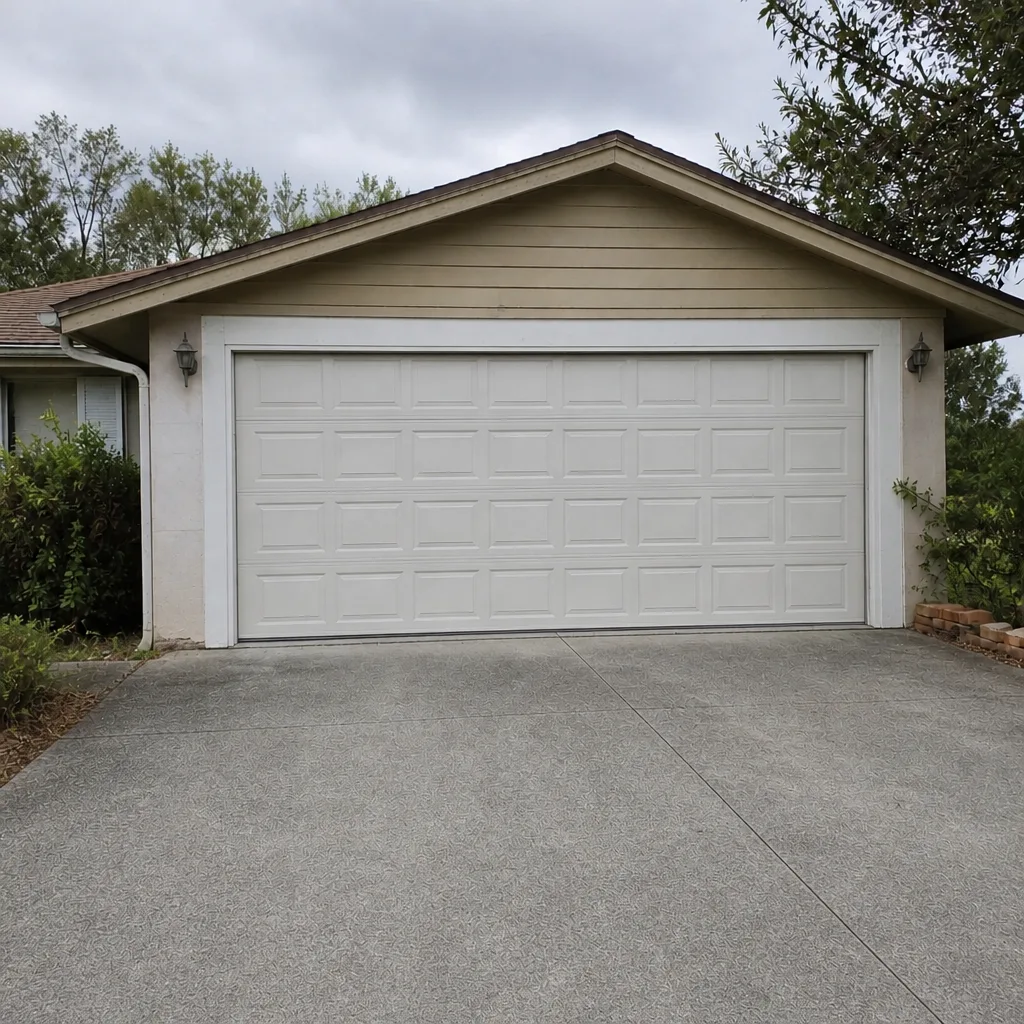 After
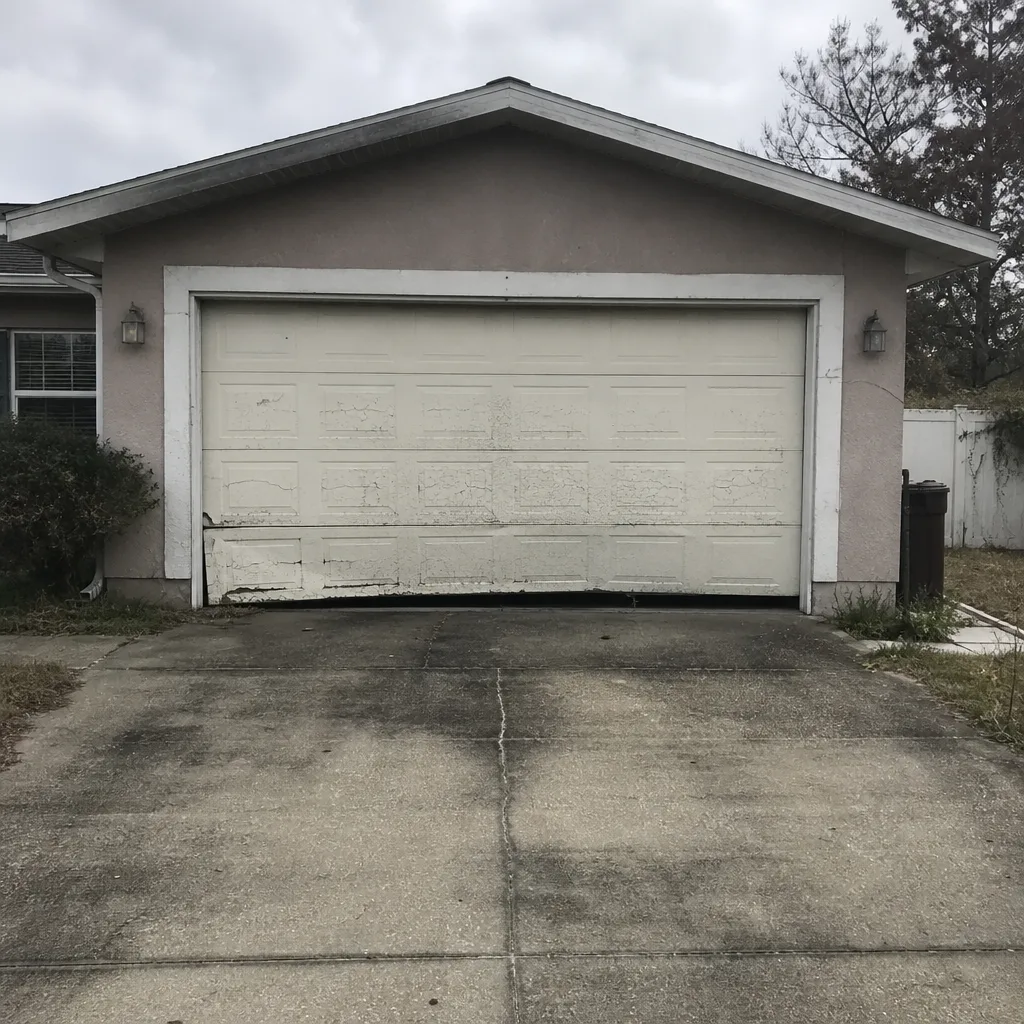 Before
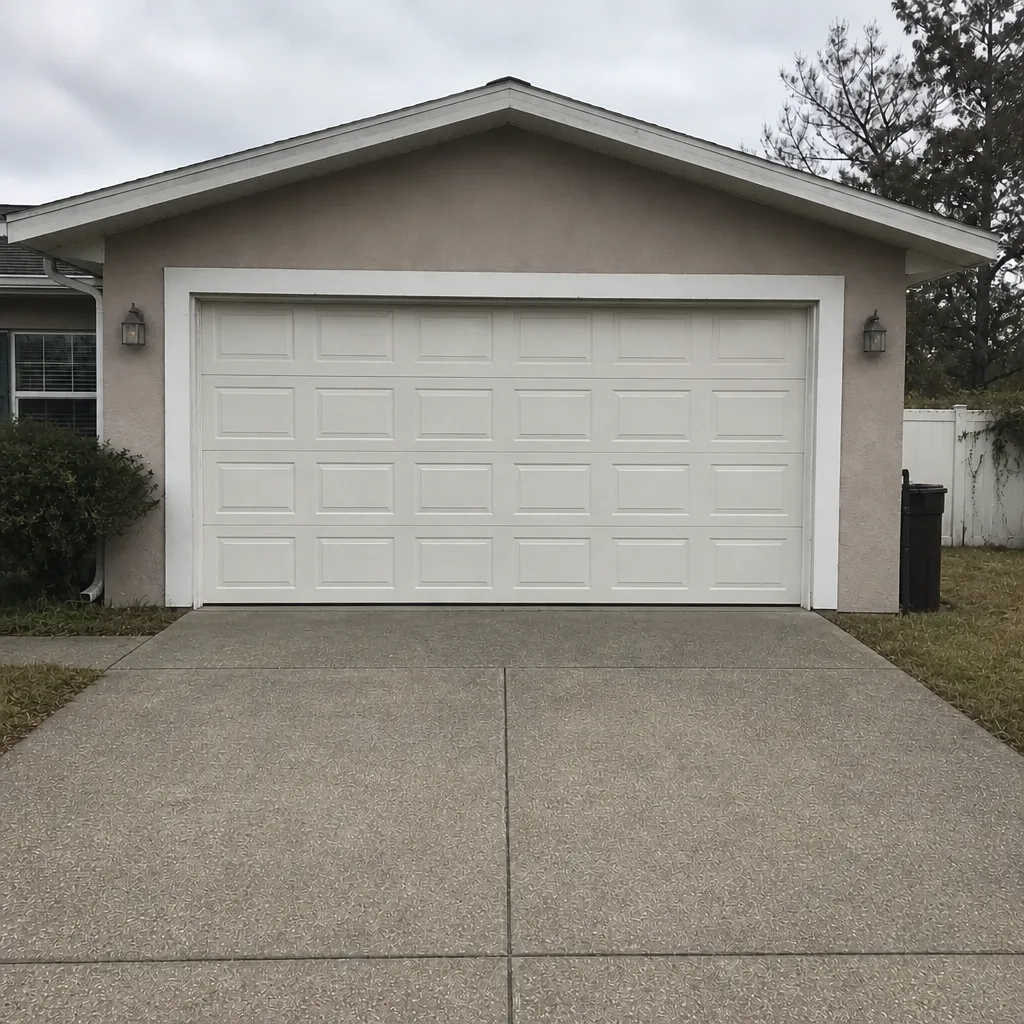 After
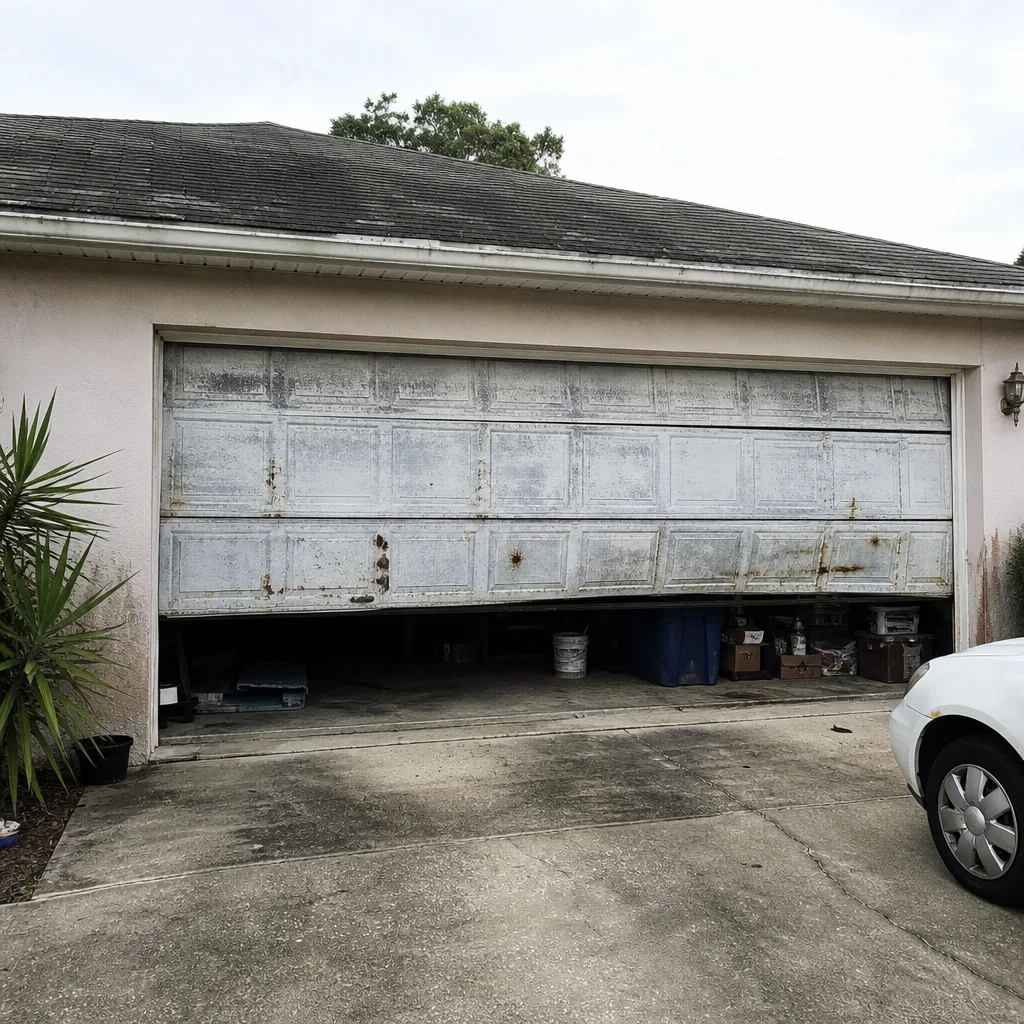 Before
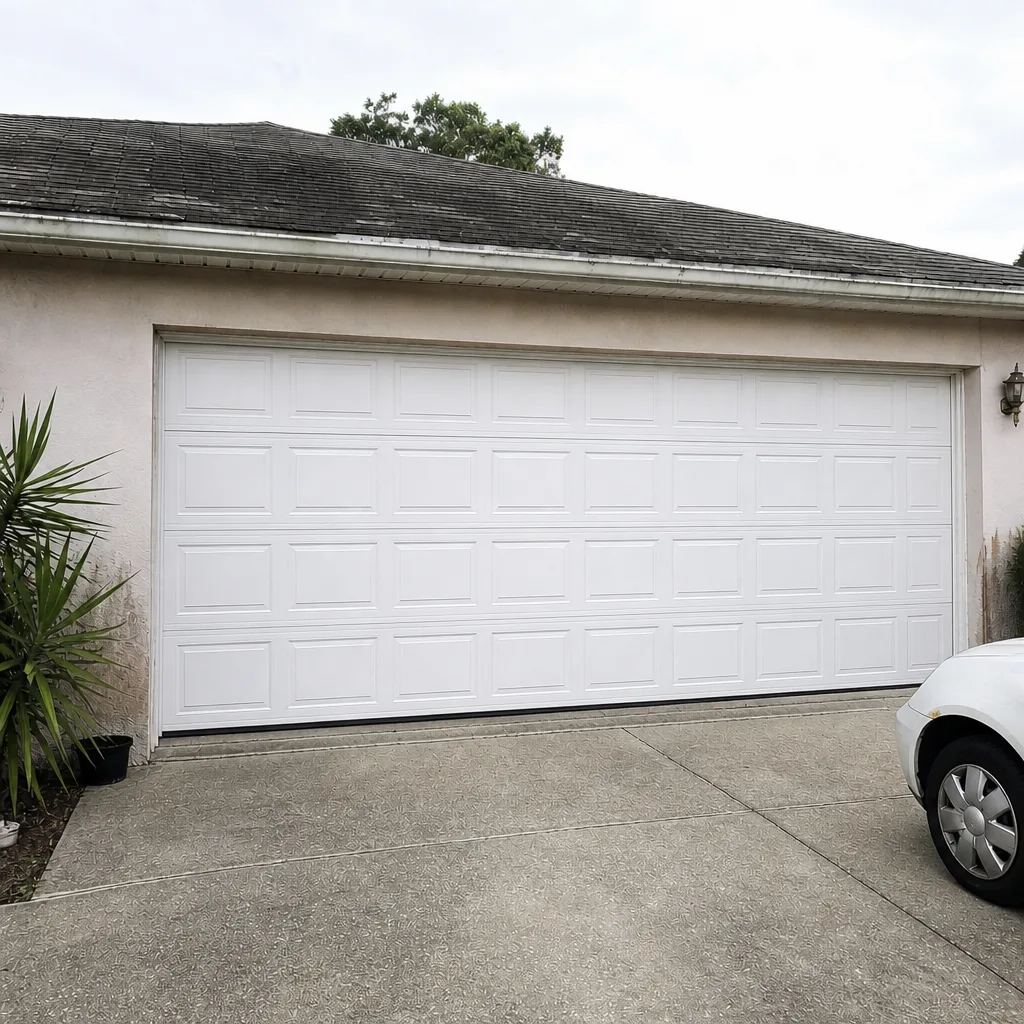 After
Frequently Asked Questions
Look up their license number at myfloridalicense.com, confirm the status shows as current, check the classification, and review the disciplinary history tab. Florida has no standalone garage door license, so the classification is the specific thing to match to the work. If the contractor can’t produce a number, you don’t have a verifiable contractor.
New garage door installation in Palm Bay typically requires a building permit through the city’s building department, and opener replacement can also trigger permit requirements depending on configuration. Permit rules vary enough that you should confirm the specific requirement for your job directly with the city’s building department. Ask the contractor whether they pull the permit and whether the cost is in the written estimate.
A handyman is typically limited to small repairs and may not legally be able to perform installation or high-tension spring work. A single-brand dealer sells and services one manufacturer’s product, which limits diagnosis on other brands. A multi-brand specialist works across multiple manufacturers, which means the recommendation fits your door rather than one brand’s inventory. The legal scope and the diagnosis capability are the two differences that matter.
Cost depends on the specific failure, the part, and the door configuration, which is why estimates are per job and set in writing before work starts. We’re not going to give you a number over the phone for a job we haven’t seen – that’s how prices drift after the fact. Call (866) 901-6506 for a free estimate. We answer 24/7 and dispatch from 7am to 7pm, Sunday through Friday.
Same-day repair is often possible for common failures like springs, cables, and opener faults. Call (866) 901-6506 early in the day to give the dispatch the best chance of fitting you in. Installation and replacement work are measured and scheduled rather than same-day – those jobs need a measurement, a written estimate, and a scheduled install.
The company is state-licensed and carries insurance, and the specific license classification and certificate of insurance are available on request. Ask for them before you sign the estimate. You can verify the license number independently through the DBPR database. Call (866) 901-6506 for details on the current license and coverage.
The Bottom Line
Hiring a garage door contractor in Palm Bay is mostly a credential-checking exercise dressed up as a price comparison. There’s no standalone “garage door contractor” license in Florida, so the classification and the status in the DBPR database do more of the work than the total on the estimate. Verify the license. Confirm insurance. Ask who pulls the permit. Ask for a written quote that specifies parts, spring sizing, labor, permit, and haul-away. Compare two or three estimates from licensed contractors and treat any vague answer as a no. The cheapest bid isn’t a bad bid because it’s cheap; it’s a bad bid because the contractor may not be legally allowed to perform the work you’re paying for.
Contact
Unity Garage Door Repair works on LiftMaster, Chamberlain, Genie, Clopay, Amarr, Wayne Dalton, Craftsman, and Raynor equipment. We diagnose before we quote, and we handle repair, opener repair, and installation under one company so you’re not managing a chain of referrals. If you’re comparing estimates in Palm Bay, call (866) 901-6506 for a free estimate. We answer 24/7. Fast dispatch from 7am to 7pm, Sunday through Friday. The written estimate is the price before any work starts, and we’ll answer the license and insurance questions up front.
Written by the team at Unity Garage Door Repair.