
Last updated November 15, 2026
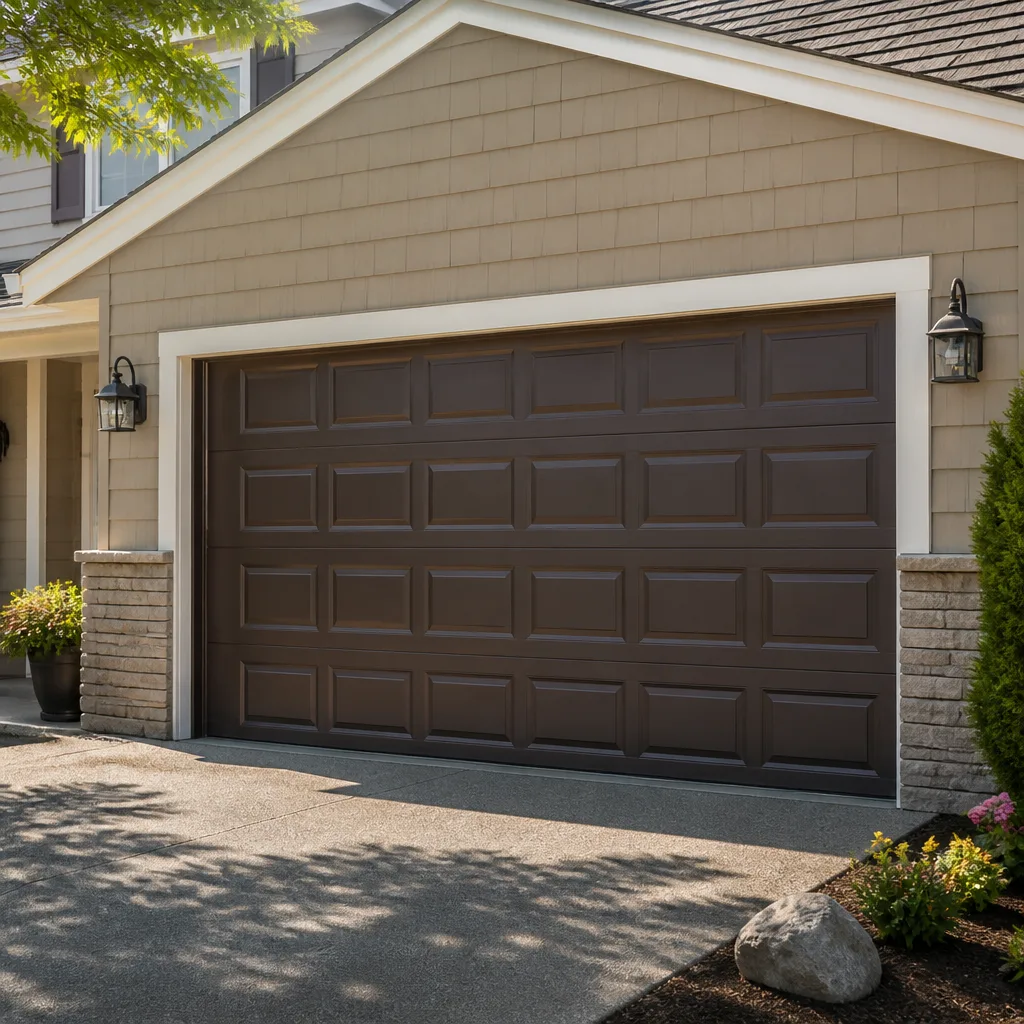 Raised-panel steel
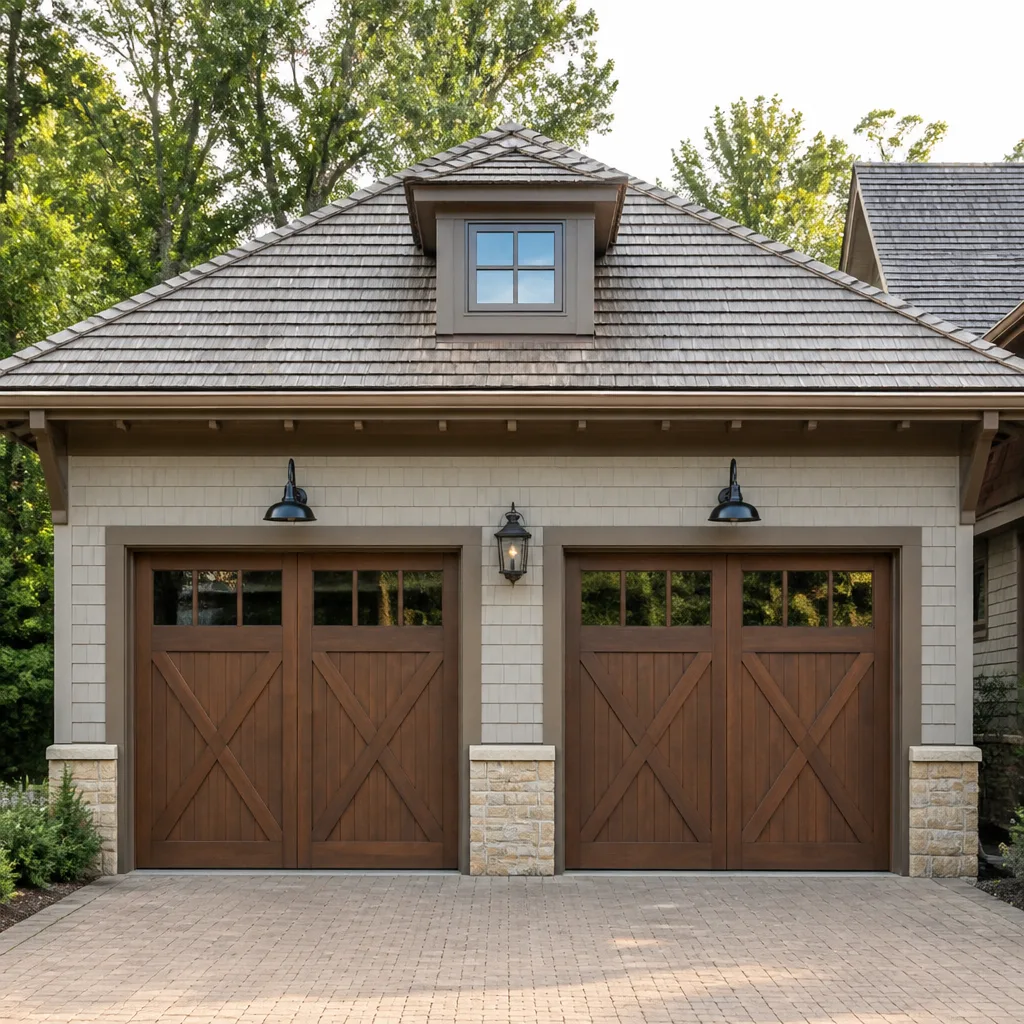 Carriage house
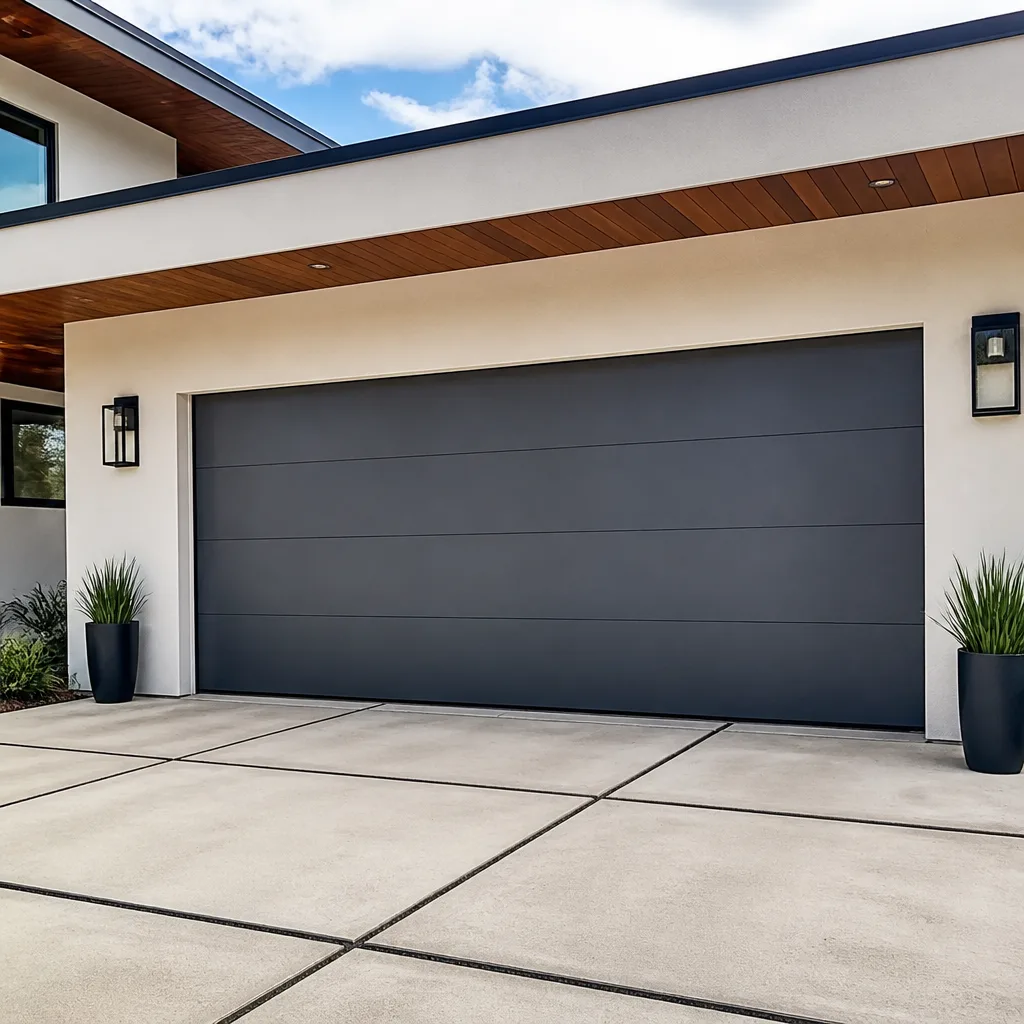 Modern flush
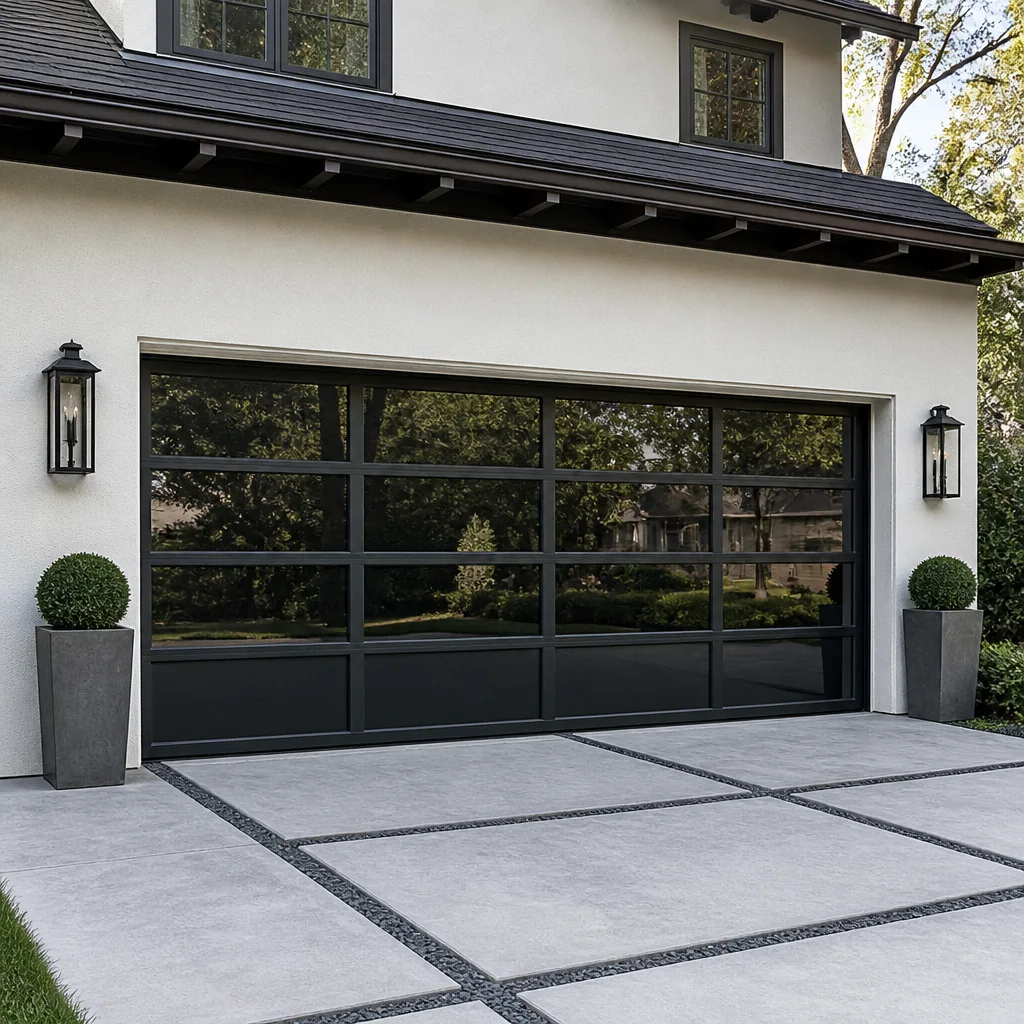 Full-view glass
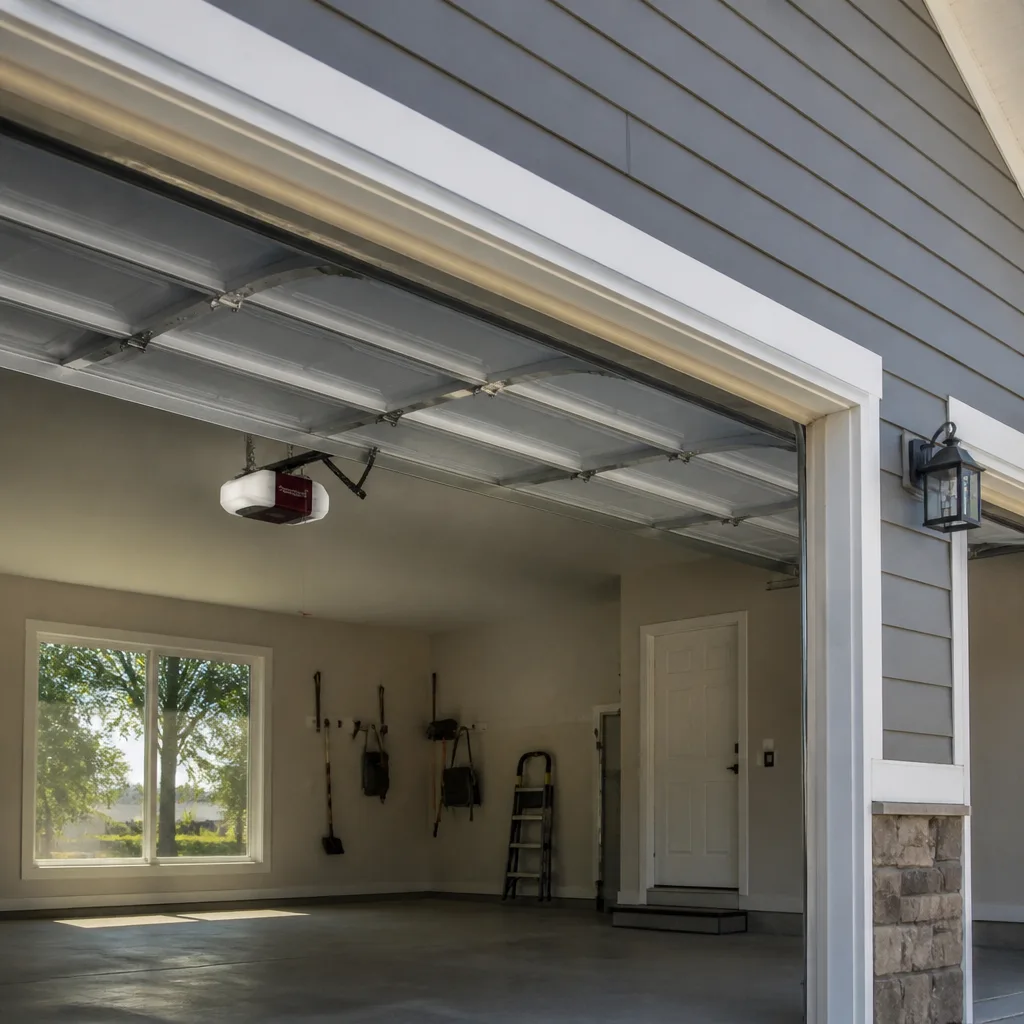 LiftMaster openers
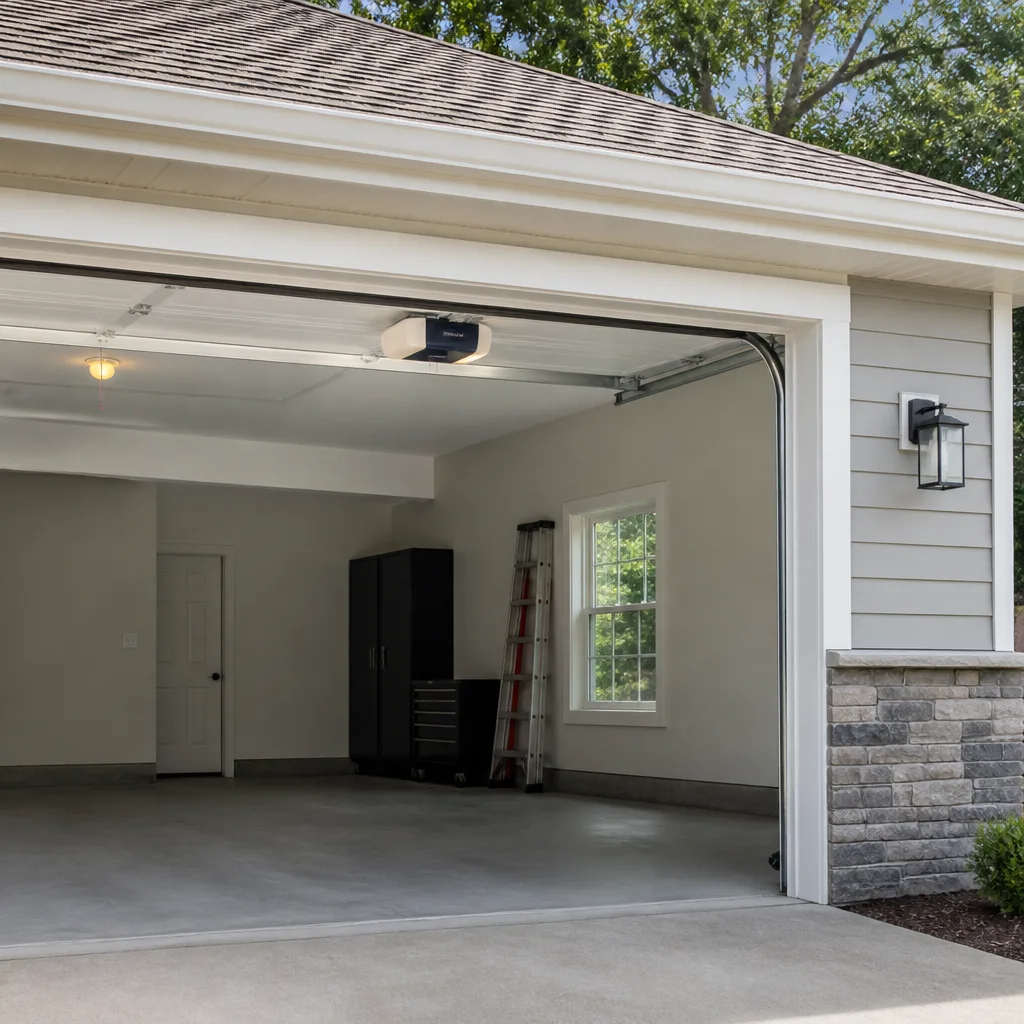 Chamberlain openers
Full 25-point door and opener safety check with every visit - springs, cables, rollers, tracks, and your LiftMaster or Chamberlain opener included
You get a price before we start. It does not change when the pro arrives.
Get your free estimateGarage Door Warning Signs: A Palm Bay Homeowner’s Reference Guide
Most warning sign guides tell you what you already know: the door won’t open, it’s loud, something looks broken. By the time those symptoms show up, the failure has already happened. The signs that save homeowners money and stress are the quiet, early-stage ones that appear weeks before a part actually gives out. A torsion spring, for example, usually shows a visible gap in the coil before it snaps. Almost nobody checks for it, because almost nobody was told to. This guide is written to change that. We’ll walk through the 30-second visual checks, the opener behaviors that point to specific hardware problems, and the warning signs that read differently in Palm Bay’s humid subtropical climate than they do up north.
Quick Answer
A garage door gives warning before it fails, and the warning is almost always visible if you know where to look. A gap in the torsion spring coil, a few frayed cable strands, a roller worn flat instead of round, or a track with bright scoring lines are all early signs that a part is on its way out. Separately, changes in how your opener sounds or moves (slower travel, mid-cycle reversal, grinding) point to specific parts failing, not vague “door problems.” The single most useful habit is a 30-second standing inspection from the side of the door every month or so. If anything on this list shows up, stop using the door and get it looked at. Call (866) 901-6506 to book a free estimate in Palm Bay.
Styles & brands we work with
- Raised-panel steel
- Carriage house
- Modern flush
- Full-view glass
- LiftMaster openers
- Chamberlain openers
Table of Contents
- The 30-Second Visual Inspection That Catches Most Failures
- Coil Gaps on Torsion Springs: The Warning No One Tells You to Check
- Frayed Cables, Flat Rollers, and Track Scoring
- What Your Opener Is Telling You: Slower Travel, Reversals, and Grinding
- Palm Bay Corrosion Signs: White Oxidation, Rust Streaks, and Bubbling Paint
- When You Have a 2-4 Week Repair Window (and When to Stop Using the Door)
- What a Technician Sees That You Don’t From the Front of the Door
- Seasonal Checks for Palm Bay Homes
The 30-Second Visual Inspection That Catches Most Failures
A 30-second standing inspection from the side of the door catches the majority of impending failures. You don’t need to touch anything, loosen anything, or stand under any part of the door. You just need to look at the mechanical system from an angle you probably never use. Most homeowners stand directly in front of the door, hit the remote, and watch it go up or down. That view tells you almost nothing about the parts that fail.
Here’s the routine we suggest, and it’s the same one our technicians start with on a garage door repair call.
- Stand to the side of the door, ideally at one of the rear corners of the garage, where you can see the torsion bar, springs, drums, and cables on one side.
- Look at the torsion spring. Run your eyes along the length of the coil. Any gap between the coils is worth noting. We’ll cover why in the next section.
- Look at the cables running from the bottom corner brackets up to the drums. They should be smooth, tight, and uniformly wound. Any fuzzy, frayed, or splayed strands are a stop-using-the-door sign.
- Glance down the track where the rollers ride. Bright wear lines, gouges, or a slightly bent profile are early signs the rollers or the door’s alignment have a problem.
- Check one roller (visually, not by hand). Rollers should be round. If any are flat-spotted, cracked, or sitting at an odd angle, they’re past their service life.
- Look at the bottom section of the door for bubbling paint, rust, or peeling paint along the bottom edge.
That’s the whole inspection. Once a month is plenty. The reason it works is that it shifts your view from “is the door working?” to “are the parts still healthy?” Those are different questions, and only the second one gives you time to plan. In Palm Bay, where humidity runs high much of the year, that inspection window is narrower than in drier climates, so getting on a monthly rhythm is worth it. If you’re new to Palm Bay, this monthly routine is one of the first things we suggest adopting.
Coil Gaps on Torsion Springs: The Warning No One Tells You to Check
A gap in the torsion spring coil, even a small one, is a visible warning that the spring is being stressed beyond its design and could snap. Most homeowners have never heard this, because most guides skip it entirely. A healthy torsion spring is wound tight: the coils sit against each other with no daylight between them. When you can see a gap, something has changed. It might be a small stretch from age, a partial crack working its way through the wire, or a sign the spring was under-sized for the door. In all three cases, the spring has entered the last stage of its service life, and it’s time to get it looked at.
Here’s why this matters so much. A torsion spring under load is a highly dangerous component. If it fails, it releases its stored energy in an instant, and a technician working near it without the right tools and precautions can be seriously hurt. That’s why we tell every homeowner the same thing: do not attempt to adjust, wind, or replace a torsion spring yourself. The visual check is safe. The repair is not. On a Unity Garage Door Repair call, the first thing we do is confirm what’s holding the door up before we touch anything else.
What to look for:
- A visible gap between coils. Even 1/8 inch is worth a call.
- Rust or pitting along the coil wire, which thins the spring and shortens its life.
- White, chalky oxidation dusting the wire, which in Palm Bay usually indicates the steel is reacting to humidity.
- Visible deformation where the spring has started to bow or sit off-center on the bar.
- A loud bang from the garage at any point: that’s often the sound of a spring failing, and the door should not be operated until it’s been checked.
If you spot a gap, the door should not be run again until it’s been looked at. Call (866) 901-6506, and we’ll get someone out fast. We answer 24/7, and dispatch runs from 7am to 7pm, Sunday through Friday.
Frayed Cables, Flat Rollers, and Track Scoring
Frayed cables, flat-spotted rollers, and scored tracks are the second tier of early warning signs, and like the coil gap they’re easy to catch once you’re looking for them. These parts tend to fail gradually, and each one gives a visible cue before it goes fully wrong. Cables are the most urgent. Rollers and tracks are more forgiving, but only up to a point.
Frayed cable strands
Garage door cables are made of many thin steel strands twisted together. When the cable is healthy, the strands are tight and smooth. When it’s starting to fail, individual strands separate and stick out, giving the cable a fuzzy or “hairy” appearance. This is a stop-using-the-door sign. A cable that fails under load can whip with enough force to break a window or injure anyone nearby. If you see fraying, don’t cycle the door. Call and get someone out to inspect it.
Flat or cracked rollers
Rollers are small, and they’re easy to overlook, but a worn roller is one of the most common causes of a door that runs rough, rattles, or slowly goes out of alignment. Nylon rollers wear flat. Steel rollers crack or score. Either way, the sign is visual: a healthy roller is round and smooth, and a worn one is flat-spotted or cracked. Rollers are also one of the highest-leverage inexpensive replacements in a door service, because replacing them takes pressure off the tracks and hinges at the same time. On doors from Clopay, Amarr, and Wayne Dalton, the roller style and size varies, so matching the right part matters. We keep track of which manufacturer uses which profile.
Track scoring and bending
Look at the inside face of the vertical track where the roller rides. Bright, straight wear lines are normal. Deep gouges, a dented profile, or a slightly bowed track are not. A bent track forces the door to work harder, wears out rollers faster, and can eventually cause the door to come off its track entirely. Tracks are usually easy to inspect once you know what “healthy” looks like. They’re also easy to accidentally bend when moving furniture or a trash can, so check them after any move-in, move-out, or garage cleanout.
What Your Opener Is Telling You: Slower Travel, Reversals, and Grinding
Slower travel speed, mid-cycle reversals, and grinding are the three most useful behavioral warning signs a garage door opener produces. Homeowners tend to lump all three into “the door is acting weird,” but each points to a specific hardware issue. Learning to read them saves diagnostic time and often catches the actual problem before it becomes a breakdown. This is garage door opener repair territory, and it’s a distinct specialty. The opener is its own system with its own failure modes, and treating it as a side task to door repair misses things.
Here’s how to interpret the common behaviors:
- Slower travel speed but the door still opens and closes. This usually points to a torsion spring losing tension, a worn bearing at the end of the shaft, or the opener motor working harder than it should. The opener is compensating for something else, and the underlying problem is upstream of the motor.
- Mid-cycle reversals (door stops and goes back up). This points to a force or safety sensor issue. Could be a misaligned sensor, an obstruction (even a small one, like a spider web across the lens), or the opener hitting a torque limit because the door itself is binding.
- Grinding or rumbling sounds. Usually points to a gear or sprocket issue inside the opener, or a chain drive that’s out of adjustment. Grinding that gets progressively worse is worth a service call before the gear fails entirely.
- Remote or wall button works inconsistently. Dead or weak batteries first. If new batteries don’t fix it, the issue may be the logic board or the antenna on the opener head, which is common on older units.
- Smart-home connection drops or lag builds up. Often a Wi-Fi or hub issue, sometimes a firmware problem, occasionally the opener’s board. On LiftMaster or Chamberlain units with smart-connectivity, we test the connect layer as a separate step from the mechanical layer.
If your opener is a Genie, Chamberlain, or LiftMaster and you’re not sure which behavior you’re seeing, call (866) 901-6506 and describe it. We can usually narrow it down over the phone.
Palm Bay Corrosion Signs: White Oxidation, Rust Streaks, and Bubbling Paint
Palm Bay’s humid subtropical climate accelerates corrosion on garage door hardware in ways homeowners moving from drier places don’t expect. The signs are specific and easy to spot once you know the three main ones: white oxidation on the torsion spring coils, rust streaks running down from the cable drums, and bubbling paint on the bottom section of a steel door. Each one tells you something is happening to the metal and it’s time to get ahead of it.
White oxidation on the torsion spring coils
When steel springs sit in steady humidity, the surface reacts and produces a pale, chalky residue. That’s early oxidation. It’s not a failure on its own, but it thins the spring’s protective coating and speeds wear. If you see white dusting on the coil wire, treat it as a prompt to have the spring inspected, not a reason to panic. White oxidation is distinct from the deeper red-brown rust that indicates real surface pitting.
Rust streaks running down from the cable drums
Cable drums sit at the top corners of the door and wind the cables up as the door opens. Water from years of humidity exposure runs down from those drums in streaks. If you see red or orange streaks coming down the inside of the garage wall or along the door panel near the drums, the drum bearings and cables need a look. Left alone, bearings seize, cables fray, and the drum eventually damages the cable itself.
Bubbling paint on the bottom section of a steel door
Steel garage door panels have a painted finish. When moisture gets underneath the paint (which typically starts at the bottom edge where the door meets the floor), the paint bubbles up. That bubbling is often the first visible sign that the steel core is starting to rust. On steel doors from Clopay or Amarr, the bottom section is usually the first to go, because it takes the most ground moisture and splash. Catching bubbling paint early means a repaint, a seal, or a panel replacement. Waiting means the door rusts through and the panel needs to be replaced entirely.
In Palm Bay, we recommend an inspection pass on all three of these about every six months, or more often if your garage is unconditioned and gets heavy humidity. If you’re seeing any of them, call us and we’ll take a look.
When You Have a 2-4 Week Repair Window (and When to Stop Using the Door)
Not every warning sign means “stop using the door now.” Some signs give you a comfortable 2-4 week scheduling window, and some mean the door should not be run again until a technician has been out. Knowing the difference is what lets you avoid both a panic call and a preventable breakdown.
Here’s the way we sort them.
Signs that give you a 2-4 week repair window
- A worn roller or two (round but flat-spotted, still tracking fine).
- A door that runs rougher than usual or sounds louder than it used to, without grinding or reversing.
- Fading paint, minor surface rust on a bottom section, or early white oxidation on a spring that isn’t yet showing a coil gap.
- An opener remote that needs fresh batteries or works only from close range.
- A single track with light surface scoring but no bend.
In all of these cases, the door is still working and the parts are in the early stage of wear. Scheduling service in the next 2-4 weeks gets ahead of the failure without disrupting your week.
Signs that mean stop using the door immediately
- A visible gap in the torsion spring coil, or a spring that has already snapped. The remaining energy in the bar makes the door unsafe to operate.
- Frayed or splayed cable strands. A cable can fail under load and whip.
- A door that has come off one track. Running the opener will make it worse.
- The door reverses or stops partway through the cycle. The opener may be sensing an obstruction, or the safety sensor may be compromised. Either way, don’t force it.
- Grinding inside the opener head that’s getting progressively worse. The gear is failing and the opener can jam.
- Any time you hear a loud bang from the garage and the door then won’t open. Assume spring failure until proven otherwise.
If you’re in the second list, don’t run the door. Call (866) 901-6506. We answer 24/7, and dispatch runs from 7am to 7pm, Sunday through Friday. Same-day service is often possible on repair calls.
What a Technician Sees That You Don’t From the Front of the Door
When a technician walks up to a door, they usually don’t stand in front of it. They walk to the side. That single change of position reveals things the front view can’t. As a homeowner, you can learn a lot by copying that habit, but there’s still a category of information that requires the technician’s training and tools.
Here’s what we look at from the side, and what you can see from the same angle.
What you can see from the side
- The straightness of the door itself. From the side, a bowed or twisted door is obvious. From the front, it isn’t.
- The gap between the door and the weather seal. Uneven gaps point to alignment problems.
- The angle of the springs. A properly installed spring sits straight along the torsion bar. A spring sitting off-angle is a sign of wear or install issue.
- The wear pattern on the track. Where the rollers ride tells you which parts are under stress.
- The cables. From the side, frayed strands show up clearly against the shadow of the track.
What a technician checks that you can’t
- Spring tension and balance. A trained technician can check balance (how much force it takes to lift the door manually) and spring torque without putting themselves or the door in danger.
- Force settings on the opener. The opener has a safety force limit. Measuring it requires the right tool and a systematic test.
- Bearing condition at the end plates. Sealed bearings need to be checked for play and noise.
- Cable tension and drum wind. Confirming the wind count on each side requires a reset if it’s wrong.
- Hinge wear and panel integrity on hidden faces of the door.
This is the reason “it looks fine from the front” isn’t a useful diagnosis. The side view is where the mechanicals live, and it’s where we start on any service call in Palm Bay. We diagnose before we quote. That’s the process, every time, on every brand we see: LiftMaster, Chamberlain, Genie, Clopay, Amarr, Wayne Dalton, Craftsman, and Raynor.
Seasonal Checks for Palm Bay Homes
Palm Bay’s weather doesn’t give garage doors the same seasonal beat that colder climates do, but there are still two times of year when a check pays off. The first is late spring, before the long humid summer. The second is at the front edge of the cooler months, when the garage is closed up more and airflow drops. Neither is urgent, but both catch small issues before they become inconvenient ones.
Here’s the seasonal check we recommend, and it takes about ten minutes.
- Walk the inspection from the previous sections. Coil gaps, cables, rollers, tracks, bottom section of the door.
- Test the safety reverse. Put a small object (a roll of tape works well) under the door and let it close. It should reverse within an inch or two of touching the object.
- Test the photo-eye sensors. Wave a hand through the beam with the door closing. The door should reverse.
- Look for new rust or oxidation, especially on the bottom section and around the drums.
- Clean and lubricate the hinges and rollers with a proper garage door lubricant. Avoid general-purpose oil, which attracts dust in a humid climate.
- Check the weather seal at the bottom of the door. If it’s cracked, dried out, or gapping, replacing it is a low-cost fix that keeps moisture and pests out.
If anything on this list reads as “worn” rather than “broken,” that’s the signal to book a service call. If anything reads as “unsafe,” don’t run the door. Call (866) 901-6506 for an estimate and we’ll take a look.
If you’re looking at a door that’s a candidate for replacement rather than repair, that’s a different conversation, and we cover it in the installation side of our work. We measure, order, and schedule the install as a planned job, and the written quote sets the price. For repair work in Palm Bay, our technicians have up to 14 years of experience on the brands your door actually uses, which is why we recommend what fits, not what’s easiest to sell.
Common Mistakes to Avoid
- Only looking at the door from the front. The front view hides the springs, cables, drums, and opening mechanics that fail most often. Stand to the side and look at the machine, not the painted panel.
- Touching the torsion spring. The spring is under tension. Even an experienced hand can be hurt. The safe check is visual. Anything beyond that should be done by a trained technician.
- Ignoring a coil gap because the door still opens. A door that opens with a compromised spring is one cycle away from failing. The gap is the warning; the door “working fine” is not proof the spring is fine.
- Confusing an opener issue with a door issue. A slow or laboring opener is often compensating for a door problem upstream. Replacing the opener without fixing the door just delays the failure and doubles the cost.
- Applying too much lubricant or the wrong kind. Oversprayed lubricant attracts grit, especially in Palm Bay’s humidity. A light application of a proper garage door lubricant on the correct points is better than a heavy coat everywhere.
- Painting over bubbling steel panels to “stop” the rust. Painting traps moisture under the surface and accelerates the rust. If the paint is bubbling, the panel needs to be checked before any cosmetic fix.
- Skipping the monthly side-view inspection because “nothing has gone wrong yet.” The point of the inspection is to catch failures before they happen. Waiting for a symptom means waiting for a breakdown.
See the difference
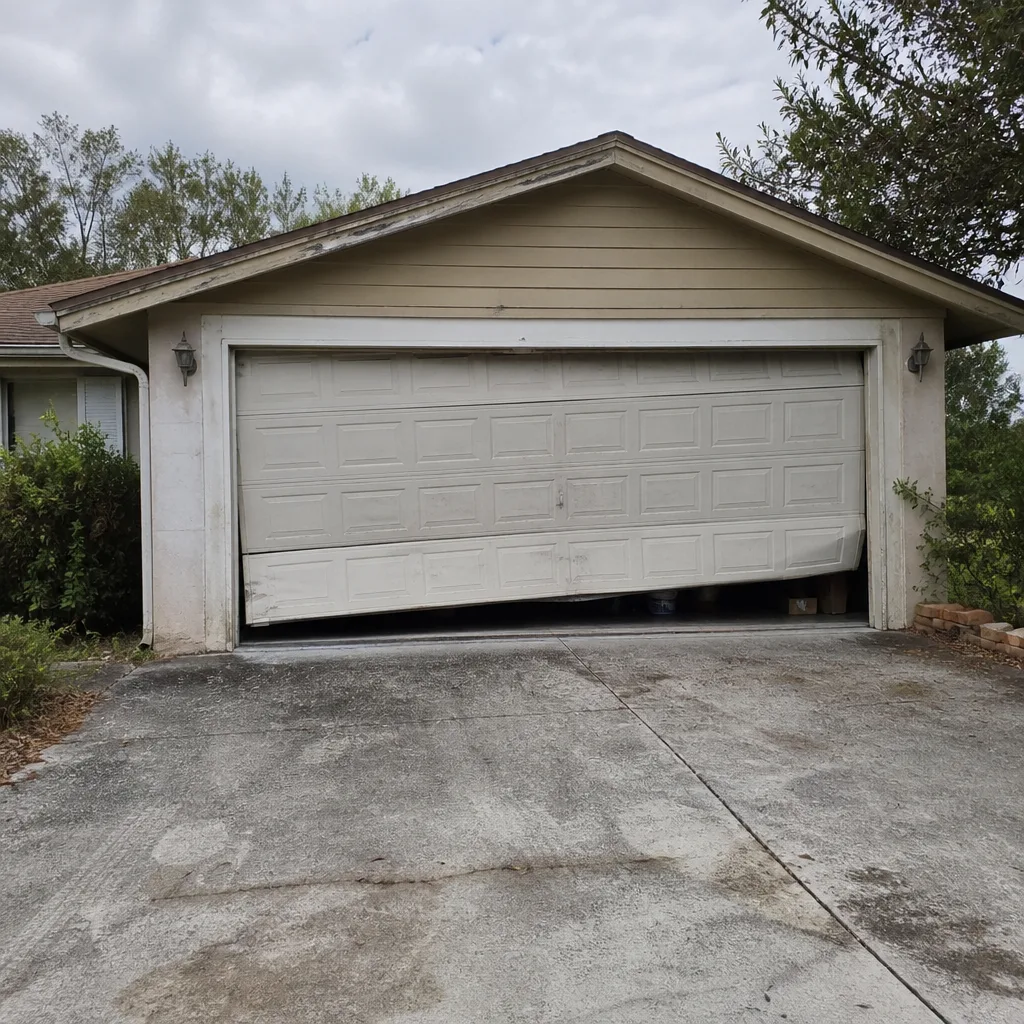 Before
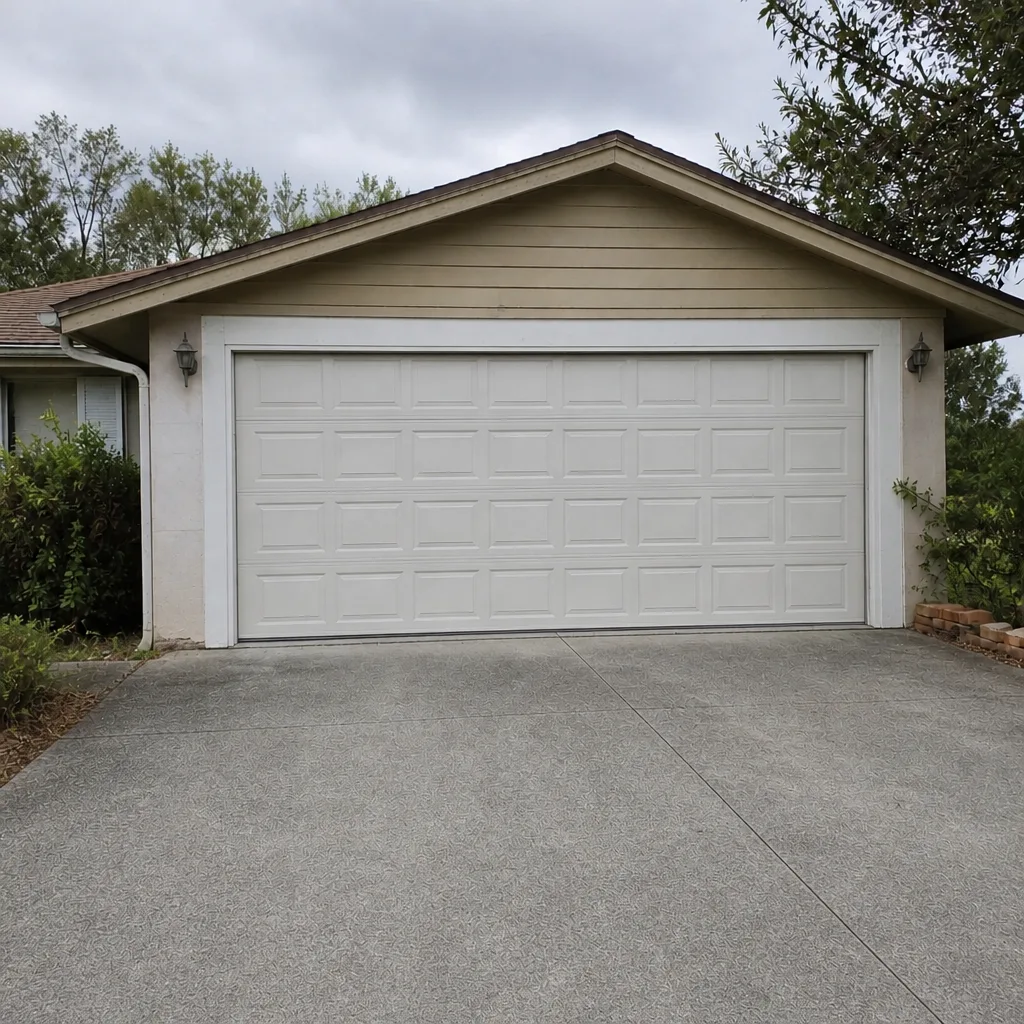 After
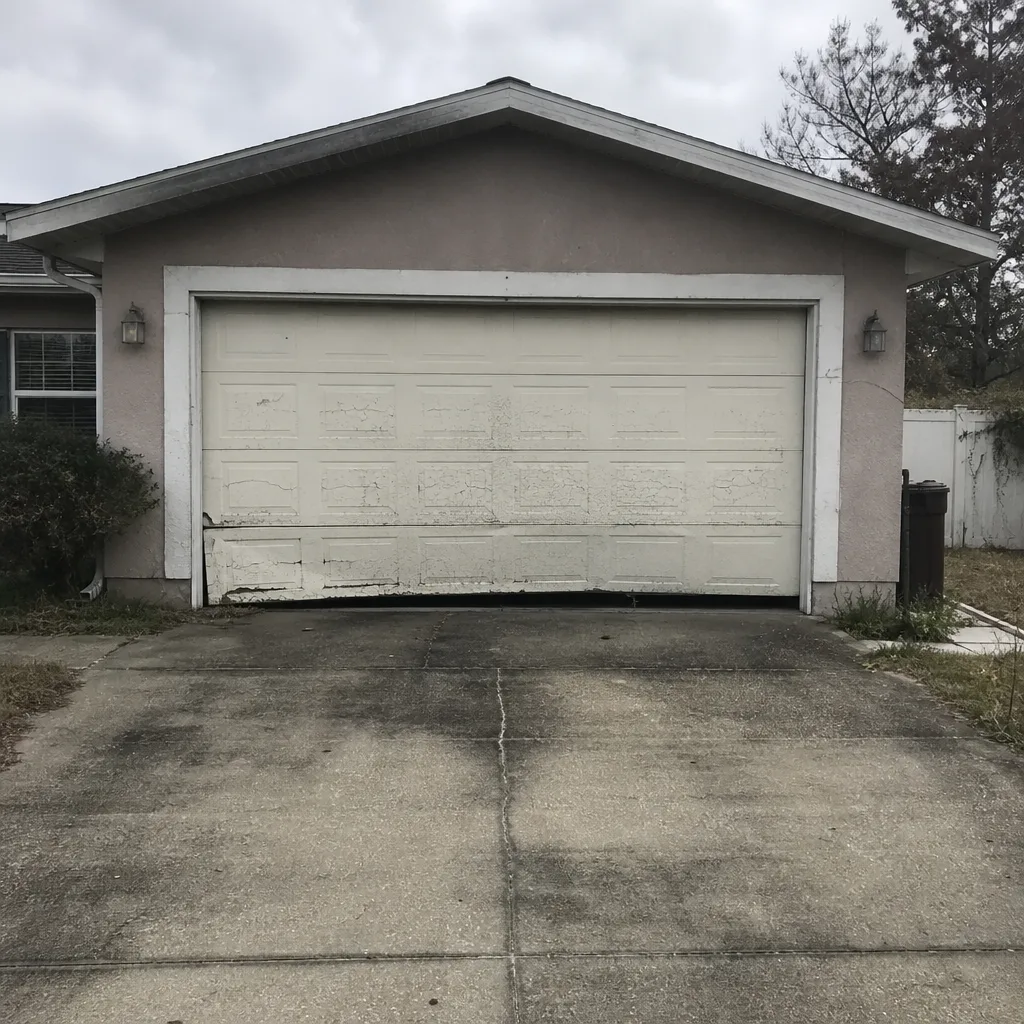 Before
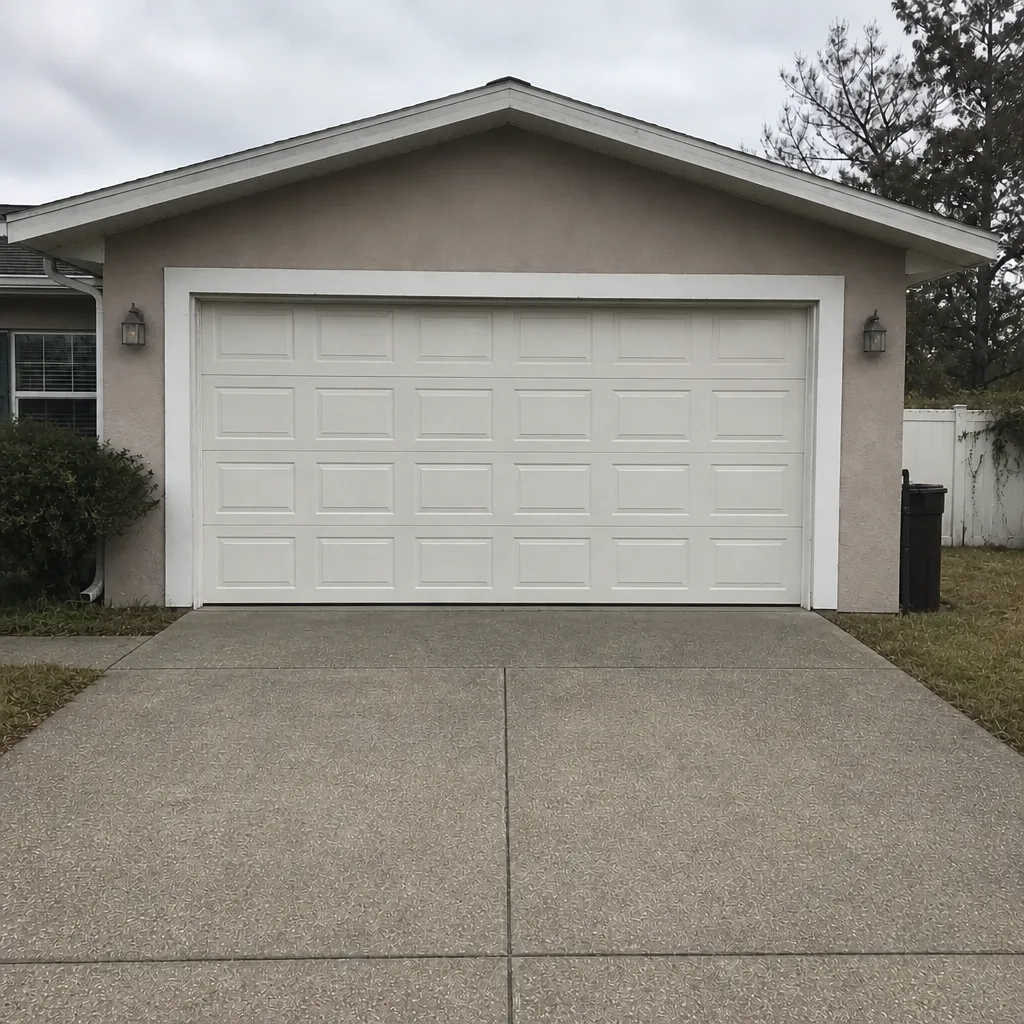 After
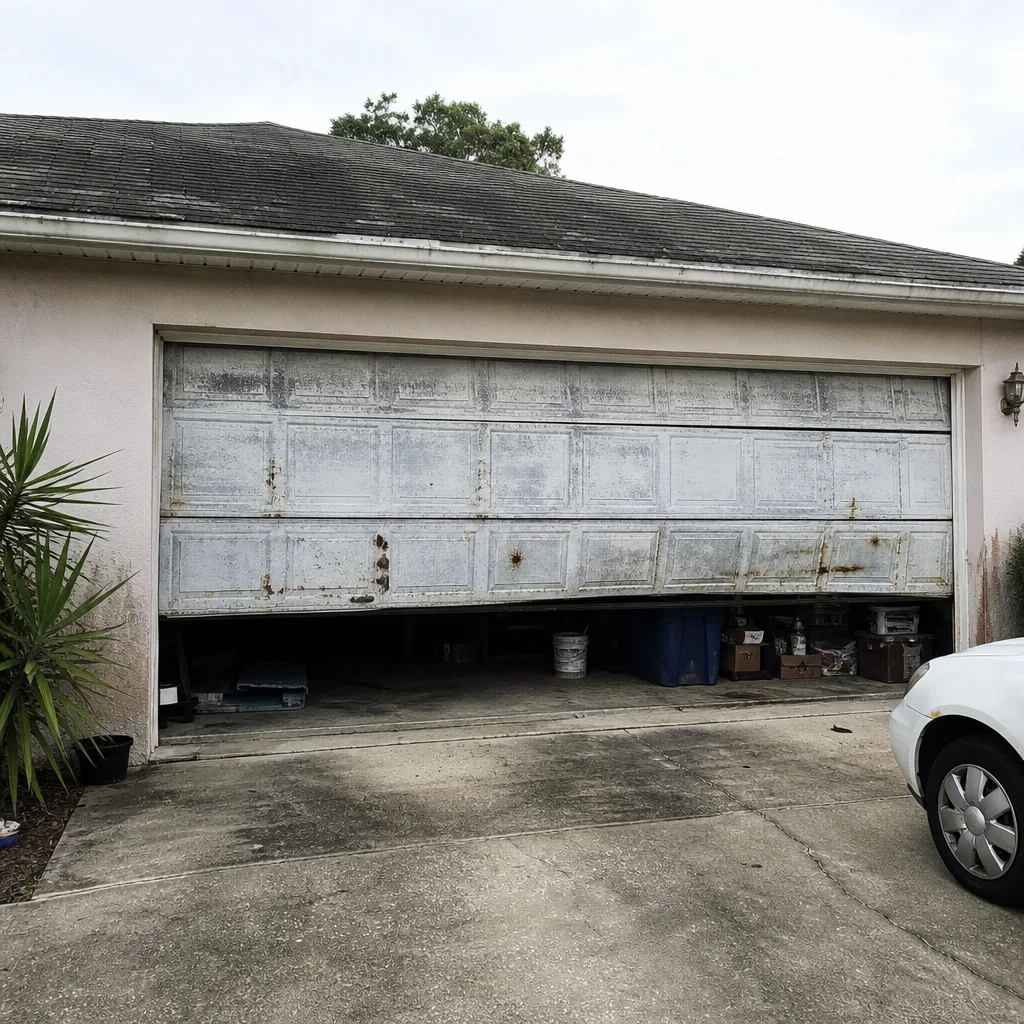 Before
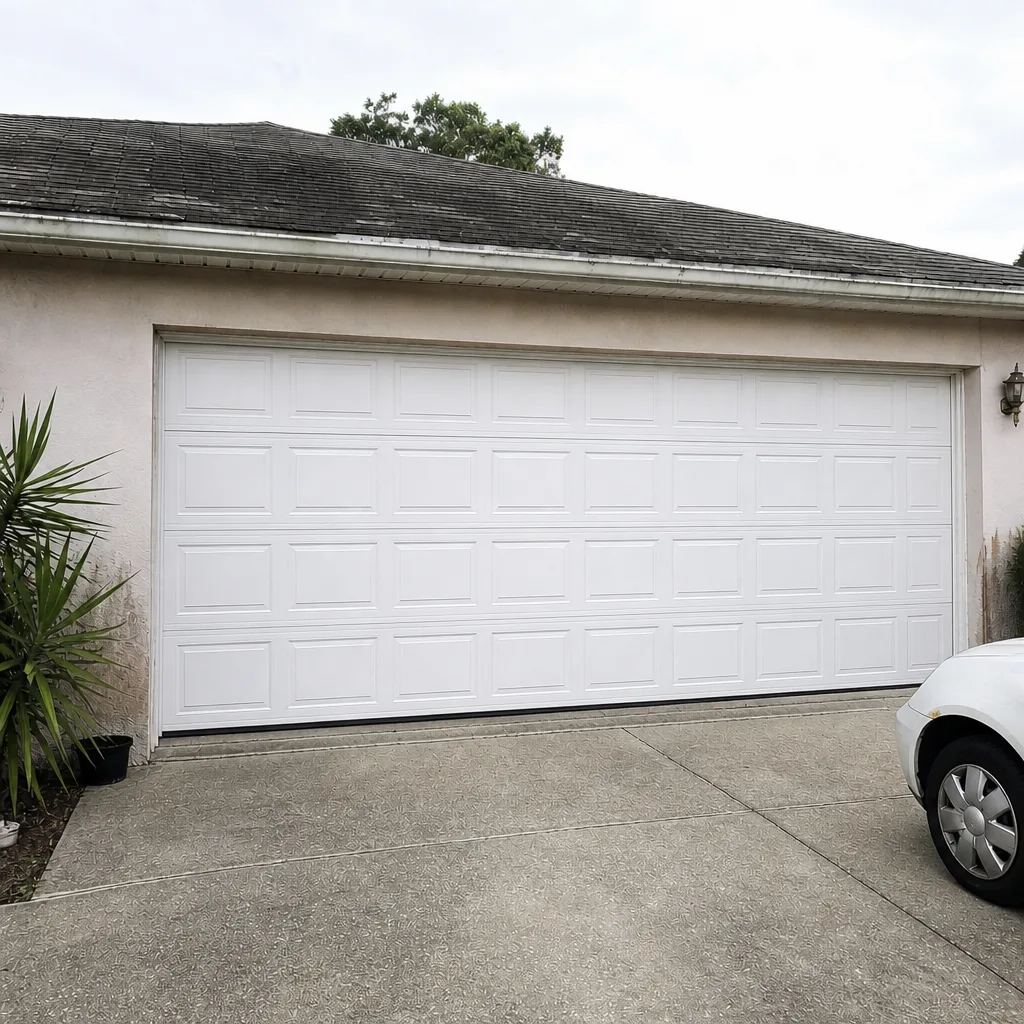 After
When to Call a Professional
Call a professional any time you see a stop-using-the-door sign from this guide: a coil gap, frayed cables, a door off track, a door reversing mid-cycle, or grinding that’s getting worse. Call when a door that used to run quietly now sounds different, because that’s usually the first real signal of wear. Call when you see white oxidation or rust streaks that have appeared in the past few months. Call when the opener is inconsistent and new batteries haven’t helped. And call when you’re not sure and would rather get eyes on it than guess. Unity Garage Door Repair offers free estimates in Palm Bay. Call (866) 901-6506. We answer 24/7, and fast dispatch runs from 7am to 7pm, Sunday through Friday. The price is always quoted and agreed before any work starts, on every repair and every install.
Frequently Asked Questions
The most common early signs in Palm Bay are a visible gap in the torsion spring coil, frayed cable strands, flat-spotted rollers, bright scoring lines on the tracks, and rust streaks or bubbling paint on the bottom section of steel doors. Palm Bay’s humid climate makes the corrosion signs show up faster here than in drier regions, so an inspection every six months is worth building into your routine. If you’re seeing any of them, call (866) 901-6506 for a free estimate.
A spring replacement is priced per spring, and the exact figure depends on the door’s size and spring type. We give a written estimate before any work starts, and that written estimate is the price. Call (866) 901-6506 and we’ll set up a free estimate. On a matched pair (two springs replaced together), the cost is roughly double a single spring, and we’ll explain why before you decide.
Same-day service is often possible on repair calls, and we prioritize doors that shouldn’t be run at all. We answer 24/7. If you call outside dispatch hours, we book you into the next opening, Sunday through Friday, 7am to 7pm. Call (866) 901-6506 and describe what you’re seeing. If it’s a spring gap, frayed cable, or a door off track, tell us that first.
The price is quoted and agreed before any work starts, and that written quote sets the final price. If our technician finds something different on arrival (a corroded bearing, a damaged roller, a track issue that wasn’t visible from the front), we stop and re-quote before doing anything. You’ll never get an invoice bigger than the estimate you approved. Call (866) 901-6506 for an exact quote.
Our technicians are experienced (up to 14 years) and the work is done to manufacturer-standard practices on the brands we service, including LiftMaster, Chamberlain, Genie, Clopay, Amarr, Wayne Dalton, Craftsman, and Raynor. Call (866) 901-6506 to confirm current licensing and insurance details for your specific job before scheduling, and we’ll walk you through it.
A small coil gap on a torsion spring is worth taking seriously. It means the spring is being stressed beyond its design, and it can snap with no further warning. Running the door normally until it snaps is how you end up in an emergency call instead of a scheduled one. If you see a gap, stop running the door and call (866) 901-6506 for a free estimate.
The Bottom Line
The garage door warning signs that matter most are the ones that show up early, when you still have a comfortable 2-4 week scheduling window. A gap in the spring coil, frayed cable strands, flat rollers, scored tracks, and the corrosion signs specific to Palm Bay’s humid climate are all visible with a 30-second check from the side of the door. The signs on the stop-using-the-door list deserve a call today. The signs on the 2-4 week list deserve a call this week or next. Either way, the price is quoted and agreed before any work starts. Unity Garage Door Repair works on all eight major brands (LiftMaster, Chamberlain, Genie, Clopay, Amarr, Wayne Dalton, Craftsman, and Raynor) so we can diagnose what’s actually on your door, not just the brand we happen to stock. Call (866) 901-6506 for a free estimate. We answer 24/7, with fast dispatch from 7am to 7pm, Sunday through Friday.
Written by the team at Unity Garage Door Repair.