
Last updated November 15, 2026
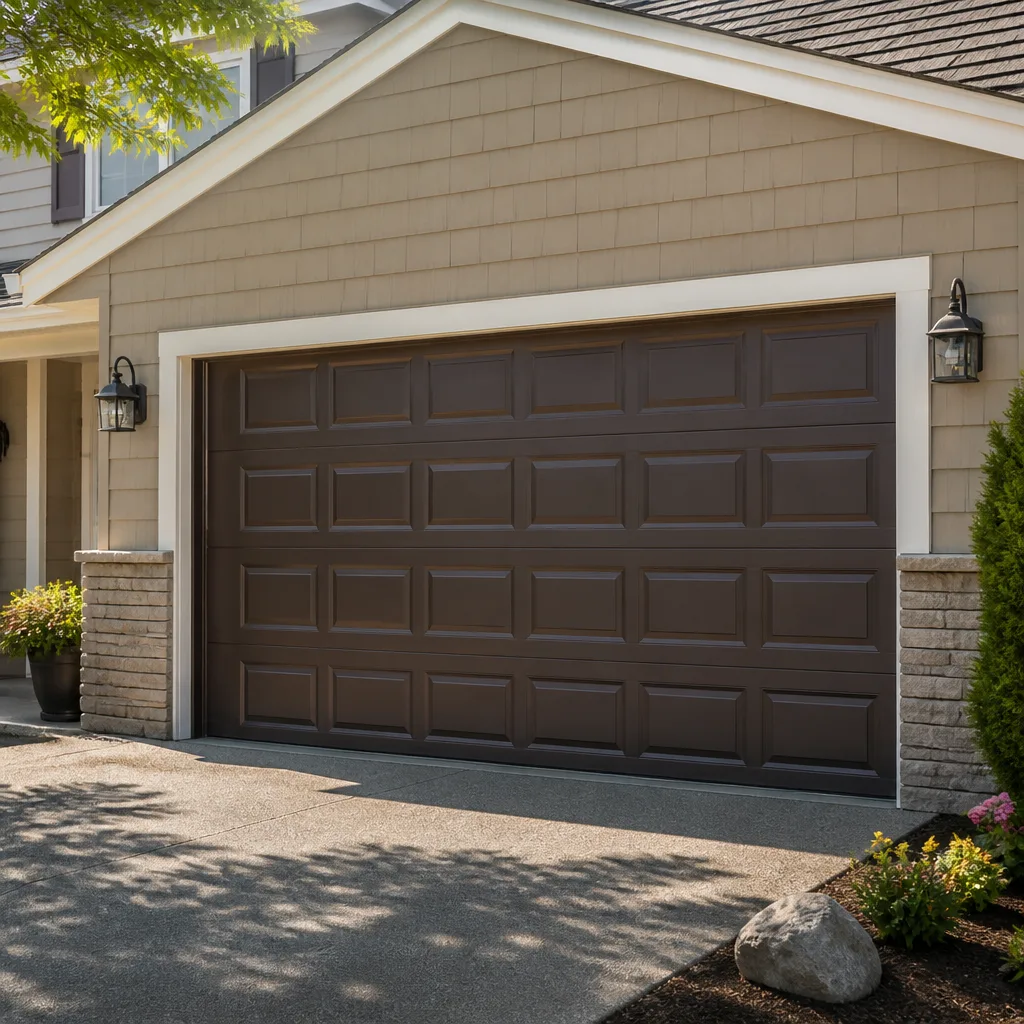 Raised-panel steel
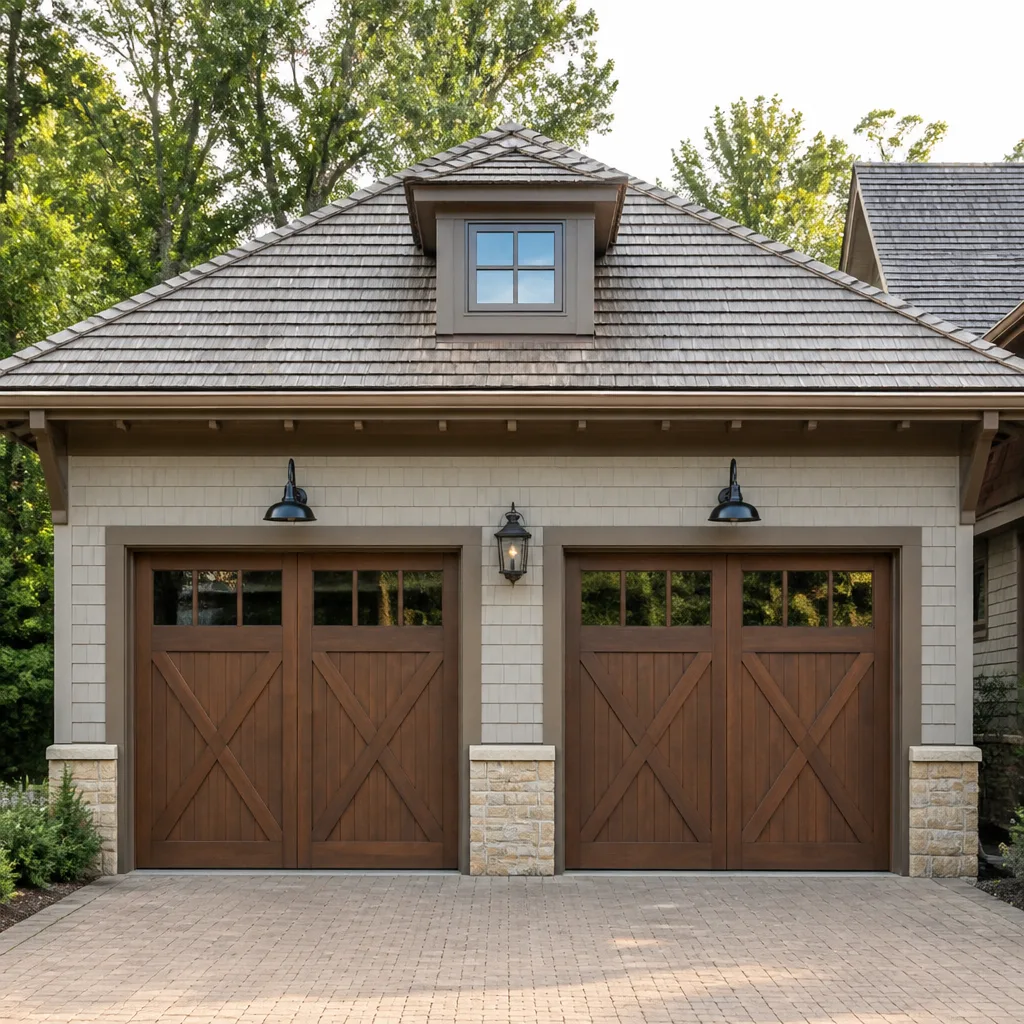 Carriage house
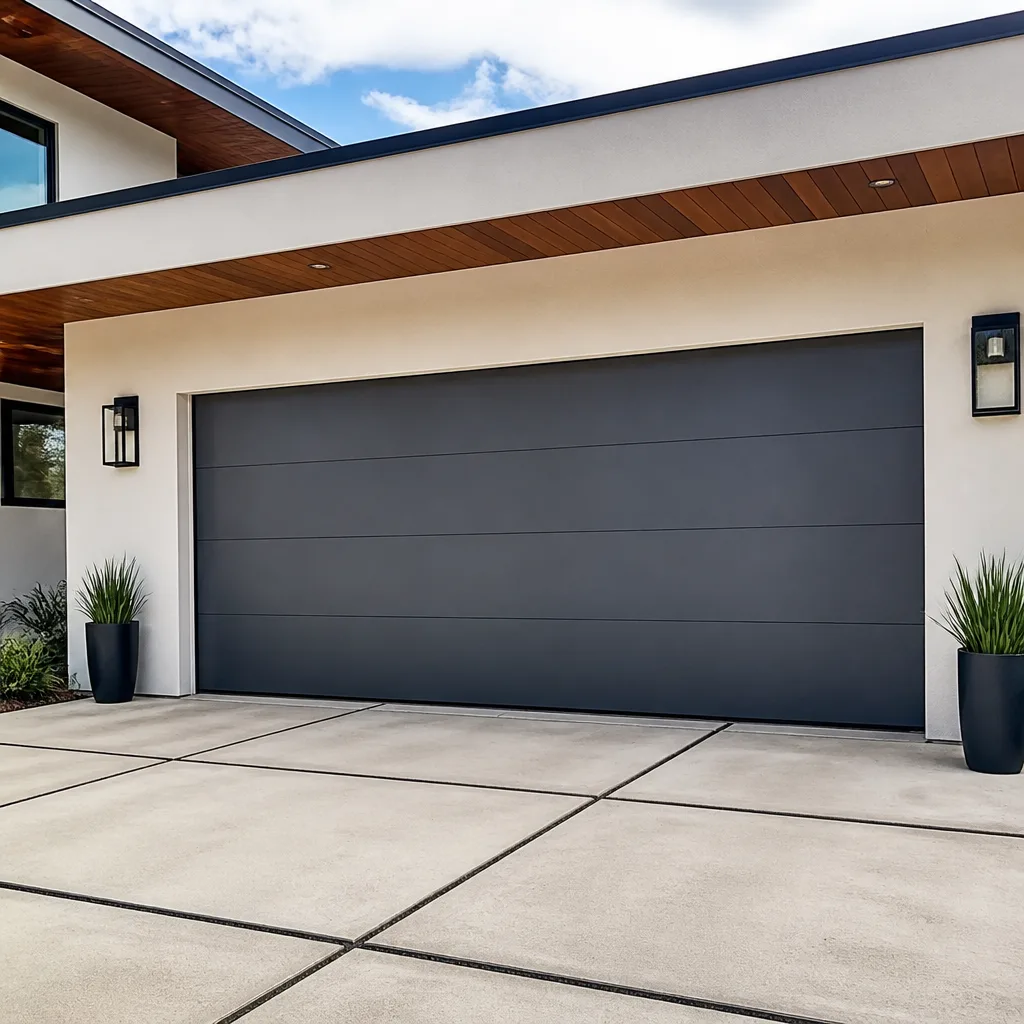 Modern flush
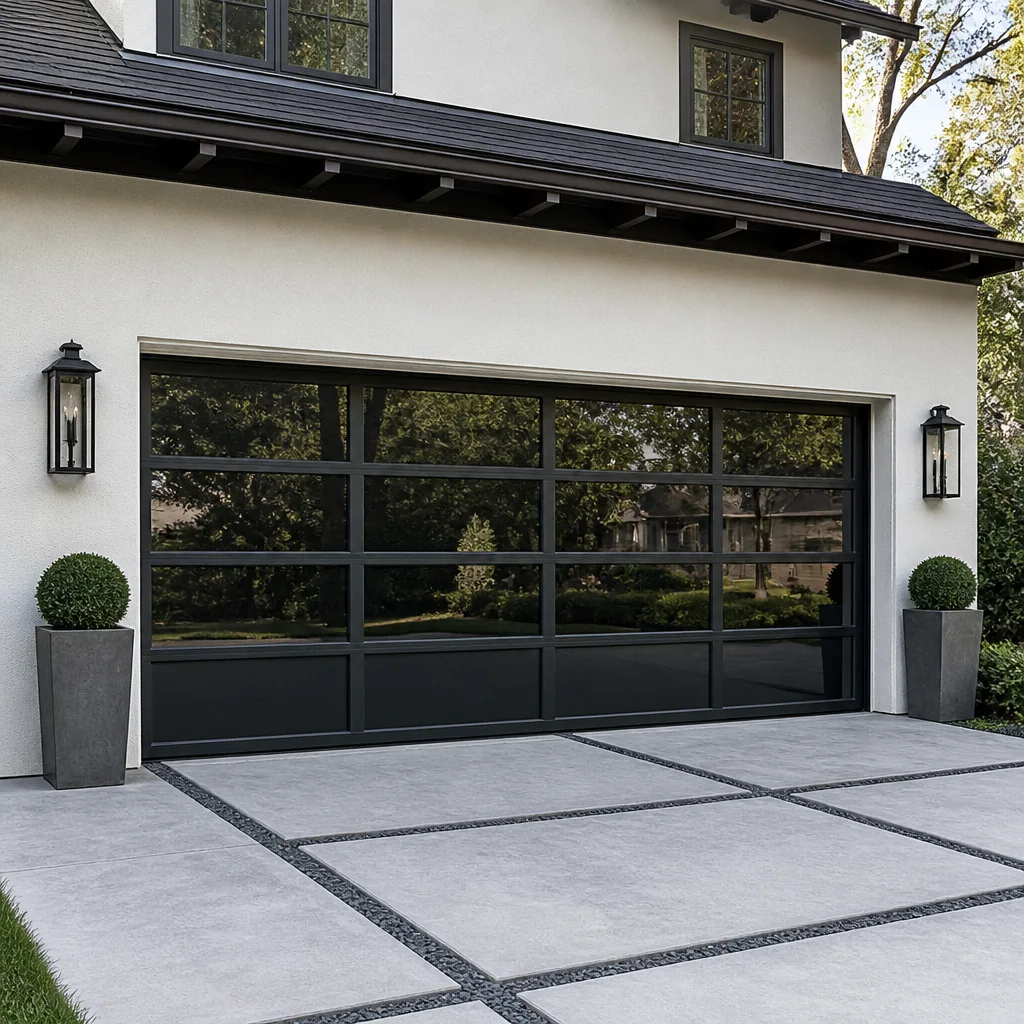 Full-view glass
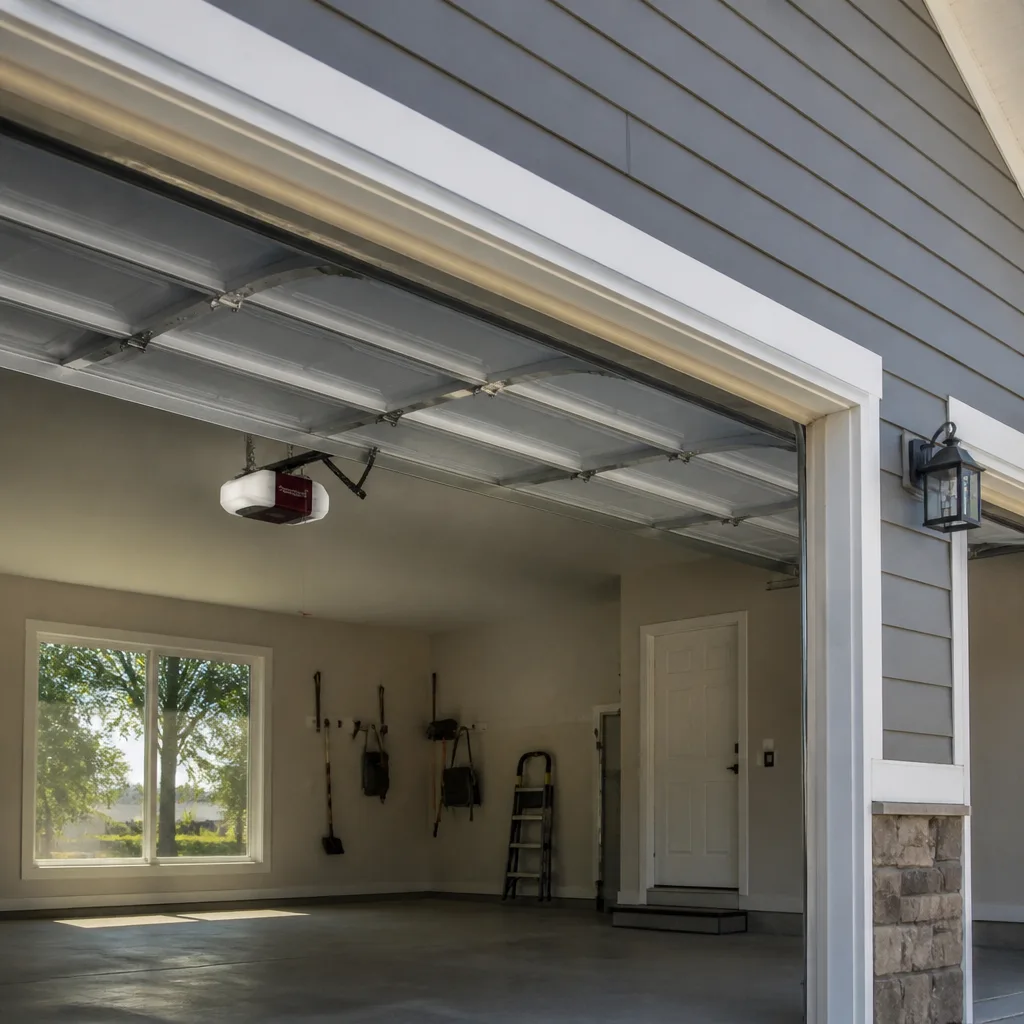 LiftMaster openers
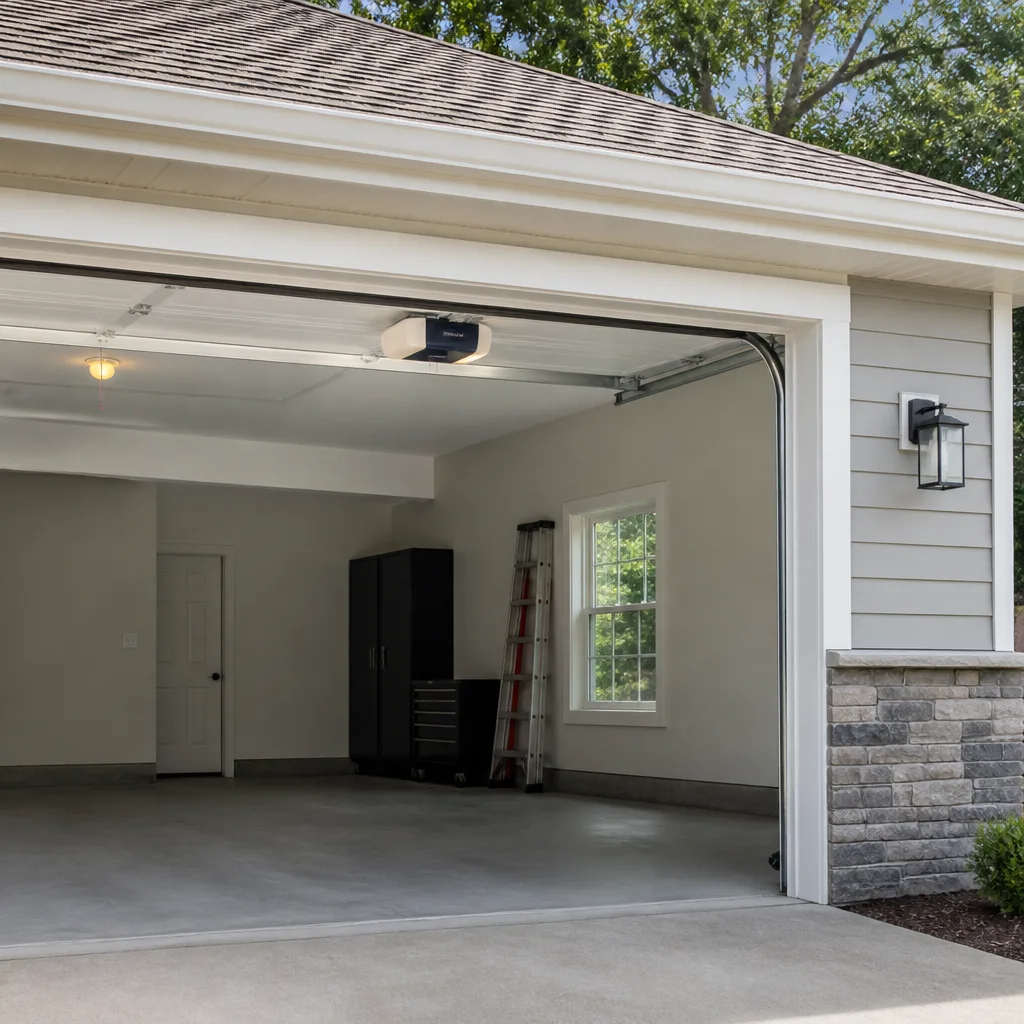 Chamberlain openers
Full 25-point door and opener safety check with every visit - springs, cables, rollers, tracks, and your LiftMaster or Chamberlain opener included
You get a price before we start. It does not change when the pro arrives.
Get your free estimateGarage Door Emergency Preparedness Guide for Palm Bay Homes
Most Palm Bay homeowners think about their garage door emergency plan only after the door has already failed. That’s backwards. The two emergencies that actually happen here – a storm-related failure and a mechanical failure that traps a car inside – demand different responses, and neither one gives you time to learn on the spot. The single most useful preparation takes about ten minutes: testing the manual release before you need it. In this guide, we’ll walk through both emergency types, how the manual release works and how it jams, what to do when a door fails mid-travel, how to reinforce a door before a named storm, what to do during a power outage, and how to tell cosmetic from structural post-storm damage. Everything here is written for Palm Bay homes and the conditions we actually live with.
Quick Answer
Garage door emergency preparedness in Palm Bay comes down to two separate protocols: a storm protocol (reinforce the door, know your manual release, plan for power loss) and a mechanical-failure protocol (how to safely free a vehicle from a door stuck mid-travel). The manual emergency release is the most important part of both. Test it now, before the day you need it, because a release that has never been operated is far more likely to jam when it counts.
Styles & brands we work with
- Raised-panel steel
- Carriage house
- Modern flush
- Full-view glass
- LiftMaster openers
- Chamberlain openers
Table of Contents
- Why Palm Bay Homes Face Two Kinds of Garage Door Emergencies
- How the Manual Emergency Release Works (and How It Jams)
- What to Do When the Door Fails Mid-Travel and Traps a Car
- Pre-Hurricane Door Reinforcement: What Actually Holds
- Power Outage Protocol for Palm Bay Homes
- Post-Storm Damage Assessment: Cosmetic vs. Structural
- Your 10-Minute Garage Door Readiness Checklist
- When to Call a Professional
Why Palm Bay Homes Face Two Kinds of Garage Door Emergencies
Palm Bay sits on Florida’s Space Coast, where hurricane season runs from June through November and summer thunderstorms roll through most afternoons. That weather creates one category of garage door problem. The other category has nothing to do with weather at all: cables, springs, and openers wear out on a schedule of their own, and when they fail, they can leave your car stuck inside a closed door at the worst possible moment.
These two emergencies are not the same, and treating them the same causes problems. A door damaged by wind or flying debris needs to be inspected before you run the opener again. A door that simply stopped mid-travel because a spring gave out is a mechanical repair, and forcing it can turn a moderate repair into a major one. Knowing which situation you’re in changes what you do in the first five minutes.
There’s a third factor unique to this area: evacuation timing. When a storm is approaching and evacuation orders go out, every minute counts, and a garage door that won’t open can strand a family at home. We’ve seen that exact scenario play out during past storms, and it’s almost always preventable with a ten-minute test done weeks earlier. The rest of this guide is about making sure you’re not learning that lesson in real time.
Why Palm Bay Homes Are Especially Vulnerable
- Hurricane exposure: Palm Bay sits in a region that sees tropical systems regularly, and the garage door is the largest opening on most homes – the most likely point of wind entry.
- Power loss: Storms knock out power, and a garage door on a standard opener is dead weight without electricity unless you’ve planned for it.
- Older doors: Many Palm Bay homes have doors that have gone years without a release test or a spring inspection.
- Heavy daily use: In a car-dependent city, the garage door is the front door. More cycles mean faster wear on springs and cables.
How the Manual Emergency Release Works (and How It Jams)
The manual emergency release disconnects the door from the opener so you can lift it by hand. It’s a cord, usually red, hanging from the trolley that rides on the opener’s rail. Pulling it disengages the trolley from the door arm, and the door then moves on its springs and tracks alone. Every opener made by Genie, LiftMaster, Chamberlain, and the rest has one, and it’s the first thing to find on your own door before anything else in this guide matters.
How to Test the Release Before You Need It
- With the door fully closed, pull the release cord straight down toward the floor.
- Lift the door by hand about a foot. It should move with steady resistance – not easily, but not with a struggle either.
- Let go. A properly balanced door stays roughly where you left it. One that slams down or flies up has a spring problem.
- Lower the door back to the floor.
- Re-engage the trolley by running the opener (or pulling the cord again on some models) until it clicks back into the carriage.
Run that test once, then add it to your spring and fall routine. If the release doesn’t pull cleanly, doesn’t re-engage, or the door behaves strangely by hand, that’s a call to a technician, not something to ignore.
Why Releases Jam on Older Doors
When a manual release fails, it’s usually for one of a few predictable reasons. The trolley carriage can corrode and stick on the rail, particularly on doors that have gone years without lubrication. The release cord can break or pull free from the lever inside the carriage. The door arm can bind against the opener rail because of a bent bracket. On very old doors, the release mechanism itself can seize inside the trolley housing. None of these are exotic failures, and all of them are the kind of thing you discover by testing, not by assuming.
For a full breakdown of how our team handles a stuck or jammed opener, see our guide to garage door opener repair.
What to Do When the Door Fails Mid-Travel and Traps a Car
This is the scenario that turns a bad morning into a bad week: the door opens partway, stops, and won’t budge either way, and your car is inside. The instinct is to pull harder on the door. Resist that. Cables under tension on a torsion system can snap and whip, and springs under load can release violently. What you want is a controlled sequence that gets you out without turning a repair into an injury.
The Step Sequence
- Stop operating the opener. Don’t hold the wall button down hoping the door will finish the cycle. Repeated attempts can strip the opener gear or damage the limit switch.
- Pull the manual release cord. If the door is stuck mid-travel, disengaging the opener frees the door to move on its springs alone.
- Lift the door by hand. Lift with steady pressure under the bottom section. If it moves, raise it fully and prop it – a sturdy clamp or a step ladder set under the bottom edge works in an emergency, but never leave the door up unpropped.
- If the door won’t move by hand, back off. Something is binding in the track or a cable is off its drum. Don’t force it.
- If you must move the car, can you exit another way? A second garage bay, the front door, or a side door is always safer than forcing a damaged door.
- Call a technician. For Palm Bay homes where the door is the only exit from the garage, a professional can usually free the vehicle and correct the underlying failure in the same visit.
What Not to Do
- Don’t force the door up past a jam. A snapped torsion cable under load is a serious injury risk.
- Don’t try to bend tracks back into shape by hand to clear the door.
- Don’t cut or unhook a spring or cable yourself. These carry enormous stored energy and are the single most dangerous components on a garage door.
- Don’t leave a partially open door unpropped overnight – it can come down on its own.
Springs and cables are the parts of a garage door that absolutely require a trained professional. If the door fails mid-travel, the safe move is almost always to leave the door alone and call for help. Our garage door repair team handles spring, cable, and track failures regularly, and the most common cause of a mid-travel failure is a broken torsion spring.
Pre-Hurricane Door Reinforcement: What Actually Holds
Most Palm Bay homeowners who think they’re ready for a named storm have done one of two things: bought a brace kit for a door that won’t benefit from it, or assumed a “hurricane strap” over the top of the door is enough. It rarely is. What actually holds in a storm is a door designed and rated for wind pressure, installed on properly anchored tracks and framing. Retrofitted reinforcement helps, but it isn’t the same thing as a wind-rated door, and understanding the difference is the point of this section.
Wind-Rated Doors vs. Retrofitted Doors
- Wind-rated doors are tested to specific design pressures and carry a rating (often printed on a label inside the door). They’re built for the load, and their tracks, brackets, and hinges are part of the tested system.
- Retrofitted doors are standard doors fitted with aftermarket vertical or horizontal reinforcement. Bracing kits help – a well-installed vertical brace set genuinely stiffens a door against wind pressure – but the retrofit doesn’t change what the door was originally rated for.
What looks like reinforcement is often the most misleading part. A horizontal strut near the top of the top section looks serious on the way home from the hardware store, but it doesn’t address the door’s weakest point, which is usually the middle of the panels where they flex under wind pressure. So does a homemade brace bolted across the inside: if it’s not attached to the door’s frame at the right points, it can transfer load into the panels rather than through them.
What Actually Holds in a Named Storm
- The door is rated for the wind load, or has been braced with a manufacturer-approved kit matched to the door’s size and model.
- The tracks are anchored with the right fasteners into solid framing, not drywall or thin sheathing.
- The rollers, hinges, and brackets are inspected and sound – a reinforced door with a failed bracket is only as strong as the bracket.
- The opener system is set to hold the door closed against pressure, not to fight it open mid-storm.
If you’re considering a replacement rather than a reinforcement, our team installs wind-rated doors from Clopay, Amarr, and Wayne Dalton. That’s a scheduled, measured job – not a same-day fix – so if a storm is already named, reinforcement is the realistic option.
For a full explanation of how the prep side works alongside repair and replacement, see our Palm Bay service overview.
Power Outage Protocol for Palm Bay Homes
When the power goes out in Palm Bay, a standard garage door opener stops dead, and the door suddenly feels twice as heavy as it did before. That’s not your imagination, and it’s not the door being stubborn. The opener’s motor has been doing the lifting. Without it, you’re moving the door on its springs alone, and on a torsion system that means pulling a well-balanced door by hand – which is manageable if the spring is healthy and nearly impossible if it’s tired or broken.
Steps During a Power Outage
- Pull the manual release cord to disengage the opener.
- Lift the door slowly by hand, from the bottom section, using two hands spread apart.
- Open it fully and prop it. Don’t leave it partway – it can roll back down.
- Move the car out if you need it.
- Lower the door gently by hand and re-engage the opener when power returns.
Battery Backup Openers
A battery backup opener is the real fix. These units keep the door operating – at least a limited number of cycles – when the power grid is down, and they’re a common upgrade for homes in storm-prone areas. LiftMaster and Chamberlain both make battery backup models, and Genie too. If you’re replacing an opener or considering a new one, this feature is worth prioritizing in Palm Bay. It’s also worth checking what your current opener does after a power cut: some models re-engage the trolley automatically, and some stay disengaged until you cycle them.
If your opener’s battery backup has stopped holding a charge or the opener is behaving strangely after an outage, our team handles opener repair as a specialty, including the electronics and connectivity side, not just the mechanical parts.
Why the Door Feels Heavier Without Power
Garage doors are counterbalanced, not lifted. The springs hold most of the door’s weight, and the opener’s job is to push the door along its track with relatively little force. Without power, you provide that force yourself – and if the door’s springs are slightly out of balance, it will feel significantly heavier than it should. A door that’s genuinely difficult to lift by hand usually needs a spring adjustment, not just a battery backup.
Post-Storm Damage Assessment: Cosmetic vs. Structural
After a storm passes, the question every homeowner asks is whether the door is safe to use. The honest answer in most cases is “inspect first, operate second.” Palm Bay storms can leave debris in the track, bend brackets, shift panels, and stress the opener’s internal components even when the door looks fine from the driveway. The inspection below separates the harmless from the serious.
Cosmetic Damage (Usable With Care)
- Dents in panel faces that don’t affect the door’s movement or sealing line.
- Scuffed paint or small scratches on the exterior.
- Loose weather seal along the bottom edge.
Structural Damage (Do Not Operate Until Inspected)
- Bent or bowed tracks, or a track that’s pulled away from the wall.
- Any panel that has detached from the hinges or shifted significantly.
- A door that won’t sit flush at the floor when closed.
- Visible cable slack, cable off its drum, or a broken spring.
- Debris caught in the track or track rollers.
- A door that moves unevenly, or that seems to twist as it opens.
If any of the structural items apply, leave the opener off and call for an inspection. Running a damaged door “just to see” is how a repairable door becomes a replacement. Our team does post-storm inspections across Palm Bay and can tell you in one visit whether the door is safe to operate, needs repair, or has reached replacement age.
Your 10-Minute Garage Door Readiness Checklist
Do this once, before storm season, and repeat it at the start of each season and after any major storm. It’s the difference between a ten-minute test today and a frantic call during the next evacuation order.
- Locate the manual release cord. Pull it and confirm the door disengages smoothly.
- Lift the door by hand and check balance – it should hold roughly where you leave it.
- Look at the springs: no rust-through, no visible gaps in a torsion spring, no frayed cables.
- Check the tracks for debris, bends, and loose brackets.
- Test the safety reverse: put a roll of paper towels in the door’s path and confirm the door reverses on contact.
- Test the opener’s battery backup if you have one, or plan for manual operation if you don’t.
- Inspect door reinforcement: are the tracks anchored solidly, and are any bracing kits installed per manufacturer instructions?
- Check that the door seals fully against the floor and the frame.
Note anything that fails and get it fixed before the next storm window opens. Emergency repairs are always more expensive than scheduled ones, and the least convenient failures happen at the least convenient times.
See the difference
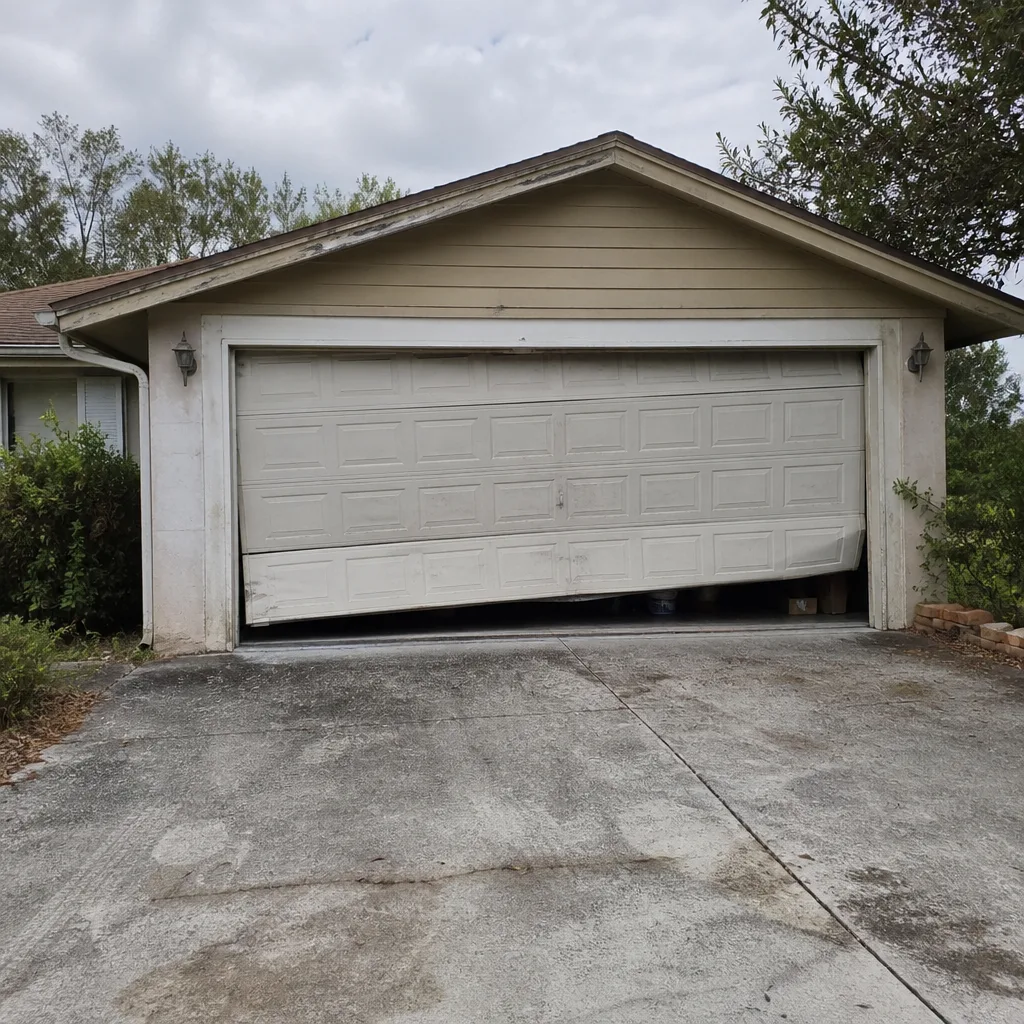 Before
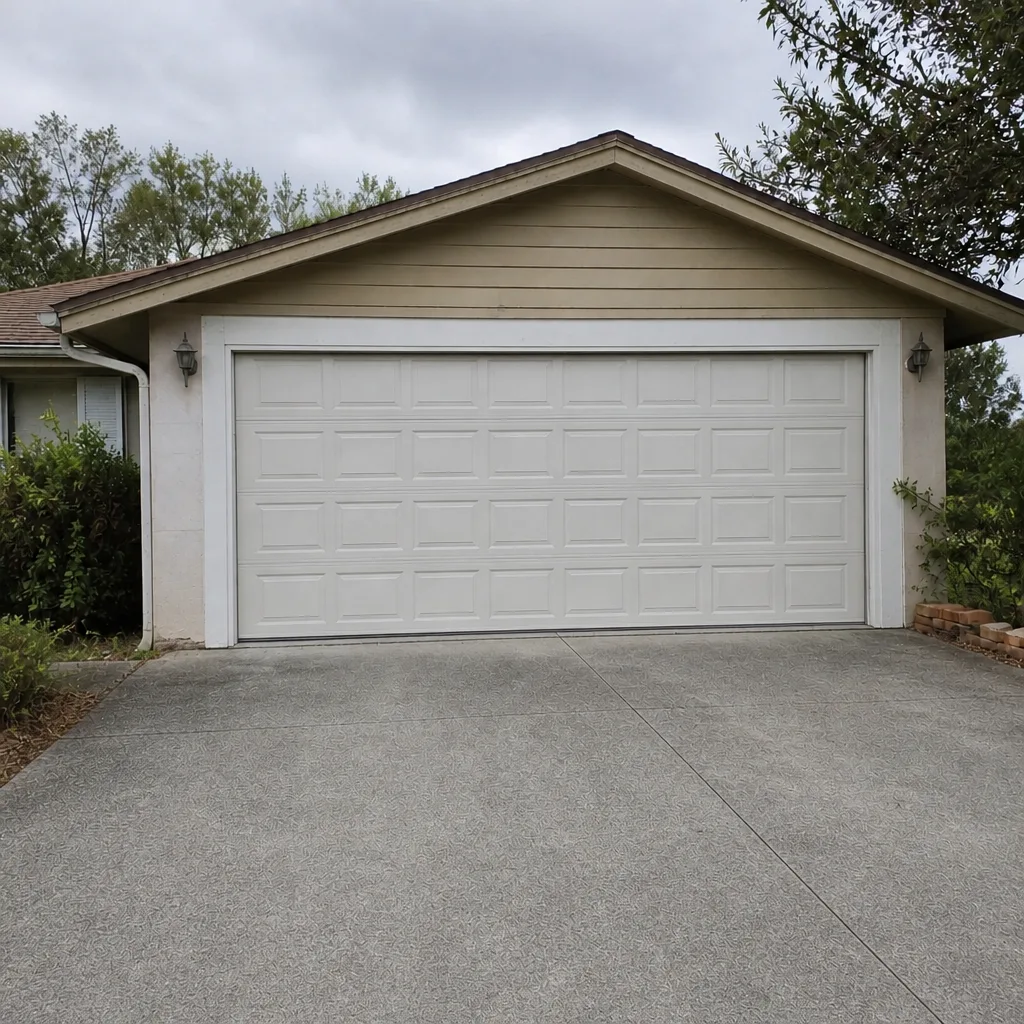 After
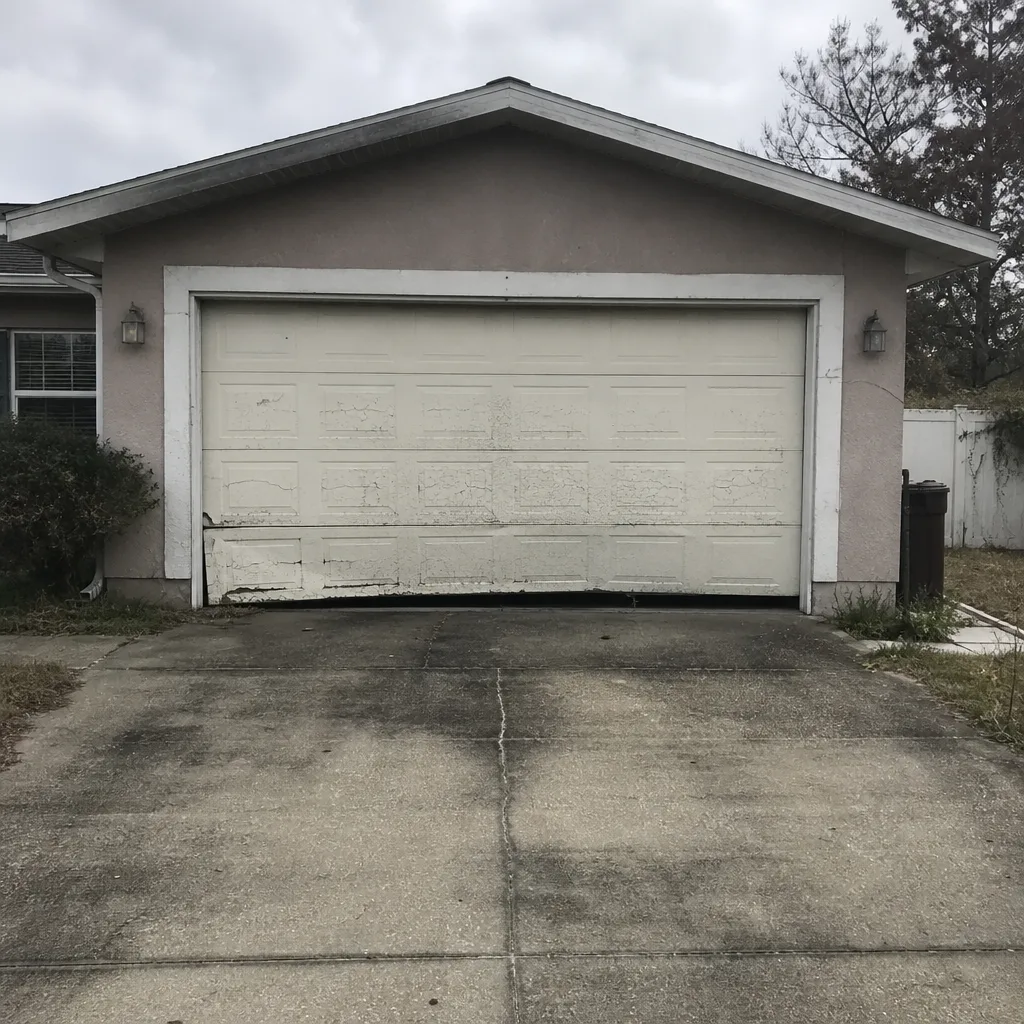 Before
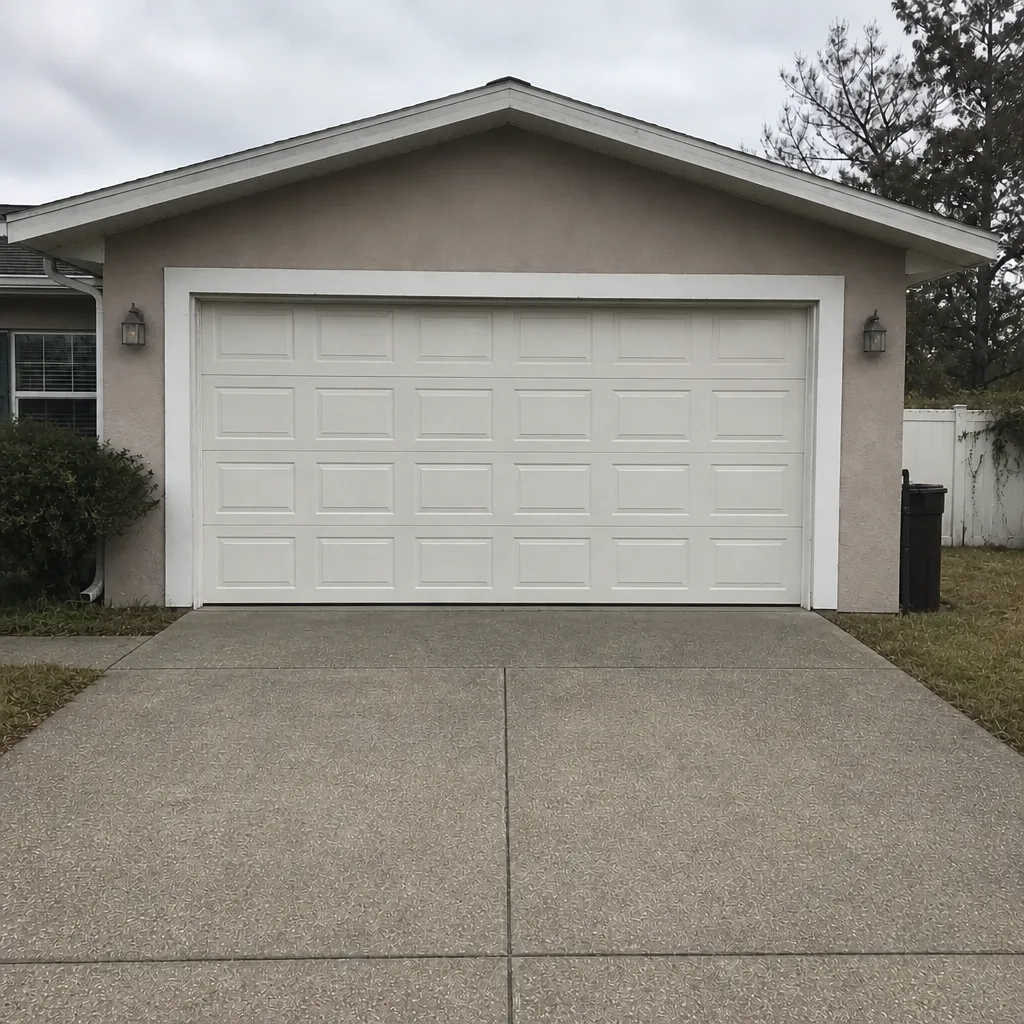 After
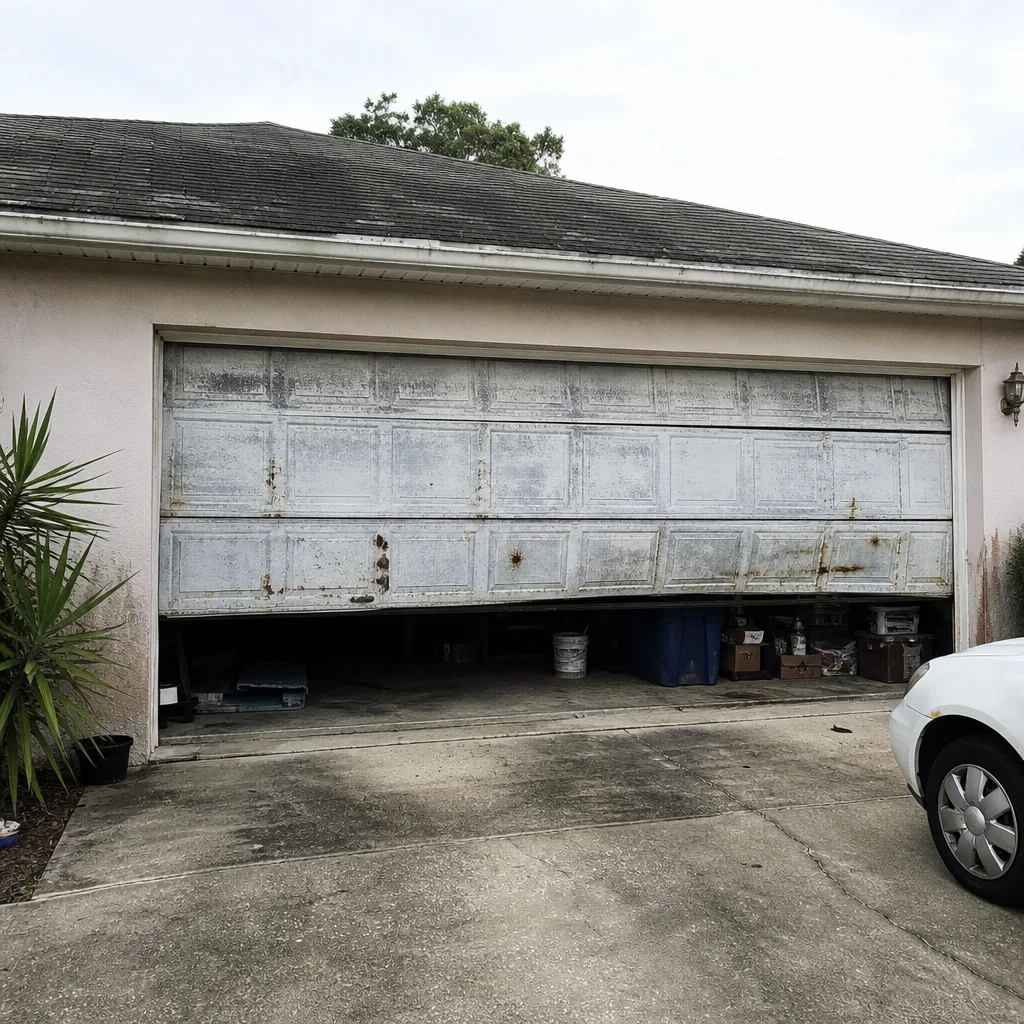 Before
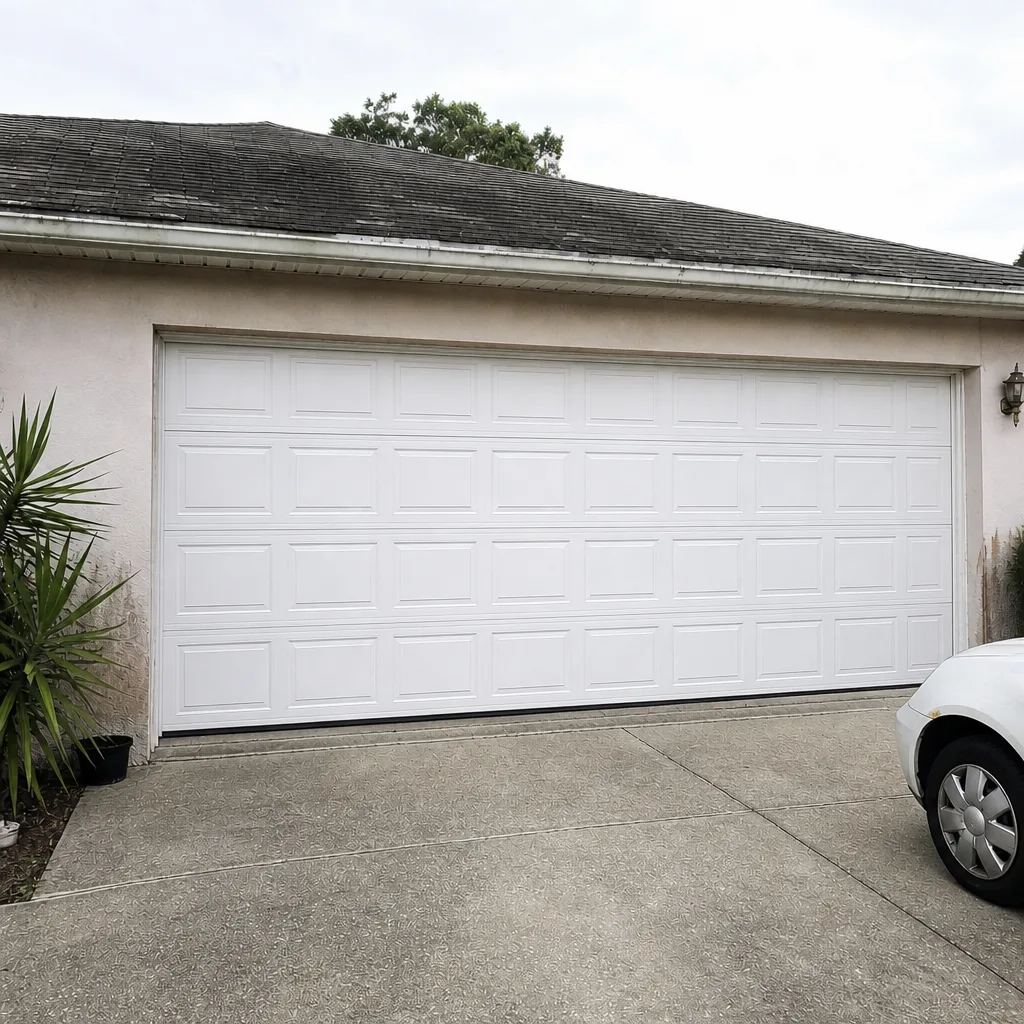 After
Common Mistakes to Avoid
- Never testing the manual release. A release that has never been pulled is the single most common reason families are trapped in their home during an evacuation order. A ten-minute test in calm weather prevents this.
- Ignoring a door that feels heavy by hand. A door that’s noticeably hard to lift is telling you the springs are losing tension or out of balance. That’s a sign to call, not a sign to lift harder.
- Forcing a jammed door with the opener. Holding the wall button down when the door is stuck will strip the opener gear, damage the limit switch, or both. Stop and pull the release.
- Buying a brace kit without checking the door. A kit that doesn’t match your door’s size and manufacturer can transfer wind load into the panels instead of through them. Check compatibility before you install.
- Operating a storm-damaged door “to test it.” A bent track or detached panel can fail catastrophically on the next cycle. Inspect first.
- Assuming a battery backup will cover the whole storm. Battery backup openers run a limited number of cycles. Know your model’s capacity and keep the manual release tested as the backup to the backup.
- Leaving the door up unpropped during a power outage. A partially open door can come down on its own, and it’s a security gap during a storm when homes are empty or dark.
When to Call a Professional
Some garage door problems are best left to a trained technician – not because they’re complicated, but because the components involved (springs, cables, track tension) carry enough stored energy to cause serious injury when they fail under load. Call us if the manual release jams, the door won’t move by hand, any spring or cable is broken or slack, your track is bent, the door traps a vehicle and won’t free, or you’ve had storm damage and aren’t sure the door is safe to operate. Also call if your opener behaves unpredictably after a power outage or the battery backup stops holding. Unity Garage Door Repair offers free estimates in Palm Bay – call (866) 901-6506. We answer 24/7. Fast dispatch from 7am to 7pm, Sunday through Friday. Our technicians have up to 14 years of experience, and they diagnose before they quote, so you know the fix and the price before any work starts.
Frequently Asked Questions
Pull the red manual release cord hanging from the opener’s trolley to disconnect the door from the motor, then lift the door by hand from the bottom section and prop it open. The door will feel heavier than usual because you’re lifting on the springs alone. If it won’t lift or moves unevenly, stop and call a technician.
Costs vary with the failure. Spring replacements, cable repairs, track straightening, and opener diagnoses are all quoted per job after a technician inspects the door, and every price is confirmed in writing before work begins. Call (866) 901-6506 for a free estimate – we’ll tell you what the job needs and what it will cost.
A door that isn’t rated for wind pressure is the weakest point on most homes during a storm, regardless of how solid it looks. Retrofit bracing helps, but the strongest protection comes from a wind-rated door on properly anchored tracks. If a storm is already approaching, reinforcement is the realistic option; a replacement should be scheduled in calm weather.
Because the opener was doing the work, and without it you’re lifting the door against its spring balance. A door that feels heavy isn’t failing – it’s being lifted by hand for the first time. If it’s genuinely hard to move with a healthy spring, the balance is off and the springs need adjustment.
Yes. A door stuck mid-travel is usually a broken torsion spring or a cable off its drum, and both can be corrected by a trained technician. Don’t force the door yourself – springs and cables under tension are the most dangerous parts of any garage door. Call (866) 901-6506 and we’ll get a technician out to free the vehicle and repair the failure. We answer 24/7. Fast dispatch from 7am to 7pm, Sunday through Friday.
A wind-rated door is tested to specific design pressures and carries a label rating it for that load. A braced door is a standard door fitted with aftermarket reinforcement, which helps but doesn’t change what the door was originally rated for. Both have a place in storm prep, but they’re not interchangeable.
The Bottom Line
Palm Bay homes face two different garage door emergencies – storm-related failures and mechanical failures that trap a car – and each needs its own protocol. The common thread is the manual emergency release: test it now, before you need it, and know how it behaves when the door is heavy or stuck. Reinforce before the storm, not during it. Know what your opener does without power. And inspect damage after a storm before you operate the door. If any of it is beyond a visual check, one call to a technician is cheaper and safer than forcing a damaged door. Unity Garage Door Repair works on all eight major door and opener brands, and we diagnose before we quote.
Call (866) 901-6506 for a free estimate. We answer 24/7. Fast dispatch from 7am to 7pm, Sunday through Friday.
Written by the team at Unity Garage Door Repair.