
Last updated November 15, 2026
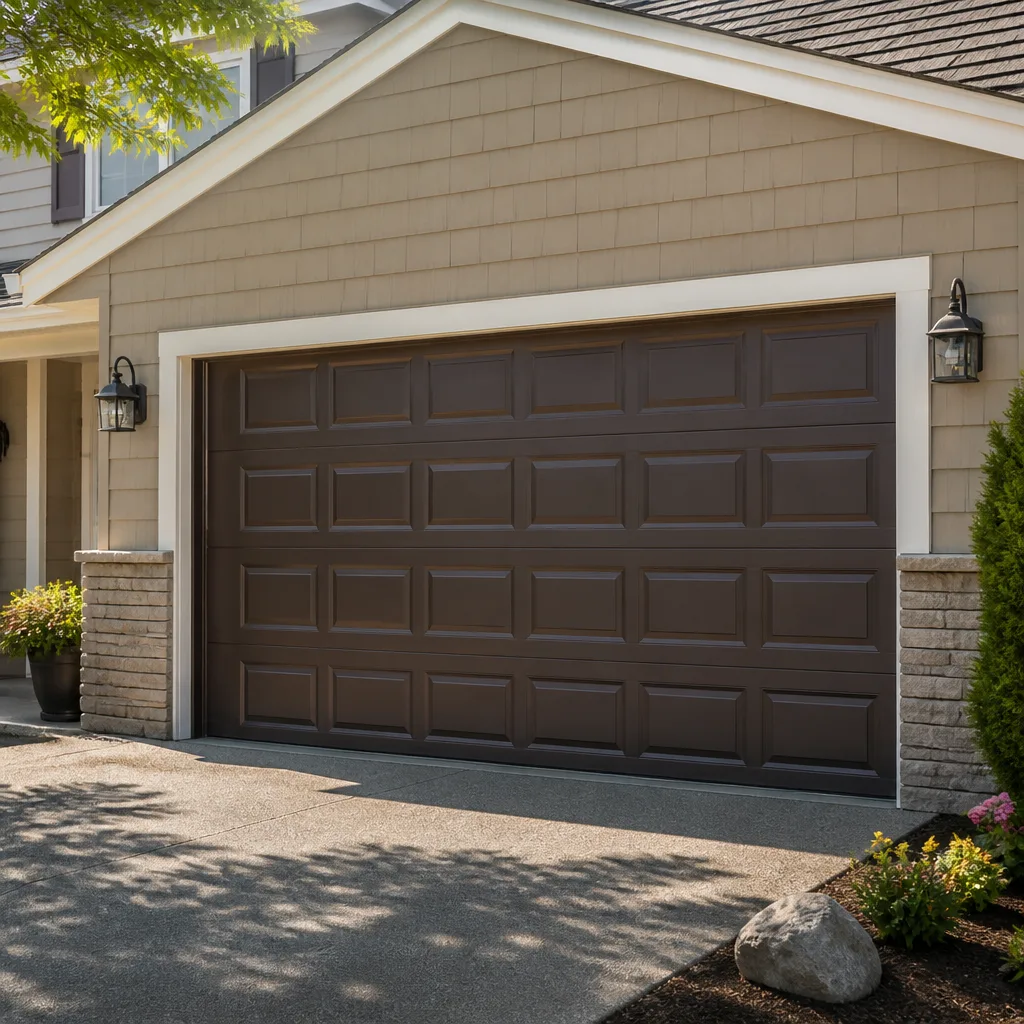 Raised-panel steel
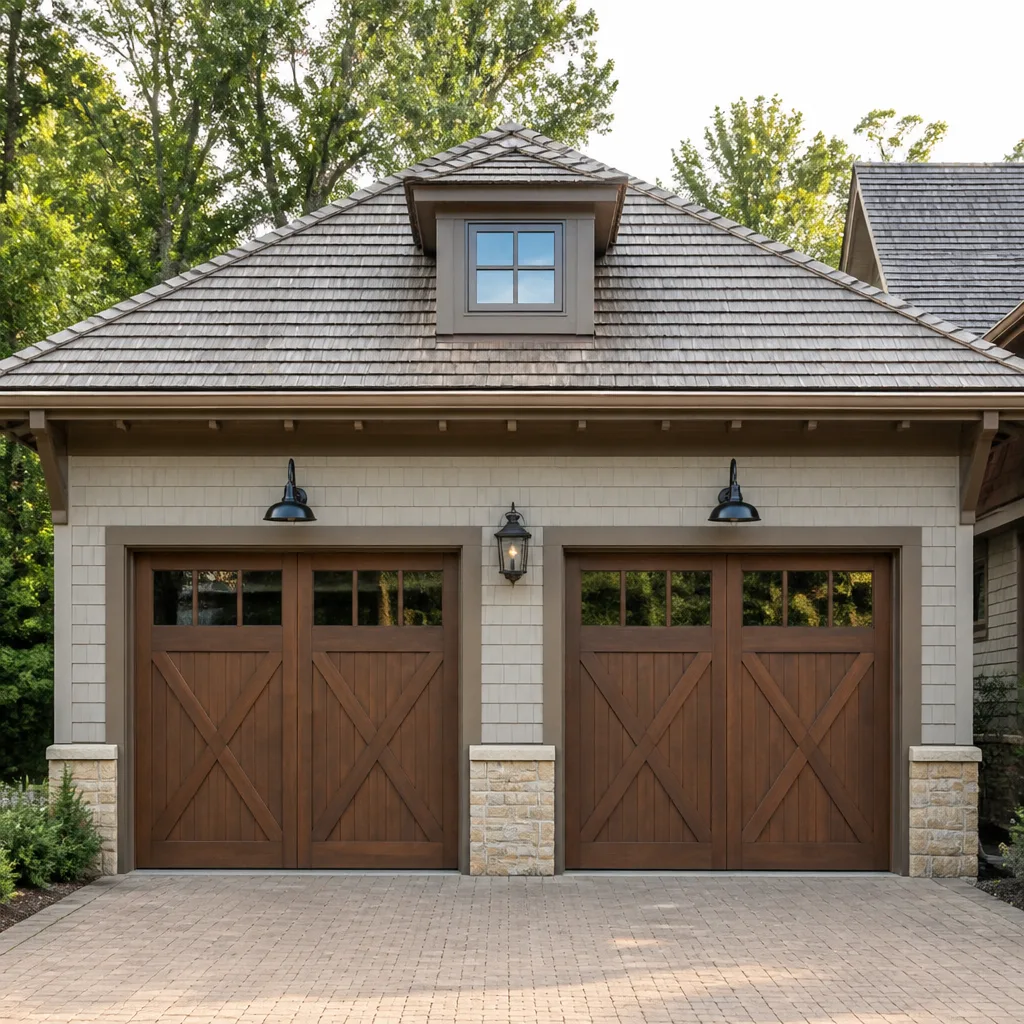 Carriage house
 Modern flush
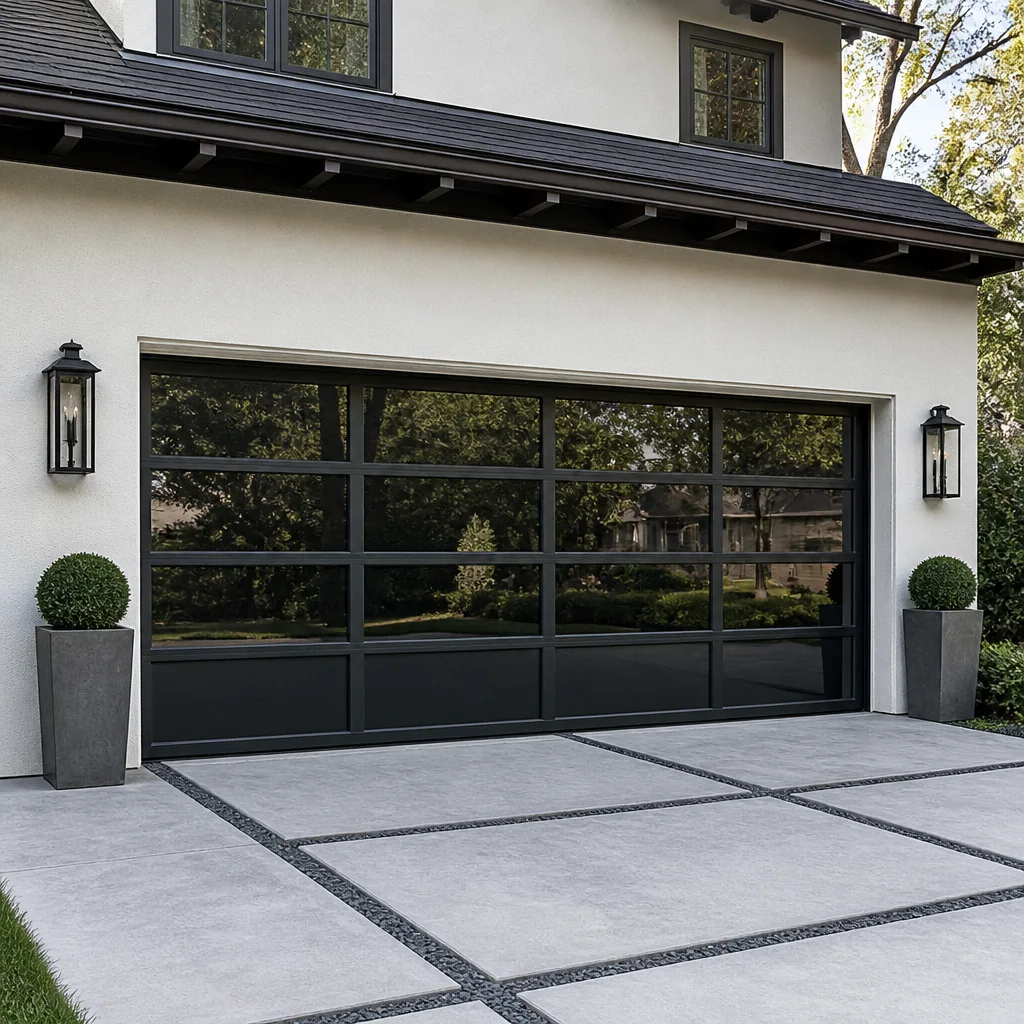 Full-view glass
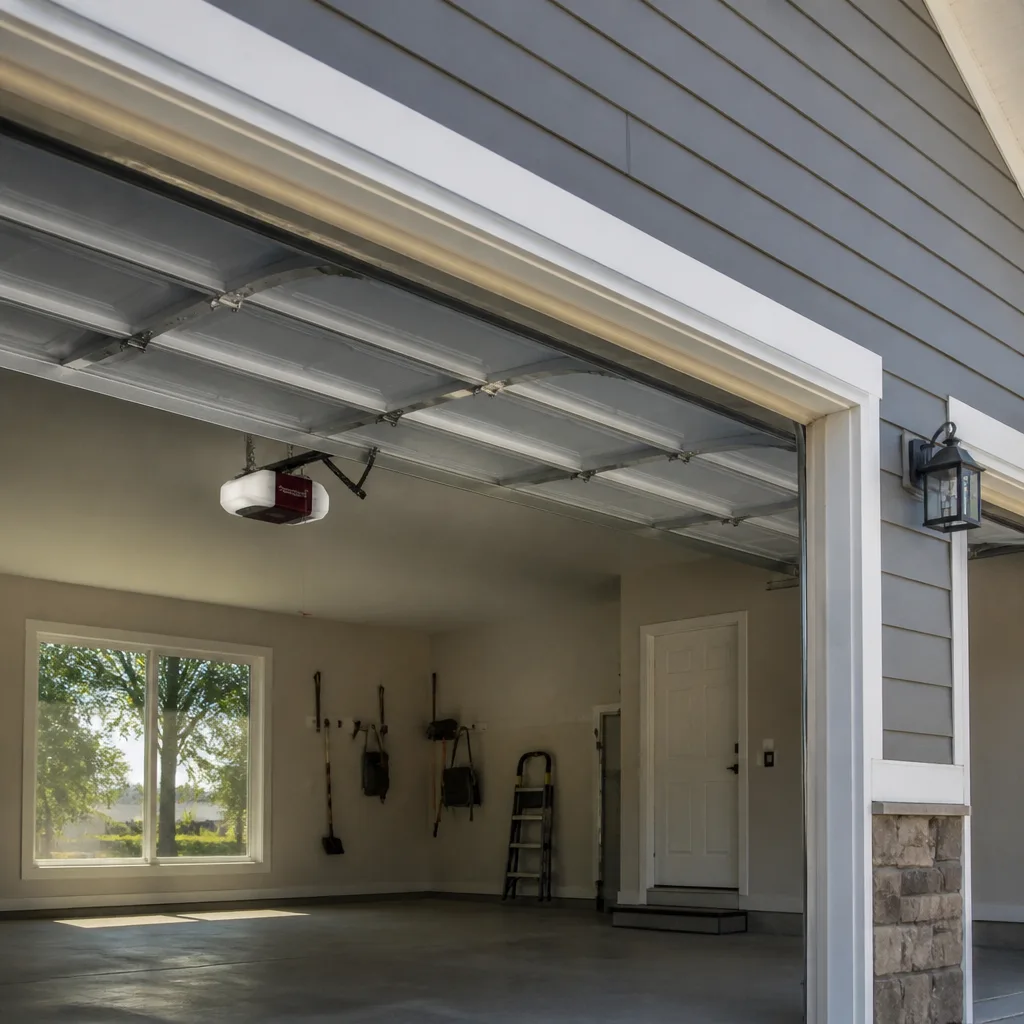 LiftMaster openers
 Chamberlain openers
Full 25-point door and opener safety check with every visit - springs, cables, rollers, tracks, and your LiftMaster or Chamberlain opener included
You get a price before we start. It does not change when the pro arrives.
Get your free estimateGarage Door Repair Maintenance Checklist for Palm Bay Homeowners
A torsion spring rated for 10,000 cycles can fail in under four years in a humid Florida climate if the coil is never lubricated with the right compound. That surprises most homeowners, because the failure isn’t the spring’s fault. It’s the maintenance. A standard spray like WD-40, used with good intentions every few months, strips the factory oil film and leaves bare steel to fight the humidity on its own. This guide is the checklist we actually use when we assess a door in Palm Bay: a component-by-component sequence ordered by what fails first here, the lubricants that hold up, and which tasks are yours versus ours.
Quick Answer
A garage door in Palm Bay needs a full inspection and lubrication about every three months, not the twice-a-year schedule you’ll find in most national advice. Springs fail first, bottom seals second, and cable drums third because humidity attacks the oil film on steel components. You can safely clean tracks, replace seals, and test the safety reverse yourself. Spring tension, cable alignment, and drum wear are technician work.
Styles & brands we work with
- Raised-panel steel
- Carriage house
- Modern flush
- Full-view glass
- LiftMaster openers
- Chamberlain openers
Table of Contents
- Why Palm Bay Maintenance Isn’t Standard Advice
- The Inspection Sequence: What Fails First in Palm Bay
- Which Lubricants Hold Up Against Brevard County Humidity
- Galvanic Corrosion: The Palm Bay Hardware Failure Point
- The Quarterly Schedule: Compressing the Standard Interval
- What You Can Check Safely vs. What Needs a Technician
- Dry Season, Wet Season: Adjusting the Checklist
- What Maintenance and Repair Typically Cost in Palm Bay
Why Palm Bay Maintenance Isn’t Standard Advice
Most garage door maintenance checklists floating around online were written for climates with cold winters and dry summers. They assume the enemy is freezing and thawing, so they tell you to inspect twice a year and call it done. Palm Bay doesn’t work that way. The enemy here is a steady, year-round humidity that comes from warm air over flat, wet terrain, and it never gives the door a break.
Here’s what that means in practical terms. The oil film on every moving steel part of a door – springs, hinges, rollers, cable drums – is the only thing standing between that steel and moisture. In a dry climate, that film lasts for months. In Palm Bay, humidity and warmth degrade it gradually and continuously, and the degradation is much faster during the rainy summer months when the air is heavy and the door sits in it day after day.
The sequence is predictable. Springs carry the most load and move the most, so their coils wear against each other and lose their protective film first. The bottom seal sits against a damp floor and takes the most contact, so it goes next. Cable drums, which wrap and unwrap cable under tension, come third. If you learn that sequence, you stop guessing and start checking the right parts in the right order.
This is why a generic checklist underperforms here. It’s not that the items are wrong – it’s that, in Palm Bay, the frequency and the product choices are wrong. That gap is where most premature failures start.
The Inspection Sequence: What Fails First in Palm Bay
Walk around your door and check the components in the order they typically fail in this climate. Each step is a look and a listen, not a repair.
- Springs (check first). Look at the torsion spring above the door or the extension springs along the sides. You’re checking for gaps in the coil, visible rust pitting, and a spring that looks stretched or uneven. If the door feels much heavier than it used to, or if it drops hard when you disconnect the opener and lift it partway, the spring has lost tension. A spring can be rated for 10,000 cycles and still give out well short of the expected service life if it was never lubricated.
- Bottom seal (check second). Run your hand along the seal that meets the floor. It should be pliable and should close smoothly against the threshold. Look for brittleness, cracks, or a seal that’s compressed flat. In Palm Bay, the seal is in contact with a slab that holds warmth and moisture, and it takes the most punishment of any rubber part on the door.
- Cable drums (check third). Look at the metal drum at each end of the torsion bar. The cable should wind neatly in its grooves with no bunching or fraying. A frayed or crossed cable is a genuine safety issue – stop using the door and have it looked at.
- Hinges and rollers. Open and close the door slowly and listen. Squeaks, grinding, or a door that shudders on the way up usually mean dry hinges or worn Nylon rollers. Check rollers for flat spots or chips.
- Tracks. Look for dents, bends, and debris. Wipe the inside of each track with a cloth and check the door moves without metal-on-metal scraping.
- Weatherstripping and gaps. Check the sides and top. A visible gap lets heat, humidity, and pests in, and it works the opener harder.
- Safety reverse. Place a roll of paper towels under the door, close it, and confirm the door reverses on contact. This is the single most important safety test you can run yourself.
Do the checks in that order every time so you don’t skip the load-bearing parts. If a step turns up a problem, note it and then move on – don’t start fiddling with a spring or a cable you’ve just flagged.
Which Lubricants Hold Up Against Brevard County Humidity
The right lubricant here is a silicone-based spray or a white lithium grease, applied lightly to moving parts. The wrong one is the thin, solvent-heavy spray most people reach for first. Here’s how they actually behave in Palm Bay’s climate.
- Silicone spray. Our default for hinges, rollers, and the spring coil. It lays down a thin, water-resistant film and doesn’t attract grit the way grease can. Apply a light coat, not a soak. It’s the easiest of the good options for a homeowner to use correctly.
- White lithium grease. Good for the torsion spring coil and for hinge pivot points where you want a heavier, longer-lasting film. The caution with lithium in a humid climate is dust and grit: too much of it collects air-borne debris, and that debris holds moisture. Light application matters.
- Thin solvent sprays and standard WD-40. Better suited to loosening a stuck bolt than lubricating a door. These strip the existing oil film, evaporate, and leave steel exposed. In a damp climate, that accelerates rust rather than preventing it. Use them elsewhere.
- Heavy automotive grease. Too thick for garage door hardware. It collects grit and turns into a gummy paste that slows the rollers and traps moisture against the steel.
A note on the bottom seal and weatherstripping: those are rubber, so anything petroleum-based will dry them out faster. Use a silicone spray there, or leave them alone until they need replacing. And don’t spray the tracks with lubricant yourself – most tracks are meant to run clean and dry, and grease in a track is one of the most common mistakes we correct.
Galvanic Corrosion: The Palm Bay Hardware Failure Point
When two different metals touch and moisture bridges them, they form a small electrical cell, and the more reactive metal corrodes. That’s galvanic corrosion, and the garage door hardware on many doors in Palm Bay is a textbook setup: aluminum brackets and hinges bolted against steel fasteners, in a climate where condensation regularly sits in the joint.
You won’t see it as a big rusty patch at first. Look at the point where an aluminum hinge meets a steel bolt or where an aluminum track bracket touches a steel plate. The tell is a white, powdery crust (aluminum oxidation) or a small ring of rust around the fastener, often with the paint bubbling just at the edge. Catching it early means cleaning the joint and applying a barrier before the fastener seizes or the bracket cracks.
Where this bites hardest is in the small parts nobody inspects: the bolts that anchor hinges to the panels, and the fasteners on the torsion mounting plate. A seized bolt makes an otherwise simple adjustment harder, and a cracked bracket compromises how the panel hangs.
Inspect the contact points during your quarterly walk-around, and keep them dry and lightly maintained. If you see real structural corrosion, that’s a job for us to assess. Brand familiarity helps here: on a Raynor or Clopay door, we know which fasteners and brackets are part of the original assembly and what a correct replacement looks like, so a corroded fitting doesn’t turn into a mismatched repair.
The Quarterly Schedule: Compressing the Standard Interval
The twice-a-year interval used in drier climates should be compressed to quarterly in Palm Bay. The logic is simple: the failure driver here is cumulative moisture exposure, not seasonal freeze and thaw, so every month of exposure matters more than it would in a drier region. A door that gets a full check every season gets caught before small issues compound.
Here’s how the year breaks down:
- Quarterly (every three months): Lubricate springs, hinges, and rollers. Run the full inspection sequence above. Test the safety reverse.
- Twice a year: Look closely at the bottom seal for hardening or cracking. Check the full length of each cable for fraying. Wipe out the tracks. Check the galvanic contact points.
- Once a year: Inspect the opener housing, check the mounting bracket and rail, and confirm the balance test on the door itself. Check rollers for flats and consider replacement if they look rough.
- After any storm or heavy weather: A quick visual pass and a safety reverse test, plus a look at anything that may have shifted.
The Palm Bay summer months are the ones to watch most closely, because warm, humid air is working against the steel the whole time. If you only manage one check a year, do it in late spring, right before the humid stretch. This single adjustment in frequency is the difference between a spring lasting toward its rated life and failing early.
What You Can Check Safely vs. What Needs a Technician
Some of this checklist is yours to handle. Some of it is genuinely dangerous, and the line between the two matters.
Safe for most homeowners:
- Cleaning and wiping down the tracks.
- Lubricating hinges, rollers, and the spring coil with the right product.
- Replacing the bottom seal or side weatherstripping.
- Cleaning or replacing Nylon rollers.
- Running the safety reverse test.
- Visual inspection for rust, cracks, and corrosion.
Needs a technician:
- Torsion or extension spring replacement, and any adjustment of spring tension.
- Cable replacement, drum work, or anything involving a frayed cable.
- Track realignment after impact.
- Opener diagnosis for motor, remote, or smart-home connectivity problems.
- Panel replacement or structural bracket work.
The reason springs and cables sit firmly on the professional side is energy. A torsion spring under load stores an enormous amount of force, and an improperly released or adjusted spring can cause serious injury. Cables are the second half of that system. We won’t walk you through it the way a video might, because the risk is real and the technique matters. If you suspect a spring or cable problem, keep the door closed, keep people clear of it, and have it assessed by someone trained for it. When maintenance turns into an actual garage door repair job, that’s where we come in.
Dry Season, Wet Season: Adjusting the Checklist
Palm Bay’s year splits into a drier stretch and a wetter, more humid stretch, and the door feels the difference. During the wet season, lubrication degrades faster, dark spots on steel appear sooner, and the rubber components harden and check more quickly. That’s when the quarterly check earns its keep. During the drier months, the door cooperates a little more, but dust and grit still get into hinges and tracks, so the clean-down matters.
Two habits help year-round. First, after any heavy weather, walk out and test the safety reverse and glance at the seal – it takes a minute. Second, keep the area around the door clear and dry where you can. Standing moisture at the base won’t fix itself.
The opener gets its own attention in the schedule, because the motor, rail, and mounting hardware work harder when the door is heavier than it should be. We treat garage door opener repair as a specialty rather than a side task, and we work across the major brands – LiftMaster, Chamberlain, Genie, Raynor and others – so a diagnosis on your unit starts from familiar ground. Checking the opener’s mounting and rail once a year, and listening for a change in sound, catches most problems before they become a breakdown.
What Maintenance and Repair Typically Cost in Palm Bay
Regular maintenance is the cheapest line item on this whole checklist, and that’s the point. A cleaning and lubrication you handle yourself costs a spray can. When maintenance turns into a repair, here’s roughly what it runs in Palm Bay, and the written estimate is what sets the final price.
| Item | Typical range |
|---|---|
| Spring replacement (one spring) | $180 – $340 |
| Matched pair of springs (usually replaced together) | About twice the single-spring price |
| Bottom seal replacement | $70 – $140 |
| Roller replacement (set) | $90 – $180 |
| Cable replacement | $150 – $300 |
| Tune-up and safety inspection | $90 – $175 |
A few things to understand about those numbers. A spring price is for one spring; a matched pair is usually what you want, since the second one is at the same age and cycle count as the first, so quoting a single range for both would be misleading. And the price you agree to is the price – we diagnose before we quote, and the estimate is free. Nothing starts until you’ve approved the number.
Spending a little on the right lubricant and a quarterly check is what keeps you out of the repair column. If you want a professional assessment of your door’s condition, the team at Unity Garage Door Repair offers free estimates in Palm Bay – call (866) 901-6506. We answer 24/7. Fast dispatch from 7am to 7pm, Sunday through Friday.
Common Mistakes to Avoid
- Lubricating springs with a thin solvent spray. It strips the oil film and leaves bare steel to rust faster. Use silicone spray or white lithium grease in light coats.
- Greasing the tracks. Tracks are meant to run clean and dry; grease collects grit and slows the rollers. Clean them with a dry cloth instead.
- Following a once-a-year schedule. A drier climate can get away with it. Palm Bay’s humidity means quarterly checks, and skipping them is how springs fail early.
- Ignoring the galvanic contact points. The white crust where aluminum meets steel is easy to overlook until the fastener seizes. Look for it during every inspection.
- Forgetting the safety reverse test. It’s the most important check on the whole list and takes one minute with a roll of paper towels.
- Adjusting spring tension yourself. This is the one item where a small mistake can cause serious injury. It’s a technician task, full stop.
- Treating a new-style opener like an old one. Smart-connectivity issues and belt-drive diagnostics aren’t a handyman repair. Bring in someone who works on opener systems regularly.
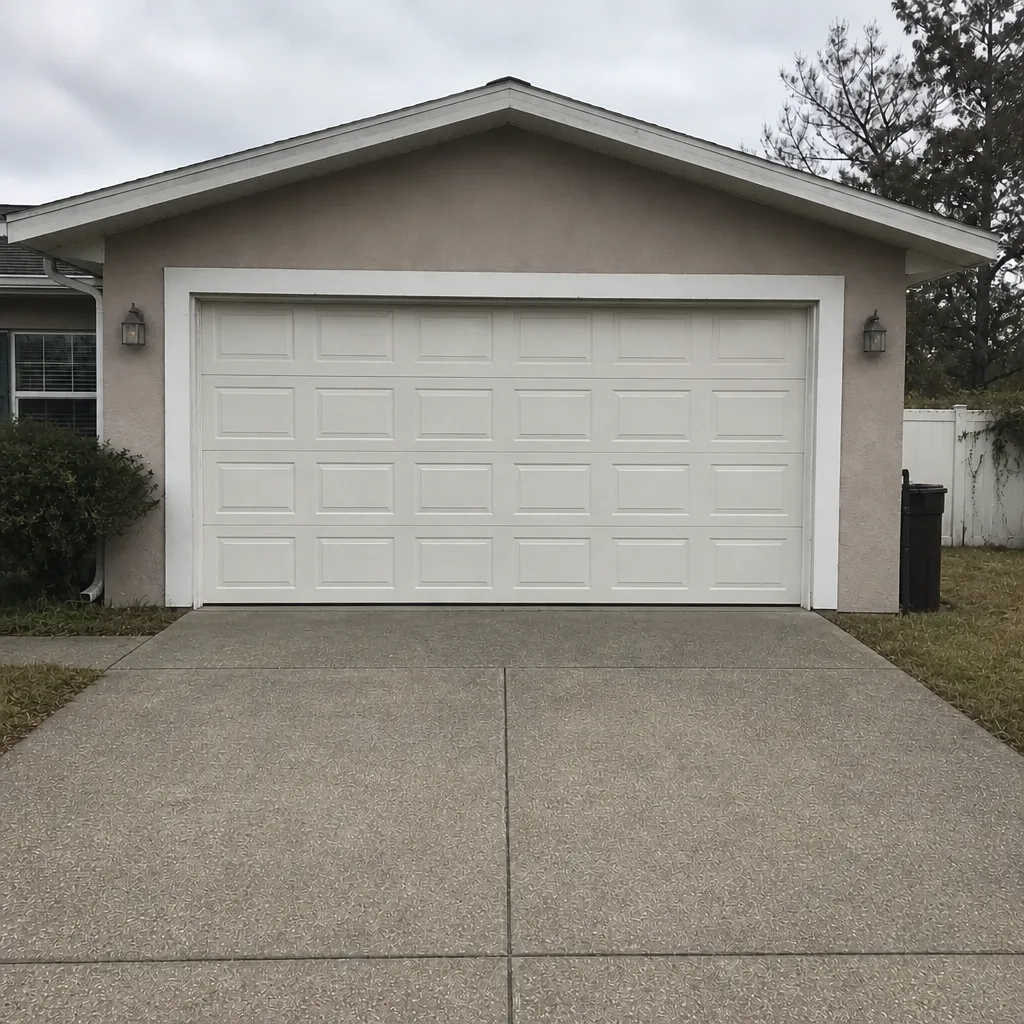
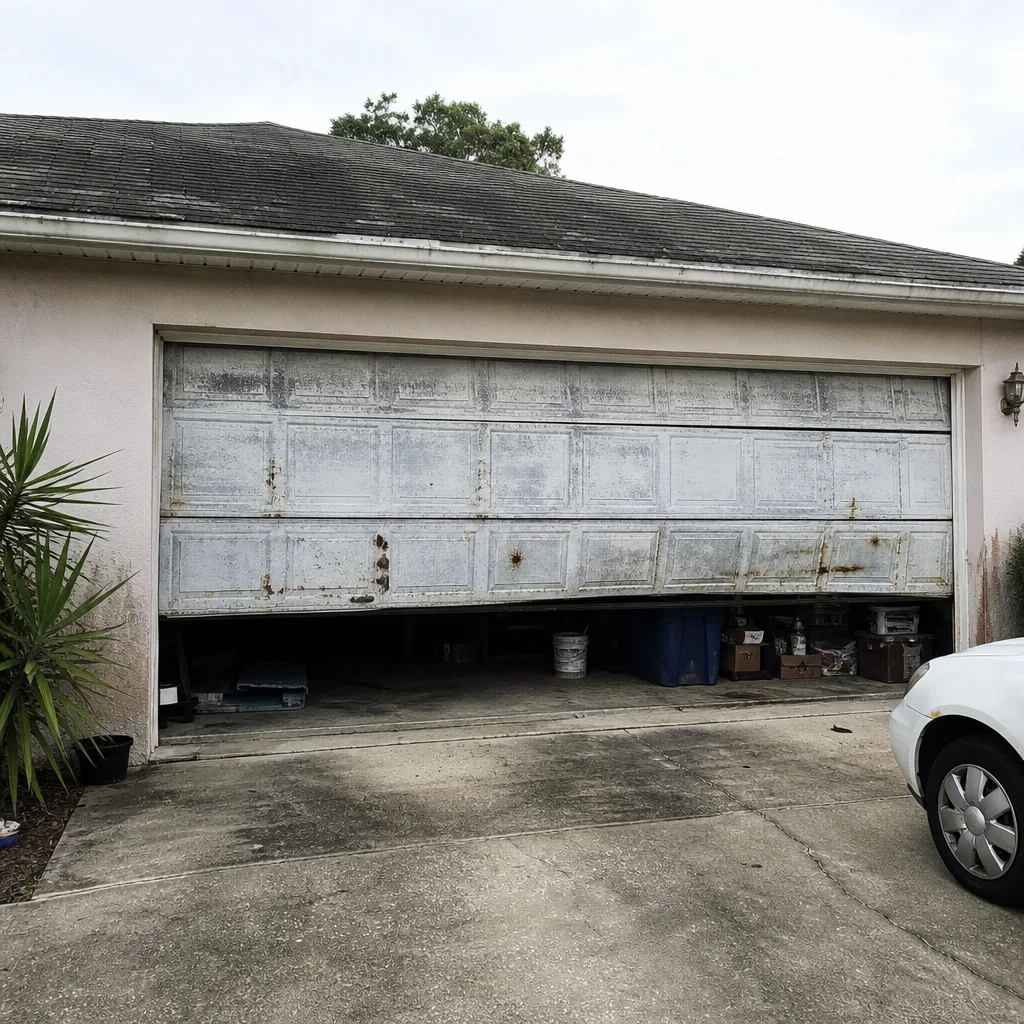
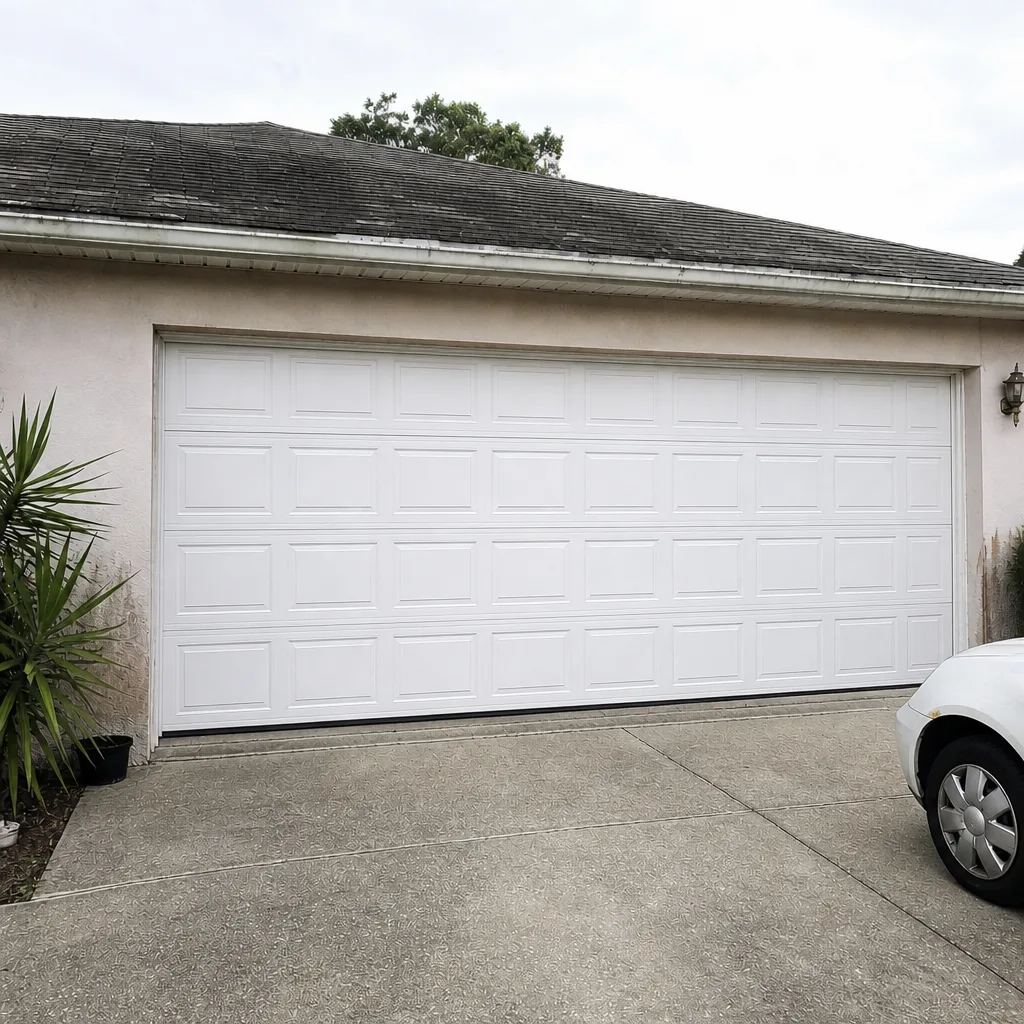
See the difference
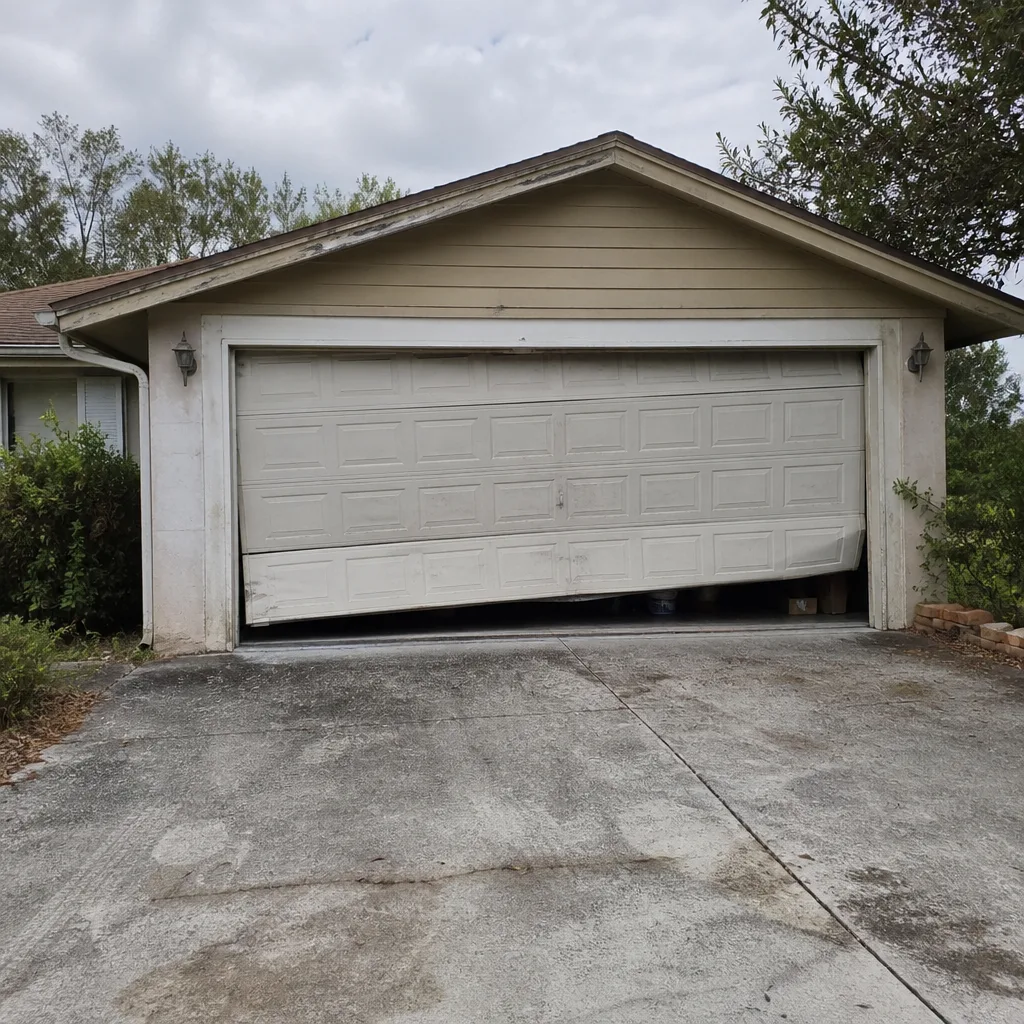 Before
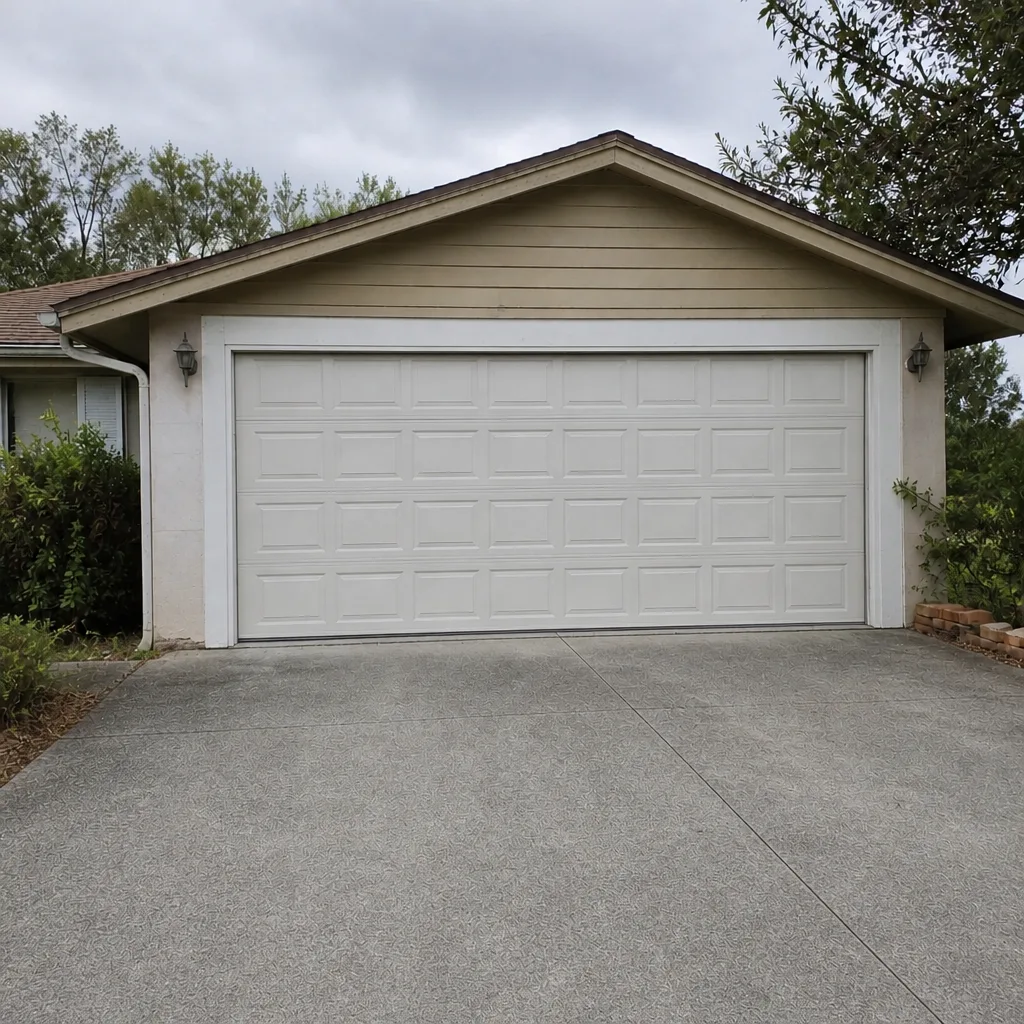 After
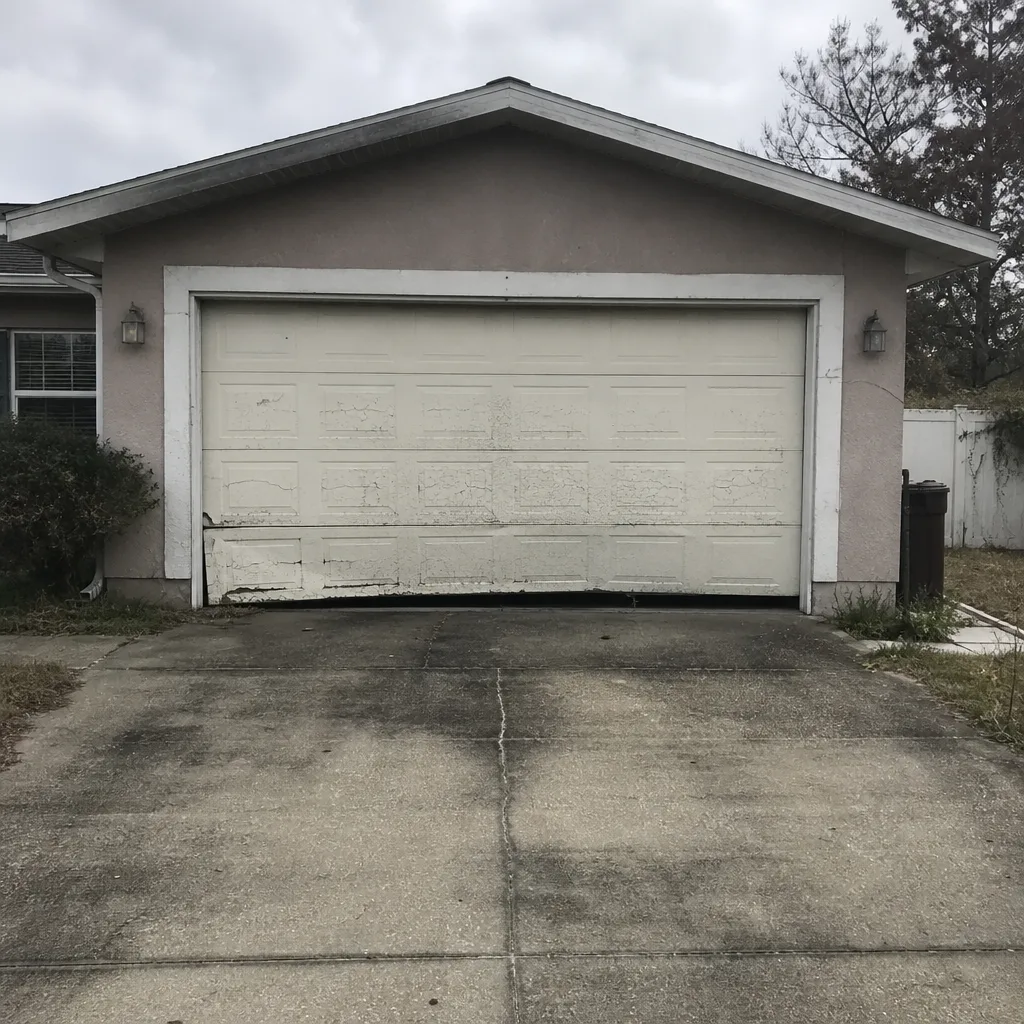 Before
 After
 Before
 After
When to Call a Professional
Bring in a technician when the door has lost its balance, when a spring looks gapped or feels wrong, when a cable is frayed or crossed, or when the door comes down hard and uncontrolled. Call sooner rather than later if you’ve punctured or dented the door and the track has shifted, and if you notice grinding from the opener or the safety reverse stops responding to your test. Any of these is more than maintenance – it’s a repair, and it’s safer handled by someone trained for it. Unity Garage Door Repair offers free estimates in Palm Bay – call (866) 901-6506. We answer 24/7. Fast dispatch from 7am to 7pm, Sunday through Friday.
Frequently Asked Questions
Every three months. The humidity here degrades the protective oil film on steel parts faster than in a drier climate, so a quarterly schedule is the right interval for Palm Bay. Use silicone spray or white lithium grease in light coats, not a thin solvent spray.
No. Torsion and extension springs store a large amount of energy under load, and improper handling or adjustment can cause serious injury. Spring tension adjustment and replacement should always be handled by a trained technician. You can lubricate the coil and watch for gaps, but leave the tension work to a professional.
The springs, almost always. They carry the heaviest load and move the most, so their coils wear and lose their protective film first. That’s why springs are the first item in the inspection sequence. The bottom seal usually follows, and cable drums after that.
If it feels brittle, looks cracked, or doesn’t close smoothly against the floor, it’s due. Run your hand along it every few months; a healthy seal is pliable. Replacing it is a homeowner task and costs roughly $70 – $140 in Palm Bay.
Not for lubrication. Standard WD-40 strips the oil film and leaves steel exposed, which accelerates rust in a humid climate. It’s fine for loosening a stuck bolt. For door maintenance, use silicone spray or white lithium grease instead.
The safety reverse test. Place a roll of paper towels under the door and confirm it reverses on contact – if it doesn’t, stop using the door and have the opener checked. That’s a garage door opener repair item, not something to put off.
The Bottom Line
Palm Bay’s humidity doesn’t give a garage door the same schedule it would get in a drier climate. Springs fail first, seals second, and drums third, because moisture works on them year-round. The fix is simple and cheap: a quarterly check, the right lubricant, and an eye on the galvanic contact points where aluminum meets steel. Keep the safe tasks yourself – cleaning, lubricating, seal replacement, safety reverse testing – and call a professional for spring tension, cable work, and opener diagnosis. That split is what makes a maintenance checklist actually work in Palm Bay. When you need a full assessment, we’re a call away.
For a complete home checklist you can trust, we work on your brand across LiftMaster, Chamberlain, Genie, Raynor, and more, so one call gets your door fully sorted. When maintenance isn’t enough, garage door repair and garage door opener repair are both under our roof, and a new door is a single Unity Garage Door Repair conversation. Serving homeowners across Palm Bay with free estimates and no guesswork.
Call (866) 901-6506 for a free estimate. We answer 24/7. Fast dispatch from 7am to 7pm, Sunday through Friday.
Written by the team at Unity Garage Door Repair.