
Last updated November 15, 2026
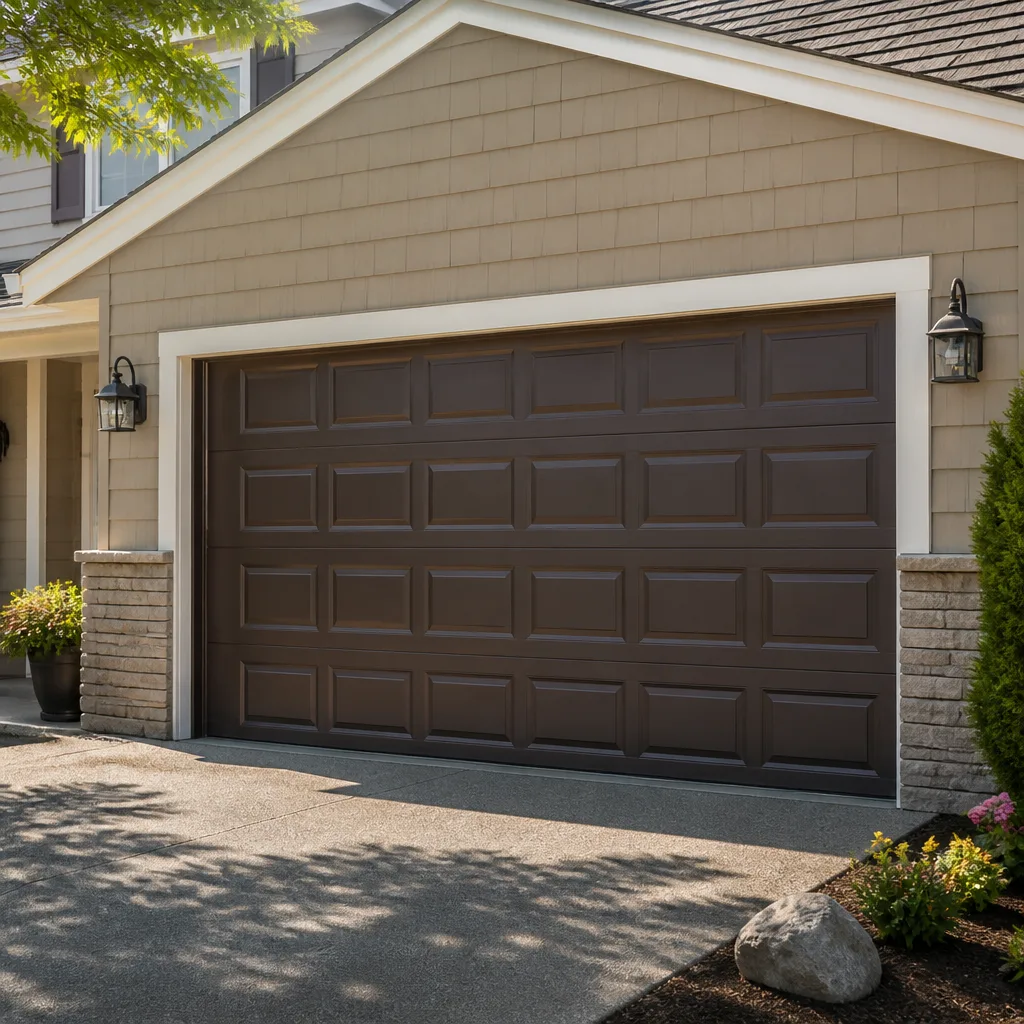 Raised-panel steel
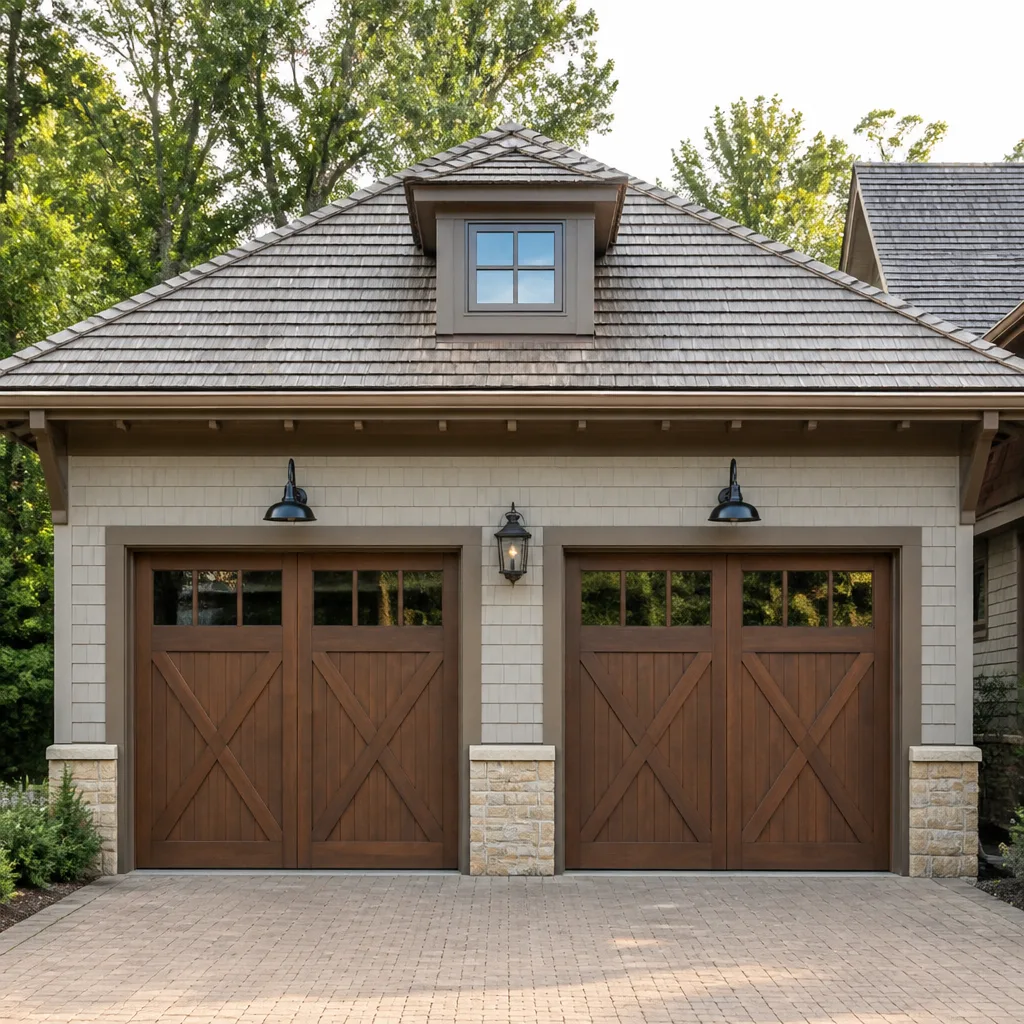 Carriage house
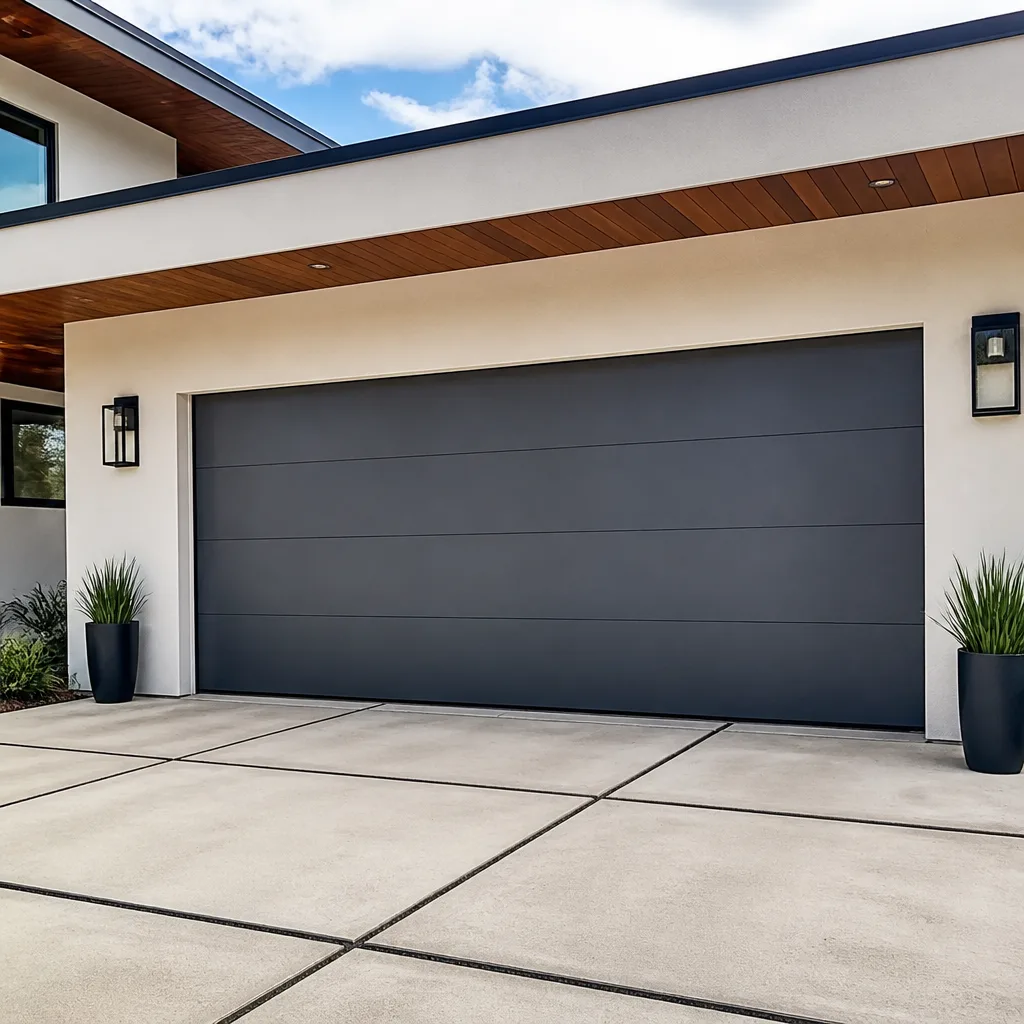 Modern flush
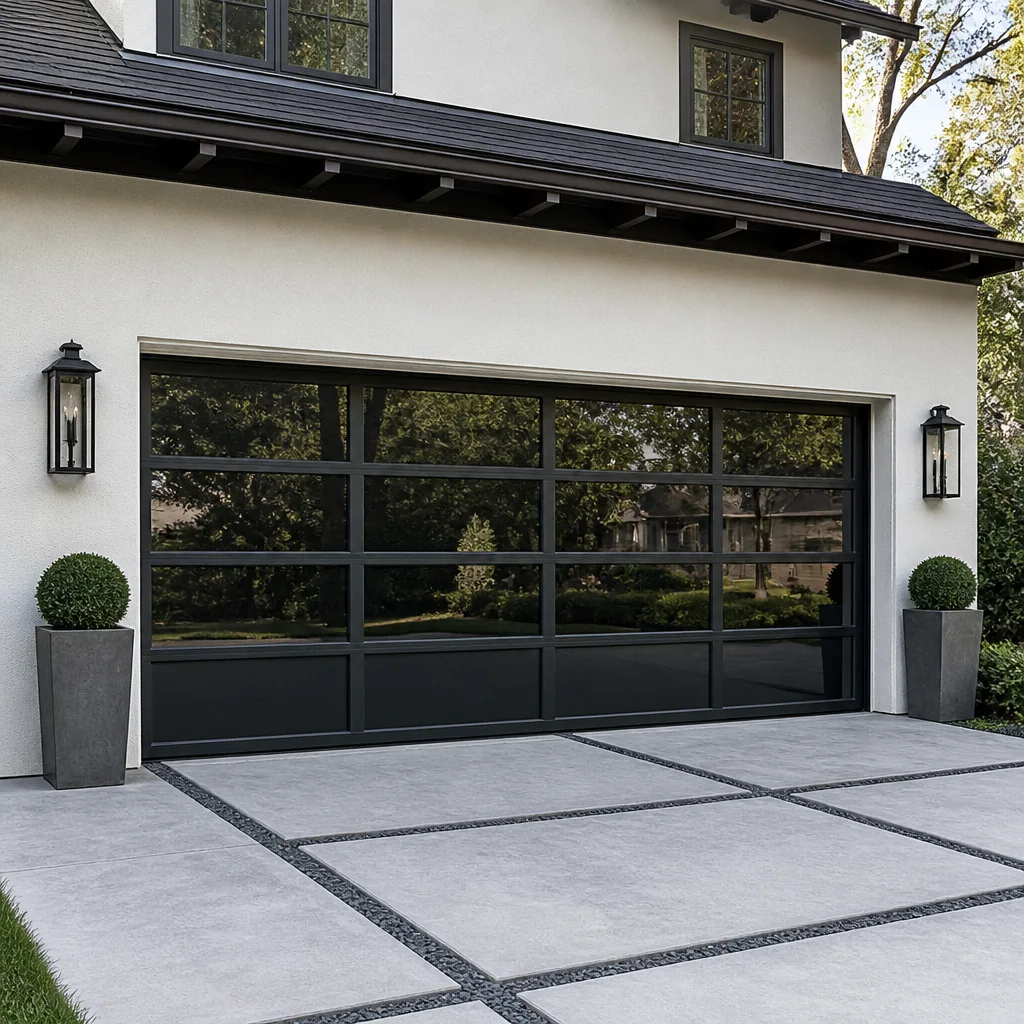 Full-view glass
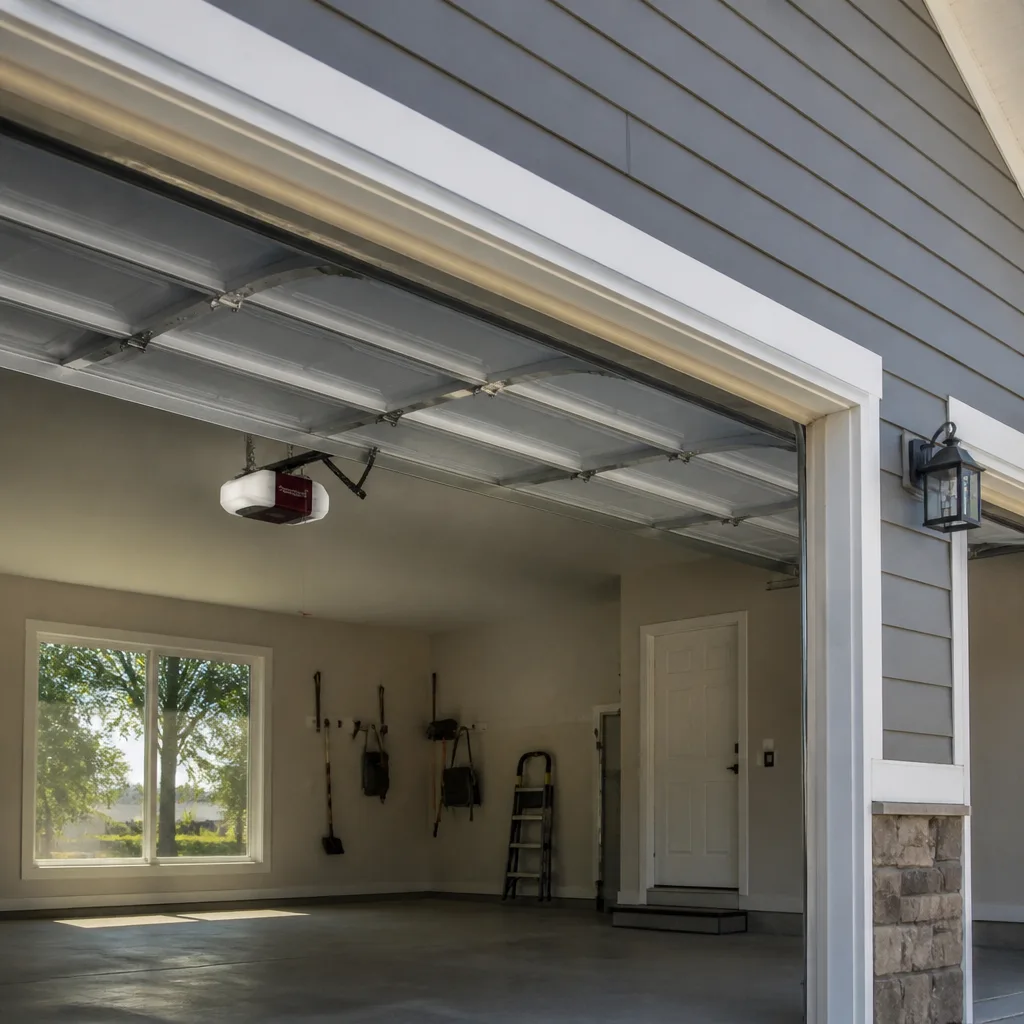 LiftMaster openers
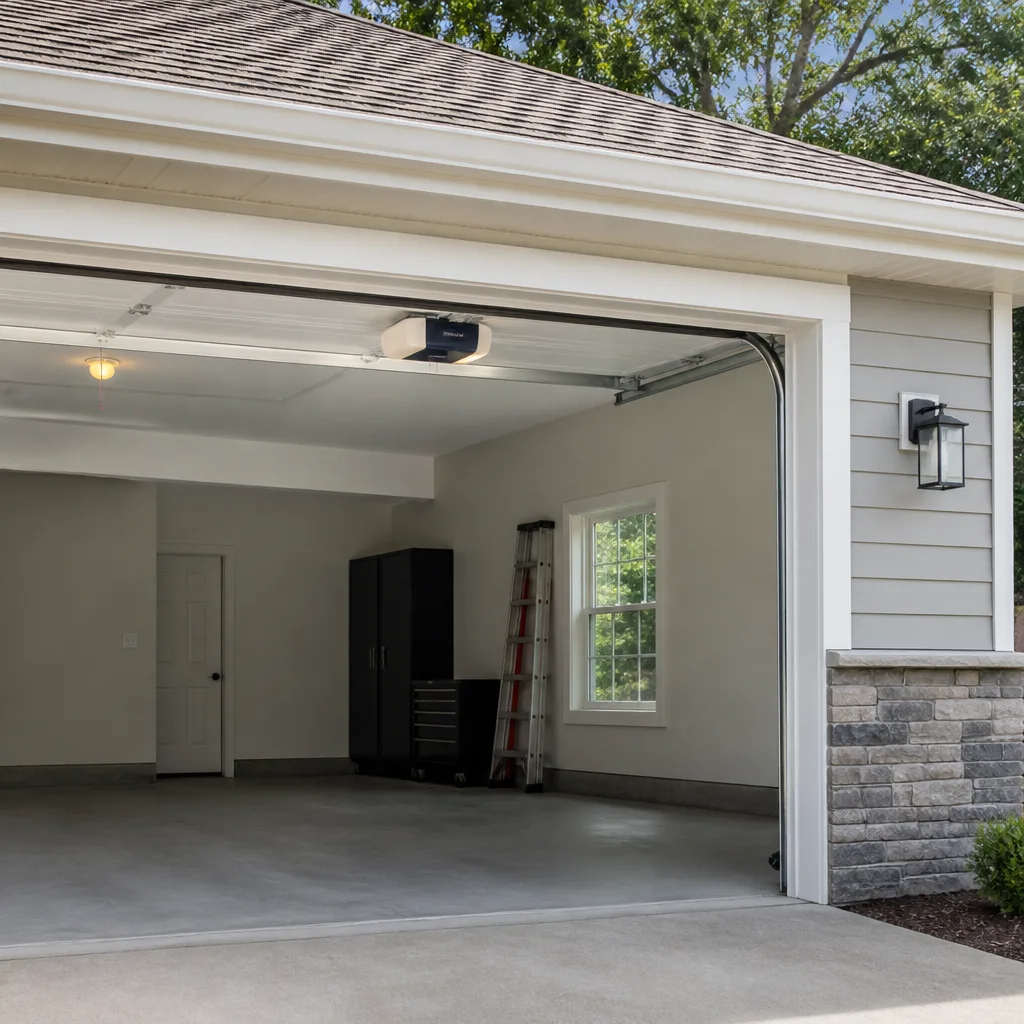 Chamberlain openers
Full 25-point door and opener safety check with every visit - springs, cables, rollers, tracks, and your LiftMaster or Chamberlain opener included
You get a price before we start. It does not change when the pro arrives.
Get your free estimateGarage Door Repair Maintenance Schedule: What to Do and When
The standard advice to lubricate your garage door springs once a year was written for climates that get cold winters and long dry spells. Palm Bay doesn’t work that way. Humidity here stays high through most of the year, and the metal parts of a garage door spend months cycling between cool mornings and hot afternoons. That pattern wears a door differently than a northern freeze-thaw cycle does, and a once-a-year checklist misses it. In this guide we lay out a maintenance schedule built around Brevard County conditions: a 90-day lubrication cycle, a month-by-month task calendar, the two quick tests that catch spring wear early, and the records that matter if you ever need to prove the door was serviced.
Quick Answer
In Palm Bay, garage doors need lubrication every 90 days rather than once a year, a full hardware inspection before hurricane season in May, a post-storm check in October, and a 10-second spring tension test plus a 30-second balance test every quarter. Springs, rollers, cables and bottom seals wear faster here than the national averages suggest because of year-round humidity and heat cycling, so the calendar below is timed to local conditions rather than a generic four-season schedule.
Styles & brands we work with
- Raised-panel steel
- Carriage house
- Modern flush
- Full-view glass
- LiftMaster openers
- Chamberlain openers
Table of Contents
- Why a Palm Bay Maintenance Schedule Looks Different
- The Month-by-Month Calendar for Palm Bay
- The Right Lubricants for High-Humidity Doors
- Two Tests You Can Run in Under a Minute
- How Long Parts Last in Palm Bay Conditions
- How to Log Maintenance So It Counts
- Storm Season: What to Check Before and After
- What You Can Do Yourself and What You Shouldn’t
Why a Palm Bay Maintenance Schedule Looks Different
Most garage door maintenance guides are written for a climate with four distinct seasons. They assume the door sits through a cold winter, gets a spring tune-up, and then coasts until fall. Palm Bay runs a different pattern. Heat and humidity carry through most of the year, and the daily temperature swing does the damage that a hard freeze does elsewhere: metal expands in the afternoon and contracts overnight, over and over, and every joint, hinge and roller takes that movement.
Humidity is the bigger factor. When the air holds moisture most of the year, unpainted or thinly protected steel starts to oxidize quietly. Rust on a torsion spring or a cable doesn’t announce itself. It builds up in the coils and the strands where you can’t easily see it, and the first sign is often a spring that snaps or a cable that frays. A door that gets lubricated once in spring may look fine in November while the protective film on the spring has already broken down.
Palm Bay’s housing stock adds another variable. Many homes here have attached garages that face west or south, which means the door takes direct afternoon sun for hours. That side of the door runs hotter than the shaded side, and the panels on that face expand against the others. We see more panel binding and roller wear on sun-facing doors than on doors that sit in shade most of the day.
None of this means a Palm Bay door is fragile. It means the maintenance rhythm is different. A 90-day lubrication cycle and a quarterly inspection catch the wear this climate produces before it turns into a repair. The rest of this guide is built around that rhythm.
The Month-by-Month Calendar for Palm Bay
Here’s the schedule we recommend for a door in Palm Bay. It’s organized by month, but the real anchor points are the quarterly checks and the two storm-season inspections. If you’d rather work from seasons than dates, run a full inspection in January, April, July and October.
- January: Full quarterly inspection. Lubricate springs, hinges, rollers and tracks. Test the balance of the door by hand. Check the auto-reverse safety feature with a test object.
- February: Look at the bottom seal and the weatherstripping around the frame. In a humid climate these degrade faster than the door itself, and a worn seal lets water and pests in.
- March: Check the opener’s force settings and the safety sensors. Clean the sensor lenses. Confirm the manual release works.
- April: Second quarterly lubrication. Tighten hinge and bracket bolts. Listen for new sounds on open and close.
- May: Pre-hurricane-season inspection. This is the most important month on the calendar in Palm Bay. Check the door’s tracks, hinges, and anchoring hardware, and confirm the door is rated for the wind load your area requires. If you have questions about what your door is rated for, ask your city’s building department.
- June: Inspect cables for fraying at the drums. Check the spring for rust bloom. Lubricate again if the door sits in full sun.
- July: Peak heat expansion check. Open and close the door slowly and watch for panel binding or a track that has shifted. Heat expansion is most visible in mid-summer.
- August: Second peak-heat check. Re-lubricate the torsion spring and rollers. Confirm the opener isn’t straining on the first lift of the day.
- September: Third quarterly inspection. Test the balance and the auto-reverse again. Check all fasteners.
- October: Post-storm hardware check. After storm season, walk the full door and look for loose hinges, shifted tracks, and bent or misaligned panels.
- November: Fourth quarterly lubrication. Inspect the bottom seal again before the wetter months. Check the spring for any new rust.
- December: Year-end review. Log what was done, what was replaced, and what to watch next year. Book any repair you’ve been putting off.
If that looks like a lot, the short version is this: lubricate every quarter, inspect fully in May and October, and pay attention in July and August when the heat does its worst. The rest is detail.
The Right Lubricants for High-Humidity Doors
The single most common maintenance mistake we see on Palm Bay doors is using the wrong lubricant on the springs. A general-purpose spray like WD-40 is a solvent and a light water displacer, not a long-term lubricant. On a torsion spring it can strip away whatever protective film is there and leave the steel more exposed than before. In a humid climate, that accelerates the corrosion you were trying to prevent.
Here’s what works, part by part:
- Torsion springs: A garage-door-specific spring lubricant, or a lithium grease in a spray can designed for high-load metal contact. The goal is a film that stays put and doesn’t wash off. Apply a light coat along the coils, then run the door up and down a couple of times to work it in.
- Rollers: Nylon rollers generally need little or no lubrication. Steel rollers benefit from a few drops of light machine oil at the bearing, not a heavy grease that attracts grit.
- Hinges: A spray lubricant designed for hinges, or a light lithium grease. Work it into the pivot points and wipe off the excess.
- Tracks: Don’t grease the tracks. A dry silicone spray is the right call, and even that should be used sparingly. Grease in the tracks collects dirt and makes the rollers drag.
- Cables: Don’t lubricate cables. They’re under high tension, and oil just attracts grit into the strands. Inspect them instead, and have a professional replace any that show fraying.
What to avoid: WD-40 on springs, any grease that stays tacky and collects dust, and silicone on the torsion spring itself. Silicone is fine on tracks and on rubber seals, but it doesn’t hold up as a spring lubricant in this climate.
On the equipment itself, we work on the major brands you’re likely to have here, including Genie, Clopay, Amarr and Wayne Dalton. Each has its own quirks when it comes to lubrication points and spring hardware, and knowing those saves time when something needs adjusting. If your door carries one of these names, we can tell you what to watch for on it specifically.
Two Tests You Can Run in Under a Minute
You can catch most spring and balance problems before they strand your car inside. Both of these tests are safe to run yourself and take less than a minute combined.
The 10-second spring tension test. With the door closed, look at the torsion spring above the door (the coil that runs horizontally across the top). You’re checking for two things: visible rust bloom anywhere on the coil, and a gap or winding difference between the coils. A healthy spring sits with its coils tight and even. If you see rust, a visible gap, or a spring that looks like it’s lost its winding, that’s a sign of wear. Don’t try to adjust the spring yourself. Torsion springs are under extreme tension, and a release can cause serious injury. This test is for spotting the problem, not fixing it.
The 30-second balance test. Disconnect the opener using the manual release (usually a pull cord hanging from the opener rail). Lift the door by hand to about halfway, then let go. A balanced door holds its position, or drifts only slightly. A door that sinks to the floor or rises on its own is out of balance, which usually points to a spring that’s lost tension. Reconnect the opener when you’re done.
Run both tests quarterly, and again any time the door starts sounding different. A door that suddenly gets louder, jerky, or slower on the way up is telling you something.
If a test turns up a problem, that’s when to bring in a professional. Our team can diagnose the issue and quote the repair before anything is done. For general repair work, garage door repair in Palm Bay covers springs, cables, rollers and hinges, and we’ll tell you plainly whether the door needs a fix or just an adjustment.
How Long Parts Last in Palm Bay Conditions
National averages for garage door component lifespan are based on a typical mixed climate. In Palm Bay, high humidity and year-round heat cycling tend to shorten the window on exposed metal parts. These are estimates based on how doors here typically wear, not a guarantee for any specific door:
- Steel rollers: Often need replacement sooner than the national average because grit and humidity wear the bearings faster. Nylon rollers tend to last longer in this climate.
- Torsion springs: Cycle count matters more than calendar time, but humidity-related rust can shorten the life of a spring here compared to a drier climate. Lubricating on the 90-day cycle is the single best thing you can do to extend it.
- Cables: Inspect every quarter. Cables in a humid environment can fray at the drum faster than elsewhere, and a frayed cable is a safety issue, not just a maintenance item.
- Bottom seals and weatherstripping: These degrade faster here than in dry climates. Check them every February and again in November, and replace when they harden, crack or stop sealing.
- Hinges and fasteners: Loose or corroded hinges are common on doors that face the sun. Tighten and lubricate on the quarterly schedule.
The takeaway is that you shouldn’t measure your door’s wear against a national chart. Measure it against what you see on the door: rust, noise, slow response, and how the balance test goes. Those observations are more useful than any average.
How to Log Maintenance So It Counts
If you ever file an insurance claim or a home warranty request related to the garage door, the adjuster will want to see that the door was maintained. A door that was serviced on a regular schedule is easier to document than one that wasn’t, and the records you keep make the difference.
Here’s what actually matters in a maintenance log, in order of usefulness:
- Dates of each service. A simple list of when the door was lubricated, inspected, or repaired. Even a note on your phone works, as long as it’s dated.
- What was done. “Lubricated springs and hinges, tested balance, auto-reverse checked” is enough. You don’t need a technical report, just a record.
- Who did the work. If a professional did it, keep the invoice or the work order. If you did it, note that it was a homeowner maintenance task.
- Parts replaced. Any spring, roller, cable or opener part that was replaced, with the date. Warranty claims often hinge on when a part was installed.
- Photos. A dated photo of the door and the spring area at each inspection gives you a visual record that’s hard to argue with.
What doesn’t matter: a complicated spreadsheet, a printed binder, or a formal report. What matters is a dated record that the door was cared for. We tell customers in Palm Bay to keep their invoices in the same place as their homeowner documents, because that’s where they’ll look when they need them.
A written estimate and invoice from a professional repair is one of the most useful records you can have, since it documents what was found and what was fixed. Unity Garage Door Repair provides a written estimate before any work starts, and that paperwork becomes part of your maintenance history.
Storm Season: What to Check Before and After
Palm Bay sits in a storm-prone part of the state, and the garage door is one of the largest openings on a home. The two checks that matter most are the pre-season inspection in May and the post-storm walk-around in October.
Before storm season (May):
- Check that the door’s tracks are straight and securely fastened to the frame.
- Look at the hinges and brackets for looseness or rust.
- Confirm the door’s wind rating matches what’s required for your area. If you’re unsure, ask your city’s building department what applies to your home.
- Test that the manual release works, so you can operate the door by hand if the power goes out.
- Make sure nothing is stored against the door or blocking its travel.
After a storm (October, or after any significant weather):
- Walk the full door and look for bent or misaligned panels.
- Check for shifted tracks, which often show up as a door that binds or scrapes on one side.
- Look for loose hinges and fasteners.
- Test the balance again. A storm can knock a door out of alignment even without visible damage.
- Check the bottom seal for tears or water intrusion.
If the door took an impact or you see damage after a storm, don’t force it open and closed. A misaligned door can damage the opener or the panels further. Get it looked at.
What You Can Do Yourself and What You Shouldn’t
Some maintenance is well within reach for a homeowner. Some isn’t, and knowing the line is what keeps you safe.
Safe to do yourself:
- Lubricating springs, hinges and rollers on the 90-day cycle.
- Running the balance and spring tension tests.
- Cleaning the safety sensor lenses on the opener.
- Checking and replacing the bottom seal.
- Tightening visible hinge and bracket bolts.
- Keeping a maintenance log.
Not safe to do yourself:
- Adjusting or replacing torsion springs. These are under extreme tension, and a release can cause serious injury.
- Replacing or adjusting cables, which are also under high tension.
- Realigning a track that has shifted, since a door can come down unexpectedly.
- Adjusting the opener’s force settings without knowing the correct procedure, since the safety reverse depends on them.
If your opener is acting up, that’s a job for a specialist. On this trade, opener repair is a distinct skill set: motors, remotes, safety sensors and smart-home integration all need their own diagnostics. garage door opener repair in Palm Bay covers all of those, and we treat it as a specialty rather than a side task.
Common Mistakes to Avoid
- Using WD-40 on the springs. It displaces water but doesn’t protect the metal long-term, and in Palm Bay’s humidity that leaves the spring more exposed. Use a spring-specific lubricant instead.
- Greasing the tracks. Grease in the tracks collects grit and makes the rollers drag. Use a dry silicone spray, and use it sparingly.
- Following a national once-a-year schedule. A schedule written for a cold-winter climate misses the humidity-driven wear that happens here. Lubricate every 90 days, not once a year.
- Ignoring the balance test. A door that sinks or rises on its own is telling you the spring has lost tension. Catching it early avoids a failure that strands your car inside.
- Skipping the May inspection. The pre-storm check is the most important one on the Palm Bay calendar. A door that’s loose or misaligned going into storm season is a bigger risk than one that’s maintained.
- Not keeping records. Without dated records of service, an insurance claim or warranty request is harder to support. Keep invoices and note the dates of your own maintenance.
- Forcing a damaged door. If the door is bent or the track has shifted, don’t keep running the opener. You’ll make the repair bigger.
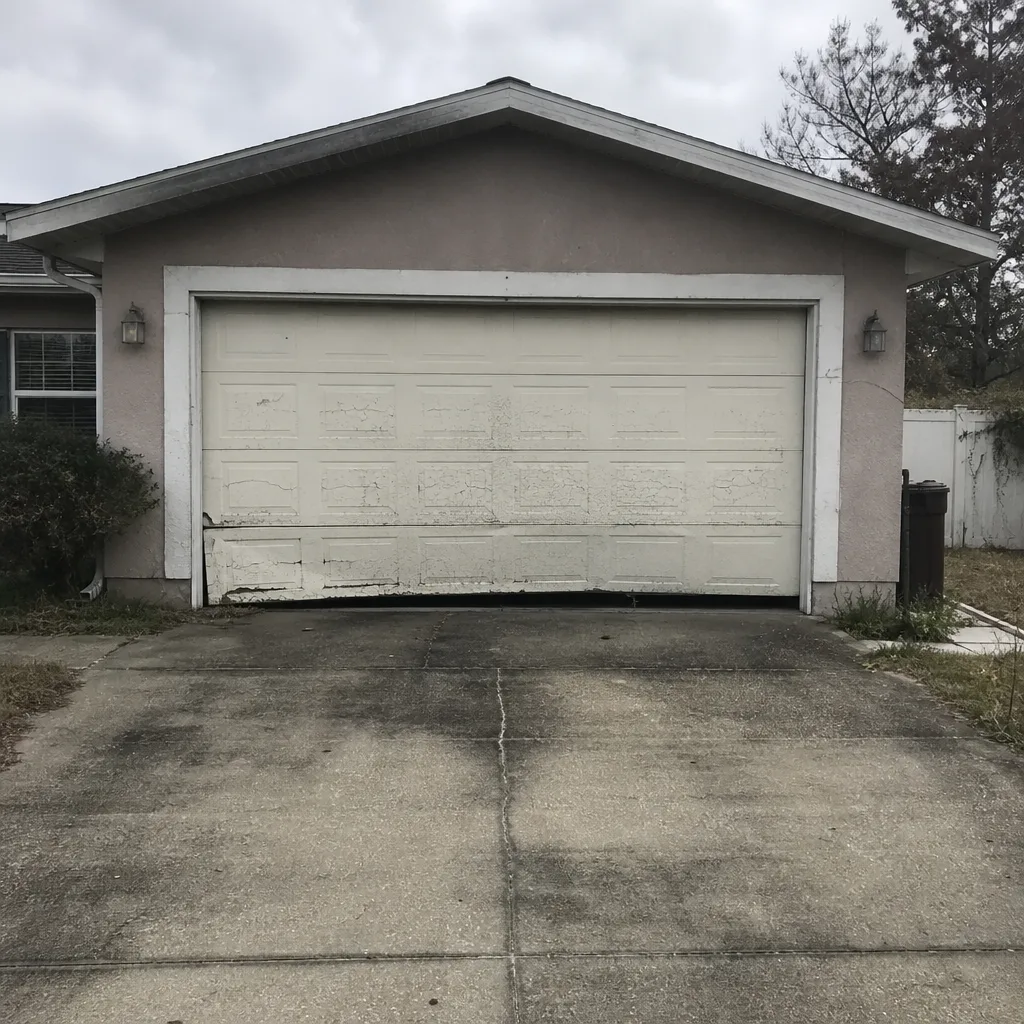
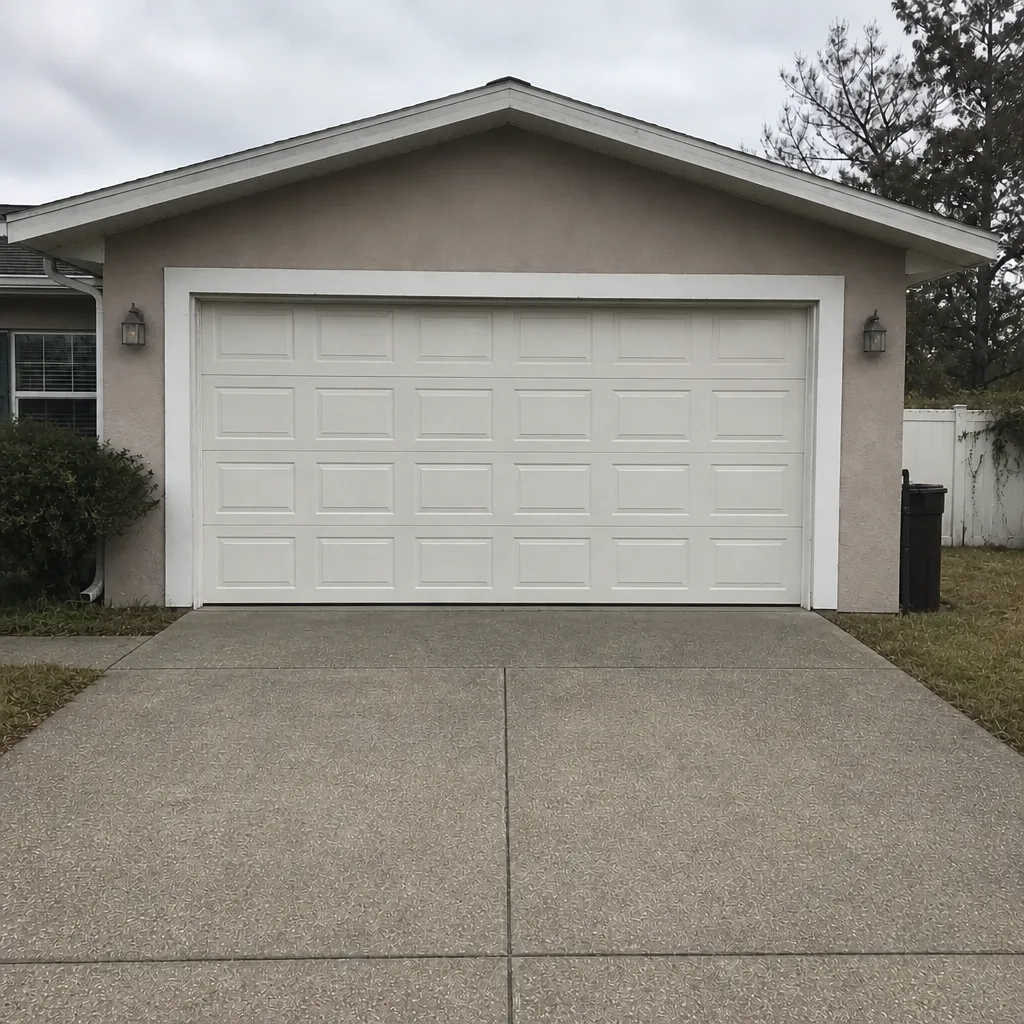
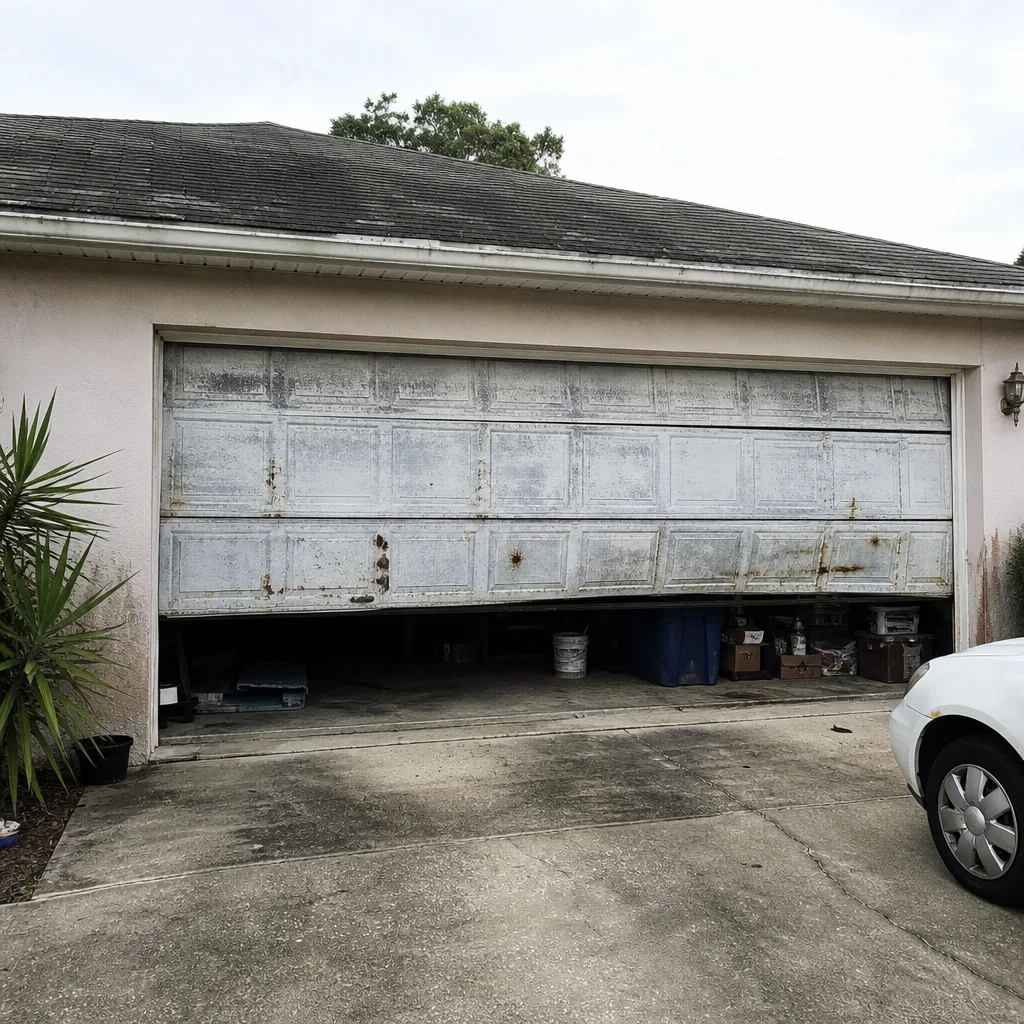
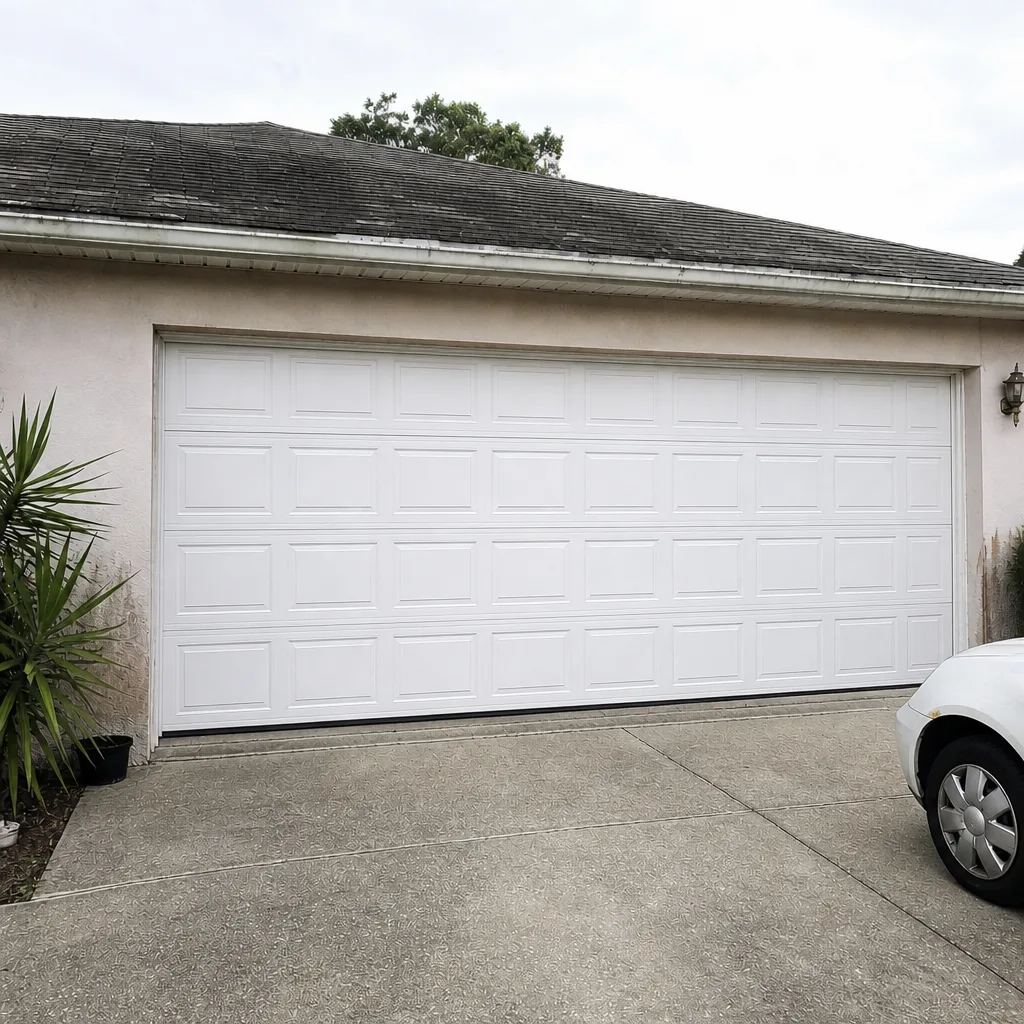
See the difference
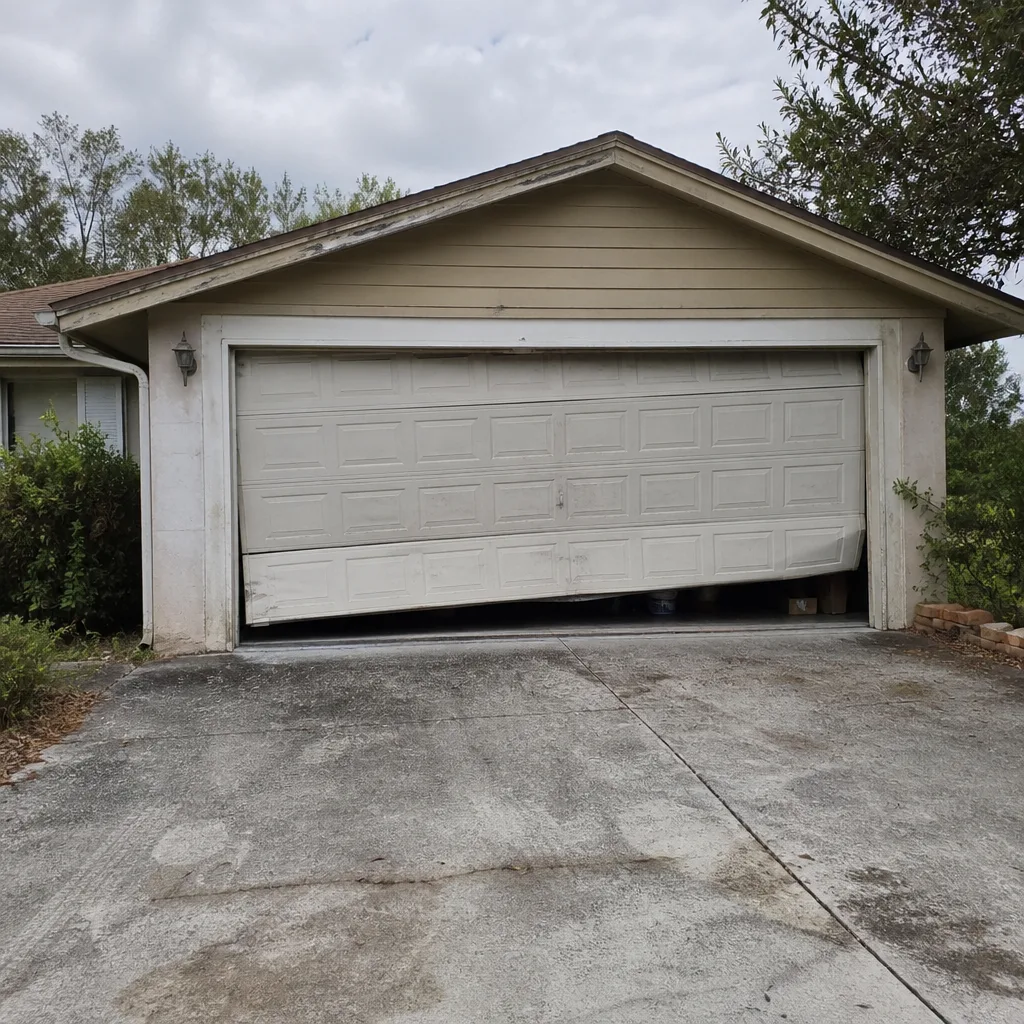 Before
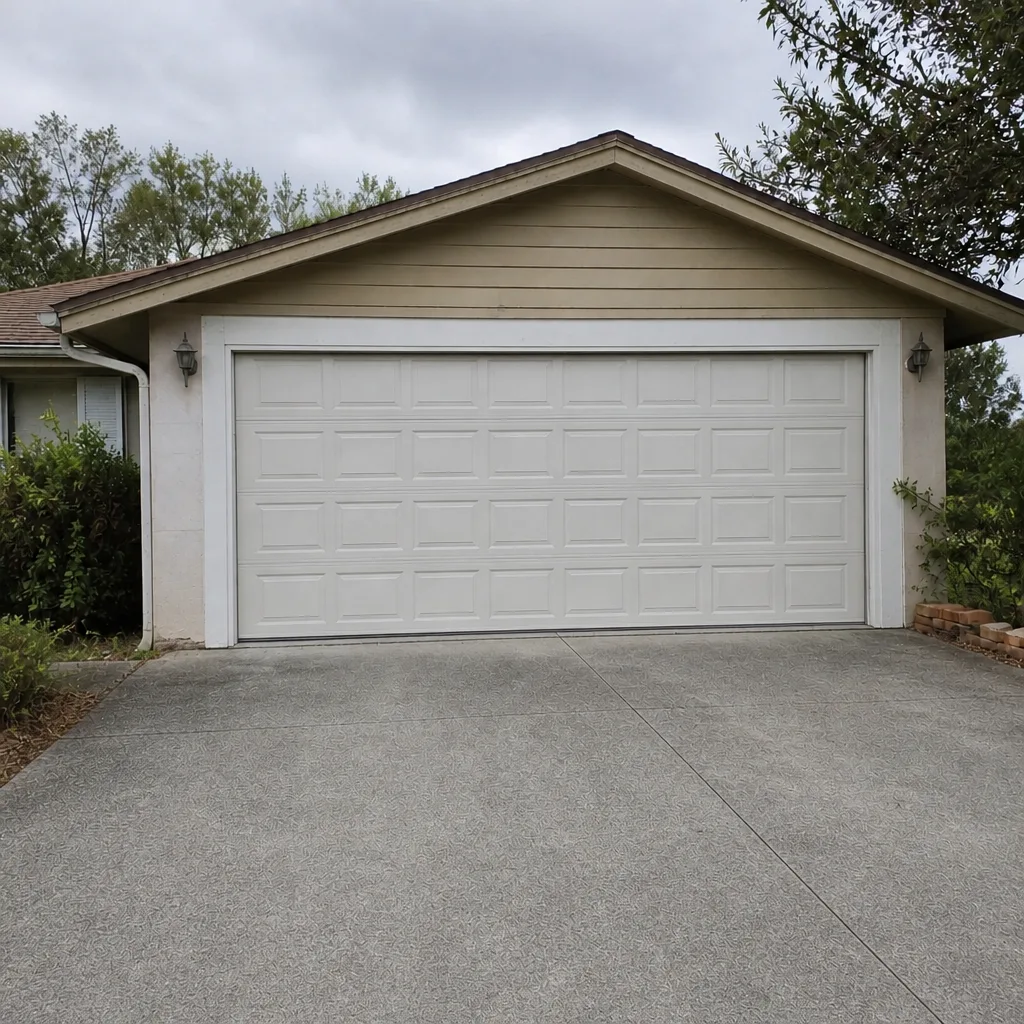 After
 Before
 After
 Before
 After
When to Call a Professional
Some problems are clearly a professional’s job: a broken or sagging spring, a frayed cable, a door that’s come off its track, or an opener that won’t reverse. Don’t try to fix those yourself. A torsion spring under tension and a cable under load are both genuinely dangerous, and the cost of a repair is far less than the cost of an injury.
Other times it’s less obvious. A door that’s suddenly loud, a door that binds on one side, an opener that strains on the first lift of the day, or a remote that’s stopped working reliably. Those are worth having looked at, because they’re often early signs of wear that gets more expensive if you wait. We diagnose before we quote, so you’ll know what’s actually wrong and what the fix involves.
Unity Garage Door Repair offers free estimates in Palm Bay. Call (866) 901-6506. We answer 24/7. Fast dispatch from 7am to 7pm, Sunday through Friday.
If you’re outside Palm Bay, we also serve the surrounding area. More about our service in Palm Bay is available on our city page.
Frequently Asked Questions
Every 90 days. The year-round humidity here breaks down protective films faster than in drier climates, so a quarterly cycle keeps the springs, hinges and rollers protected. A once-a-year schedule is too infrequent for this area.
A garage-door-specific spring lubricant or a lithium grease designed for high-load metal contact. Avoid WD-40 on the springs, since it doesn’t leave a lasting protective film and can accelerate corrosion. Call (866) 901-6506 if you’re not sure what to use on your specific door.
Yes, the visual check is safe: look for rust bloom, gaps in the coils, or a spring that looks like it’s lost its winding. Don’t try to adjust or replace the spring yourself. Torsion springs are under extreme tension, and a release can cause serious injury. Call (866) 901-6506 if the test turns up a problem.
Watch the door rather than the calendar. Noisy rollers, a door that binds, a balance test that fails, or visible rust on the spring are all signs it’s time. In this climate, exposed metal parts often wear faster than the national averages suggest, so quarterly checks catch it early. Call (866) 901-6506 for an inspection and a written estimate.
Dated records of each service, what was done, who did it, any parts replaced, and photos of the door at each inspection. A written invoice from a professional repair is the most useful single record. Call (866) 901-6506 to schedule service and get that paperwork in place.
Before the season, in May, check tracks, hinges, anchoring hardware, the manual release, and the door’s wind rating. After the season, in October, walk the full door for bent panels, shifted tracks, and loose hinges. If you see damage, don’t force the door. Call (866) 901-6506.
The Bottom Line
A garage door maintenance schedule for Palm Bay isn’t the once-a-year checklist you’ll find on most national sites. It’s a 90-day lubrication cycle, a full inspection before storm season in May, a post-storm check in October, and quarterly balance and spring tension tests. Use the right lubricants for a humid climate, keep dated records of what was done, and know which jobs aren’t safe to do yourself. That schedule catches wear before it becomes a repair, and it gives you the documentation you’d need if you ever have to prove the door was maintained. If something doesn’t look right, we diagnose before we quote and quote before any work starts.
Unity Garage Door Repair works on the major brands you’re likely to have here, including Genie, Clopay, Amarr and Wayne Dalton, and we handle repair, opener repair, and installation under one company. Call (866) 901-6506 for a free estimate. We answer 24/7. Fast dispatch from 7am to 7pm, Sunday through Friday.
Written by the team at Unity Garage Door Repair.